 Follow Us on Google News
 Follow Us on Google Discover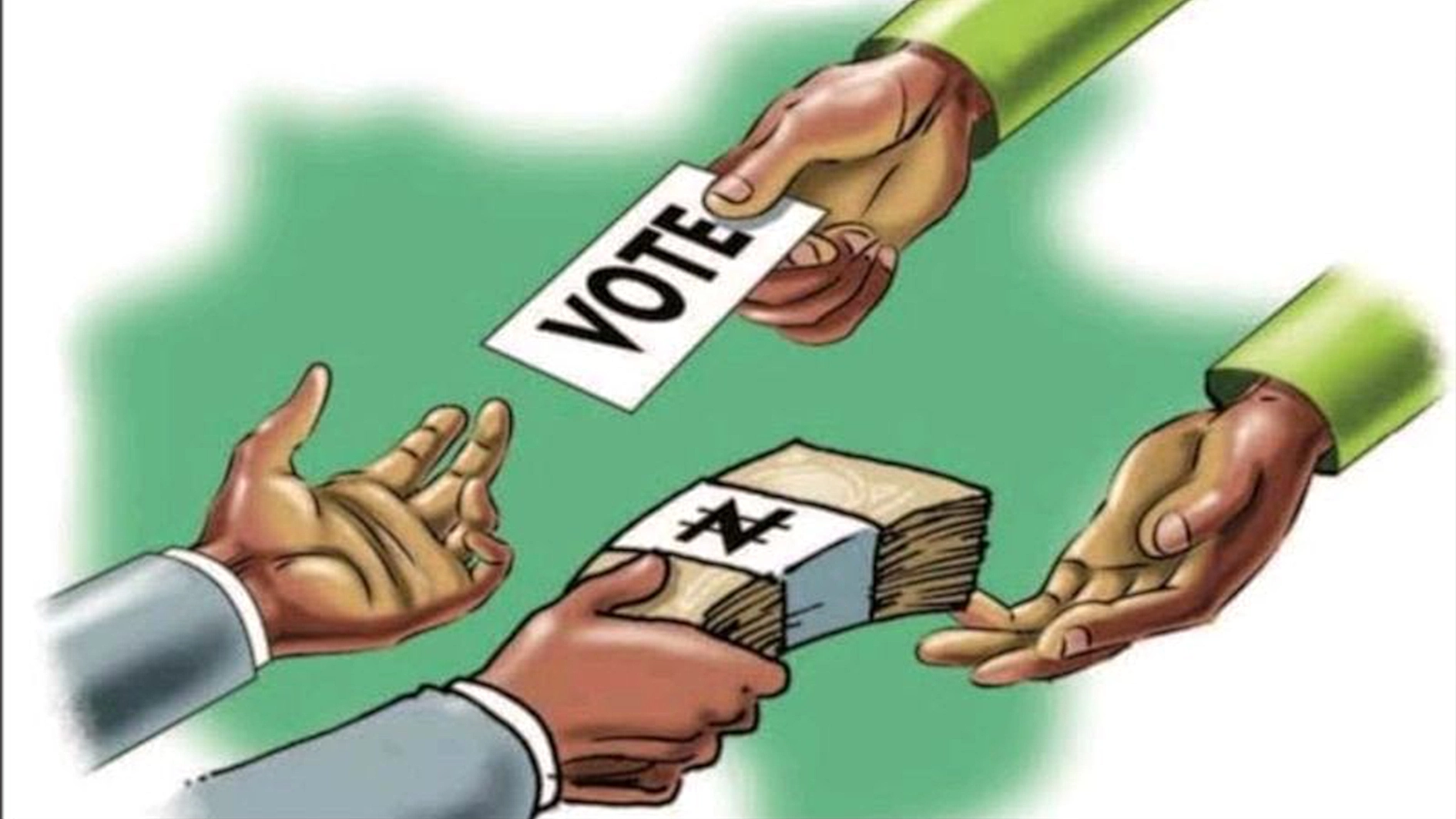
Nigeria faces many systemic challenges that directly threaten its stability, sovereignty, and democratic future. Among these, none is more insidious or structurally damaging than vote buying.
While many view vote buying as a mere transaction or a localised economic exchange, the reality is far more dangerous. It is a national disaster.
In Nigeria’s socio-political and economic system, vote buying has evolved into a primary threat to national security, systematically undermining democratic institutions, entrenching corruption, and destabilising the nation from within.
Vote buying occurs when a political candidate or their representatives — such as party agents and local vote brokers —purchase a citizen’s vote with cash, goods, or financial promises.
However, the consequences of this exchange extend far beyond a momentary financial transaction. By turning the sacred right of suffrage into a commodity, vote buying triggers a cascade of crises that impede Nigeria’s growth and reverberate across the African continent.
This phenomenon fundamentally erodes democratic integrity, entrenches bad governance, exacerbates poverty, disenfranchises competent leaders, inflates election costs, and shatters civic trust.
Vote buying directly subverts the core principle of free, fair, and credible elections, ensuring that political power is determined by financial influence rather than merit, public support, or policy proposals.
The groundwork for this breakdown begins long before general elections. Electoral delegates in political party primary elections serve as gatekeepers to public office. In nearly all major Nigerian political parties, these delegates routinely sell their votes to the highest bidder, ensuring that corrupt, well-funded individuals emerge as party candidates. Consequently, the general electorate is left to choose merely between the “less terrible” options forced upon them.
During general elections, this commercialisation becomes widespread. In recent gubernatorial elections, such as those held in Ekiti and Osun States, the price of a vote typically ranged from ₦15,000 to ₦50,000 (roughly $11 to $30 USD). Vote buyers use hybrid payment methods to conduct these transactions, combining cash handouts with digital transfers via Point of Sale (POS) operators. In many instances, agents even attempt to enforce compliance by invoking spiritual or oath-bound consequences against voters who accept funds but fail to deliver their votes.
Entrenchment of Bad Governance and Official Corruption: When politicians spend vast sums to buy votes and secure public office, their immediate priority upon assuming power is not public service but recouping their financial investments. This dynamic perpetuates a destructive cycle of official corruption and substandard public service delivery.
To fund these costly campaigns, candidates frequently incur massive debts from private interest groups and commercial banks. Furthermore, incumbent officials regularly misappropriate public funds to finance their re-election bids and vote-buying operations.
Although anti-corruption bodies such as the Economic and Financial Crimes Commission (EFCC) have periodically frozen suspect government accounts, opposition parties often allege that such enforcement is selectively targeted to suppress political rivals. Regardless of political optics, the reality remains clear: when public resources are siphoned off to buy power, governance fails, infrastructure decays, and national security is compromised.
Vote buying thrives on systemic vulnerability. Moneyed political actors exploit widespread economic distress, offering immediate cash or basic food items to desperate citizens in exchange for their votes.
According to the World Bank, Nigeria’s poverty rate rose to 63 percent in 2025, despite a slowdown in inflation, underscoring that macroeconomic adjustments have failed to reach average households. This extreme level of poverty is itself a security risk, creating fertile ground for vote buying.
A critical analysis suggests an intentional dynamic: political elites sustain economic instability to keep the population manageable and dependent on occasional handouts. This assessment aligns with findings from Chatham House, which show that poorer voters are disproportionately targeted by vote-buying schemes. When a citizen lacks options to meet basic material needs, a single vote-buying payout can equal or exceed a full day’s wages, making refusal economically difficult despite the long-term damage to their community.
The reliance on financial capital to win elections effectively excludes competent, reform-minded leaders from the political arena. Highly qualified candidates with viable policy solutions and integrity, but without access to immense wealth, are squeezed out early in the process.
Because party delegates prioritise immediate financial gain over national interests, honest candidates are often eliminated in primaries — sometimes receiving zero votes simply because they refuse or are unable to buy delegate support. Reports indicate that delegate votes in major primaries are increasingly priced in foreign currencies, such as US dollars, placing public offices entirely out of reach for principled citizens.
The structural demand for vote buying drastically inflates the cost of contesting elections in Nigeria. Politics has become an exclusive playground for wealthy elites, political godfathers, and sponsored surrogates. When the financial barrier to entry is set so high, public service is no longer accessible to ordinary citizens with leadership qualities. This escalation ensures that those who do attain office are bound to their financial backers rather than to the public interest.
When vote trading becomes normalised, the fundamental social contract between the state and its citizens erodes. Elected officials who buy their way into office feel accountable only to their financial sponsors or to their own wealth, entirely disregarding the electorate. This dynamic erodes public trust in democratic institutions. At its worst, politicians who rely heavily on external financing may pledge their allegiance to foreign lenders or international special interest groups, compromising national sovereignty and defense priorities.
Nigeria does not lack legal mechanisms to address electoral bribery. Under Section 121 of Nigeria’s Electoral Act 2022, vote buying and selling are explicitly criminal offenses. The law mandates penalties for anyone who gives, promises, or receives money, gifts, or loans to influence a vote, prescribing a maximum fine of ₦500,000, imprisonment for up to 12 months, or both.
Enforcement is assigned to agencies such as the EFCC and the Independent Corrupt Practices and Other Related Offences Commission (ICPC). However, the persistence of vote buying shows that legal prohibition alone is insufficient. The core of the crisis lies in selective enforcement, weak institutional independence, systemic corruption, and an electoral body that remains overly susceptible to executive influence.
Vote buying is a serious unethical practice, not a harmless political tactic. It is an existential threat to Nigeria’s national security and long-term stability. It undermines accountability, fuels corruption, traps millions in poverty, and deprives the nation of competent leadership.
To break free from this cycle of bad governance, Nigeria must move beyond superficial legislative fixes. The nation requires robust institutional reform, strict and impartial enforcement of electoral laws, complete independence for electoral and law enforcement bodies, and deliberate economic policies that uplift the population and rebuild a strong, independent middle class.
Until the financial incentive at the ballot box is removed, genuine national security and development will remain out of reach.
Abiodun Ramon Oseni is a Fellow at the Institute of Security Nigeria, a former U.S. police officer, and a U.S. Army veteran. He specialises in international security studies at Harvard University and American Military University.

