 Follow Us on Google News
 Follow Us on Google Discover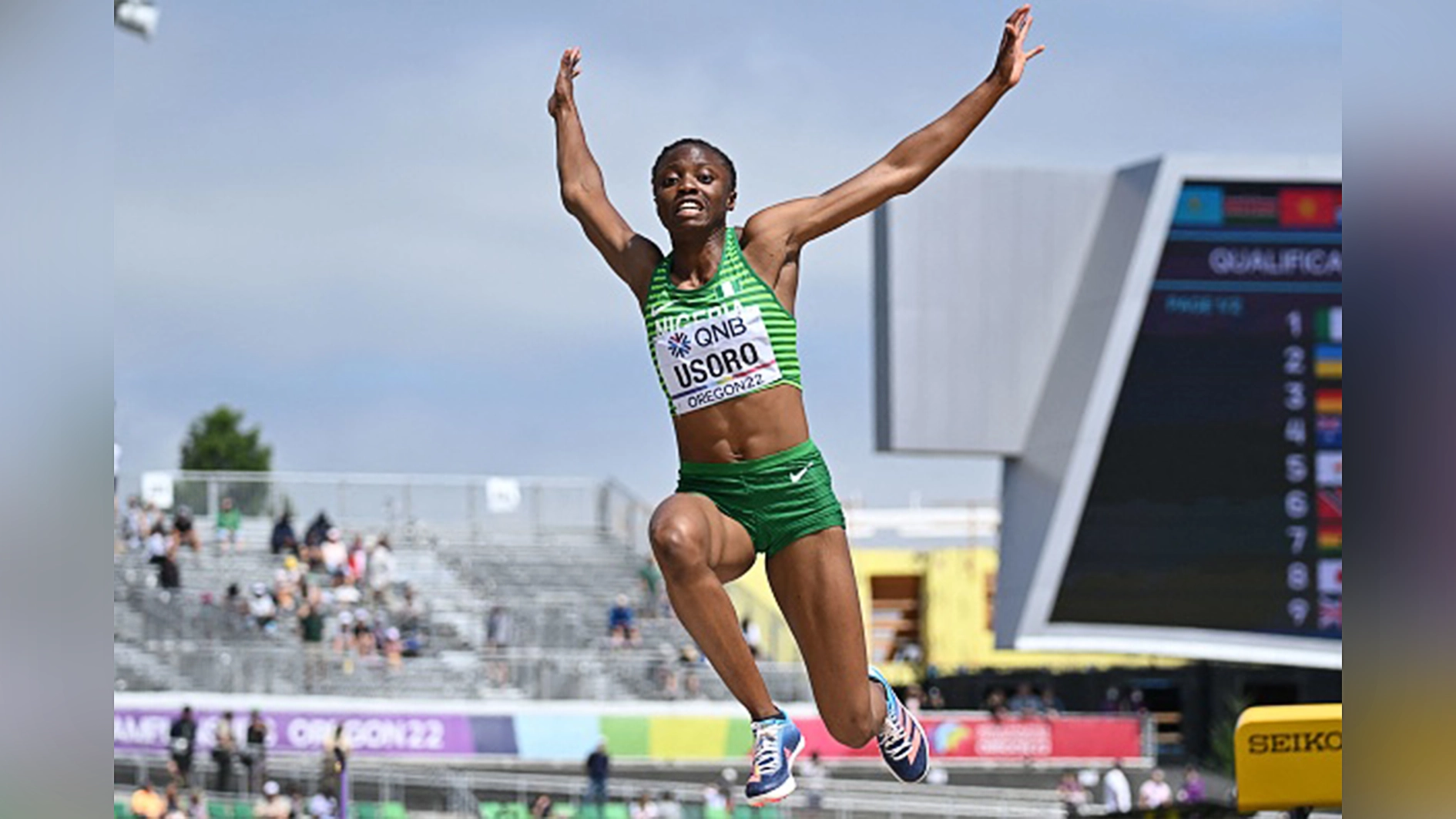
In recent times, many Nigerian athletes have been forced to move to universities in the United States to actualise their ambition of becoming world-class sportsmen. This is because Nigerian schools lack the facilities and other resources to transform budding athletes into world-class stars, writes Assistant Sports Editor, GOWON AKPODONOR.
Over the years, the United States Collegiate system has funded and produced many international champions for many countries, especially the low and middle-income countries.
Because the United States colleges and universities invest billions of dollars in athletic scholarships, elite coaching, and world-class facilities that train international athletes who go on to win Olympic medals for their home countries, many of these nations want to send their budding athletes to the U.S. to acquire and develop the skills that help them mount the podium at world meets.
It is on record that institutions in the United States spend an estimated $2 billion or more training athletes in Olympic sports, creating a grassroots sports infrastructure that dwarfs many national government budgets.
Through the National Collegiate Athletic Association (NCAA) pipeline, hundreds of athletes competing in the Olympic Games represent countries other than the United States while studying and training at American universities.
Most American schools provide professional-grade training regimens, sports science, and high-level competition that prepare athletes for the global podium.
However, while Nigeria has enjoyed the training and exposure offered by these universities, the country also had a system in the past that ensured budding athletes were discovered and nurtured to an international standard before they moved abroad.
It is on record that some of the country’s biggest laurels in international sports were won by home-grown athletes, who practised their trade in the country before competing against the world’s best at global championships.
For instance, Nigeria’s only individual Olympic gold medal was won by Chioma Ajunwa, a home-based athlete who confounded the world at the Atlanta 1996 Games, emerging champion in the women’s long jump.
Before Ajunwa, other Olympic medallists such as Peter Konyegwachie, Nojeem Maiyegun, Hogan ‘Kid’ Bassey, David Izonretei and Richard Igbineghu were all trained in the country.
Enefiok Udo-Obong, who anchored Nigeria’s 4×400 metres relay team, was a home-based athlete who combined his studies at the University of Calabar with a career in sports.
Regrettably, the country has regressed so much in athletic development that all the nation’s medallists at the last Commonwealth Games are products of the American Collegiate system.
They include Chukwuebuka Enekwechi, Samuel Ogazi, Ezekiel Nathaniel, Jessica Oji, Udodi Onwuzurike, Temitope Adeshina, Tobi Amusan, Kanyinsola Ajayi and Ella Onojuvwevwo.
The system has become so bad that athletes, like their counterparts in football, look for ways to travel abroad after completing their secondary education.
It is universally accepted that the journey to the world stage usually starts from the playground with teachers, coaches or others, who recognise potential long before the rest of the world does, playing different roles.
Whether in the United States or Nigeria, the classroom and the playing field have always shared a common mission: developing young people. However, the difference lies in how each country has built its pathway from school sports to international success.
The United States has transformed its educational system into one of the most effective athlete-development structures in the world. Nigeria, on the other hand, has produced extraordinary talents despite operating with a far less structured system. The comparison offers important lessons for the future of athletics in both countries.
In the United States, sport is not treated as an extracurricular afterthought. Rather, it is woven into the educational experience. From elementary school through high school and into college, students have access to organised competitions, qualified coaches, modern facilities, strength-and-conditioning programmes, sports medicine, nutrition, and performance analysis. Every stage is connected to the next.
Nigeria is a youth-dominated nation, with over 70 per cent of its population being under 30.
This demographic advantage should be the nation’s greatest strength, but instead, it is fast becoming a missed opportunity.
Experts have long been preaching that a well-structured sports ecosystem could create millions of jobs for Nigerians, from athletes, coaches, and referees to sports journalists, physiotherapists, event managers, facility managers, and marketers.
Conservative estimates suggest that Nigeria could generate billions of dollars yearly through sports tourism, broadcasting rights, endorsements, and local leagues if properly harnessed.
For many stakeholders, Nigeria’s school sports system can contribute to the country’s sports development only with deliberate investments in youth development.
These entail rebuilding the system from the grassroots, reviving school sports and community competitions, and strengthening local coaching systems with policies that encourage talent discovery, infrastructure development, and professional sports management.
According to a United States-based former Super Eagles star, Paul Okoku, the major difference between the American school sports system and what is found in Nigeria lies in how the two countries view the sector.
“The NCAA system in America has become one of the world’s greatest talent factories,” Okoku told The Guardian.
“Countless Olympic champions and professional athletes are allowed to earn university scholarships that allow them to pursue both education and elite sport simultaneously.
“Equally important is the emphasis on academics. Student-athletes are expected to maintain academic standards before they are eligible to compete. The philosophy is straightforward: prepare young people for success in sport without sacrificing their future beyond sport.
“The system in Nigeria tells a different but equally compelling story. For decades, Nigerian schools served as the cradle of some of the country’s finest athletes. Inter-house sports competitions were annual festivals of talent. School athletics championships filled stadiums with excitement. The National School Sports Festival and university competitions became hunting grounds for coaches and national selectors.
“Many of Nigeria’s greatest athletes first announced themselves wearing school colours before they ever wore the green and white of the national team. World record holder Tobi Amusan first developed through school competitions before progressing through collegiate athletics in the United States. Olympic and World Championship medalists such as Ese Brume and Blessing Oborududu also benefited from structured educational environments during different stages of their development. Their journeys demonstrate that talent exists everywhere, but opportunity does not.
“Unfortunately, Nigeria’s once-vibrant school sports culture has steadily weakened. In many schools today, physical education receives little attention. Sports facilities have deteriorated. Qualified coaches are scarce, and regular inter-school competitions have become inconsistent, while funding remains inadequate.
“As a result, many talented young athletes now depend on private academies, local clubs, or personal sponsors to continue their development,” he stated.
Okoku said that the conversation should not be about copying the American model wholesale because Nigeria’s educational and economic realities are different; rather, the country should focus on adapting the principles that make successful systems work. These, he said, are continuity, organisation, accountability, and investment.
One of the stars at the 2026 Commonwealth Games, U.S.-based Ruth Usoro, who joined an exclusive list of Nigerian long jump medallists, said the difference between the American system and the Nigerian way is like the difference between night and day.
Usoro told The Guardian at London Heathrow Airport on her way to the U.S. that school sports provide the nourishment for many Nigerian athletes to thrive in their careers.
“Just as a plant needs nourishment to grow, that is what American school sports stand for so many Nigerians,” Usoro said, adding, “Over there in the United States, the school system provides a level playing ground for athletes to achieve their dreams in sports. It provides the stipend for the athletes to take care of bills and also provides them with facilities to train on.
“As you are coming out with your degree as an athlete, you are also equally coming out with something tangible to blossom in your sports career. If, by any chance, these two things are missing, then it is not the fault of the American school system.”
In contrast, Usoro said, “In Nigeria, an athlete needs to hustle for everything; think of the facilities to train, money to feed, and in some cases, hustle to feed his ageing parents at home. It has frustrated many athletes out of sports.
“Though we still have some exceptional cases because athletes like Patience Okon-George, for instance, have done their athletics career in Nigeria and have done very well, winning numerous medals for the country. But whatever Patience Okon-George did to get the results might not work out for some other athletes.”
Like many other stakeholders, Usoro says that the Nigerian school sports system needs world-class training centres, medical staff and modern stadiums to thrive.
“A majority of us are beneficiaries of the NCAA school system in the U.S., which is a full education combined with high-level competition. I am not condemning the Nigerian school system entirely, but there is a need to revive the infrastructure, including dilapidated tracks, broken indoor courts, and missing training gear.
“What I discovered is that our government funding only covers basic salaries, leaving zero room for sports programmes. Some government officials in Nigeria even view sports as a distraction rather than a major industry, and this is why many talented young athletes leave Nigeria early for foreign academies or U.S. scholarships.
“Our government should partner with corporate sponsors to rebuild school facilities, bring back active inter-university games like the Nigerian University Games (NUGA) and also create systems where athletes can study and train at a high level,” Usoro stated.
However, the National Sports Commission (NSC) , under Chairman Shehu Dikko and Director-General Bukola Olopade, insists that it is driving a major nationwide infrastructure overhaul, focusing on modernising major sports complexes, building grassroots hubs, and creating a sustainable sports ecosystem.
On steps to turn things around, Olapade said that the Federal Government has started providing sportsmen with training grants and other palliatives to ensure they have no worries while training to represent the country.
He added that President Bola Tinubu has instructed the commission to ensure that athletes have sufficient funds while representing the nation in international competitions, and he credited the current resurgence in Nigerian track and field to the focus on athlete welfare.
Olopade emphasised that the NSC is working with a unified vision to maintain this momentum, noting that the commission intends to extend this commitment of care and rewards beyond just athletics to all competing athletes.
A former West African Universities Games gold medallist, Johnson Kolaru, believes that Nigerian schools can rise to the challenge if the National Sports Commission, the Ministry of Education, and the National University Commission (NUC) agree on measures to ensure that student-athletes do not suffer while participating in sports.
Kolaru, who led UNILAG to the gold medal at the WAUG Games in UNIBEN in 1995, said that many students suffer severe setbacks in their studies because of how some lecturers view sports.
“Unlike in the U.S., where schools treat sports as an essential way of life, some Nigerian lecturers still view students who take part in sports as unserious people and, in some cases, ensure that these students fail their courses. Such an attitude has scared some budding university students away from the field.
“So, for the country’s universities and other higher institutions to produce world-class stars, these athletes must get the freedom to practice their skills on world-class facilities.”

