 Follow Us on Google News


 Follow Us on Google Discover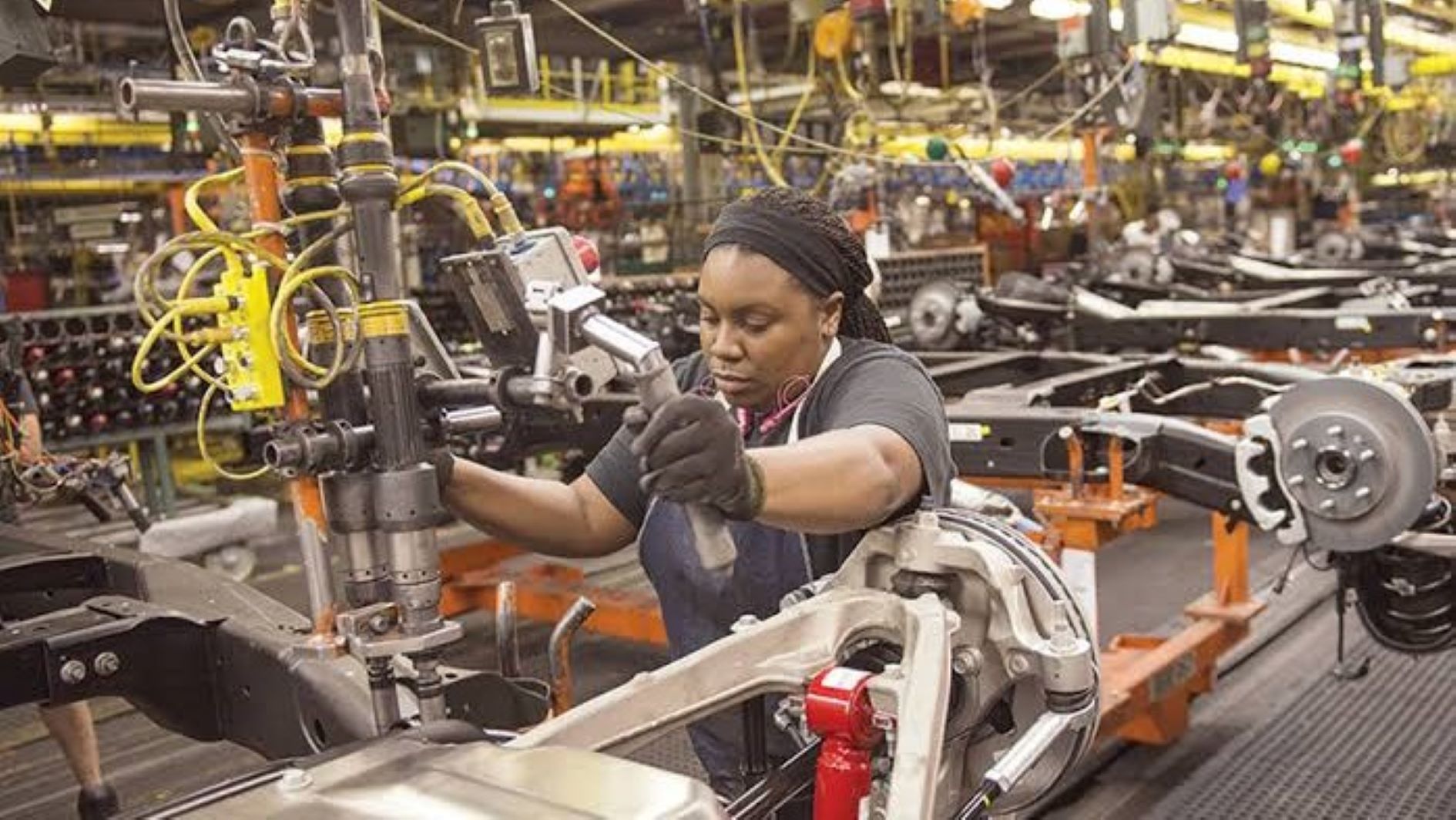
The deepening structural disconnect in the Nigerian economy comes under close scrutiny as OLUDARE RICHARDS explores how a major surge in capital importation and short-term financial inflows mask a lack of vital funding on local factory floors, leaving the nation’s productive manufacturing core highly vulnerable to currency fluctuations and ongoing power and logistics problems.
Nigeria’s economic narrative is currently caught in a striking contradiction: while capital importation and investment often dominate the headline as markers progress, the hum of industrial machinery across the federation is growing increasingly faint.
Experts agree there is a widening gap between the velocity of financial investment and the stagnation of the domestic manufacturing sector. This structural disconnect suggests that while capital is flowing into the country, it is largely bypassing the production lines that form the bedrock of sustainable economic sovereignty, settling into more liquid, service-oriented sectors that offer quicker returns but fewer structural foundations.
This trend has fostered an environment of ‘superficial growth’ where the economy thrives on paper through banking, telecommunications, and speculative assets, yet remains hollowed out as its productive core. The consequences of this manufacturing deficit are no longer theoretical; they are manifesting as a chronic vulnerability to global supply chain shocks and debilitating dependence on imported essentials.
Without a robust industrial base to act as an internal shock absorber, the Nigerian economy remains at the mercy of foreign exchange volatility. This exposure systematically erodes the purchasing power of the average citizen, feeling an unrelenting cycle of import-dependent inflation. The toll of this imbalance extends far beyond fiscal balance sheets, impacting national security and social stability alike.
Reacting to the widening disconnect between strong investment inflows and weak industrial expansion, the Director-General of the Manufacturers Association of Nigeria (MAN), Segun Ajayi-Kadir, warned in June 2026 that the country’s manufacturing sector remains under intense financial pressure despite signs of macroeconomic stabilisation.

According to the association, manufacturers are contending with prohibitively expensive borrowing costs, shrinking access to bank credit, volatile foreign exchange conditions and persistently high energy expenses that continue to undermine industrial competitiveness.
MAN disclosed that credit extended to the manufacturing sector fell sharply by about N1.92 trillion, dropping from N8.53 trillion in December 2024 to N6.61 trillion by the end of 2025, even as commercial lending rates climbed above 35 per cent in some cases. The association argued that the decline illustrates the growing reluctance of commercial banks to finance long-term productive investments at a time when industries require affordable capital to expand capacity, modernise equipment and create jobs.
Ajayi-Kadir maintained that while recent monetary adjustments are intended to improve investor confidence, they have not translated into meaningful relief on factory floors where manufacturers continue to shoulder escalating self-generated power costs, expensive imported inputs and limited access to affordable financing. He argued that without deliberate policies directing finance towards productive enterprises, capital inflows would continue to concentrate in financial assets while the country’s industrial base weakens.
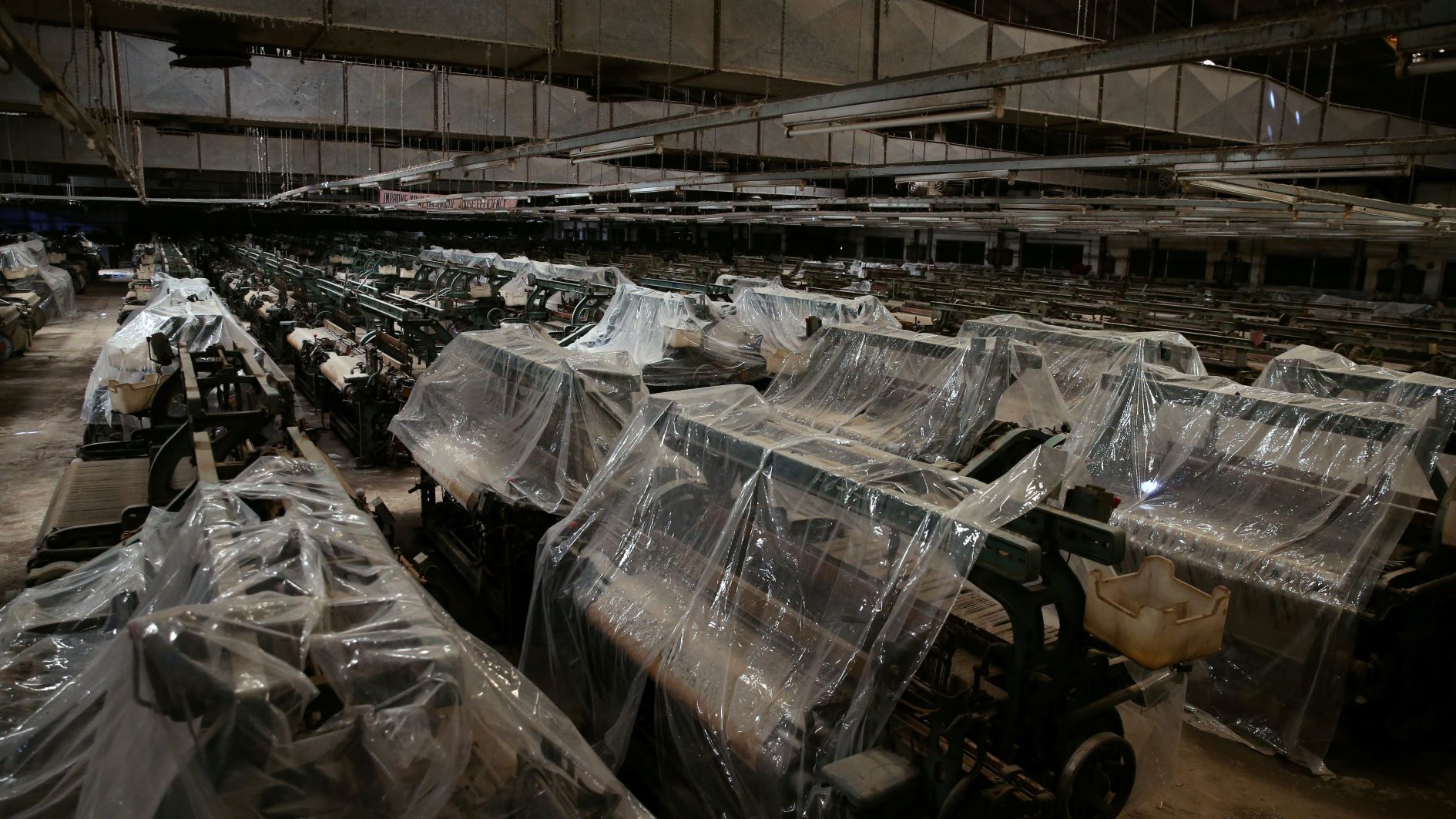
Manufacturing has historically served as the primary engine for mass employment and the cultivation of a stable middle class, yet the current investment-heavy model lacks the capacity to absorb the nation’s massive semi-skilled labor force. As industrial zones give way to residential estates and shopping malls, the nation risks its ability to add value to its own natural resources.
The data from the National Bureau of Statistics (NBS) reveals a stark imbalance, demonstrating that while billions of dollars flow into Nigeria, only a tiny fraction actually enters factory floors. Total capital importation into Nigeria experienced a major surge, climbing 88.5 per cent to reach $23.21b.
Looking closely at the final quarter of the year, total foreign inflows hit $6.44b, which represents a significant 26.6 per cent increase compared to the same period the previous year. However, a breakdown of how this money enters the economy exposes the core of the structural disconnect. The vast majority of these inflows are short-term and speculative, rather than long-term industrial commitments.
Foreign portfolio investment, often referred to as ‘hot money’ because it flows directly into money market instruments, equities and bonds , dominated the landscape at $5.48b. This accounted for a massive 85.14per cent of total quarterly inflows.
Meanwhile, the category classified as ‘other investments’, which is largely composed of commercial bank loans, accounted for $599.65m or 9.31 per cent. Crucially, Foreign Direct Investment (FDI), which is an exact form of capital required to build physical factories, assemble machinery, and establish long-term Greenfield projects, sat at the very bottom, bringing in just $357.80m, a meagre 5.5 per cent of the total capital imported.
When analysing where these billions settle sectorally, the data confirms a profound gap between financial investment and tangible industrial production. The financial services architecture absorbs the lion’s share of foreign interests. The banking sector recorded the single high highest inflow, pulling in $3.85b, which translates into 59.75 per cent of all imported capital.
This was closely followed by the financing sector, which attracted $1.94b representing 30.5 per cent. Together, these two financial categories cornered nearly 90 per cent of the capital entering the country. In sharp contrast, the production and manufacturing sector secured just $308.93m, representing a trivial 4.79 per cent of the total capital share. This data provides clear evidence for the report, proving that Nigeria’s investment surge is overwhelmingly a financial sector phenomenon where the nation’s productive heart receives less than 5 cents of every dollar that crosses the border.
Evaluating this institutional institutional blockage from a development finance lens on February 12, 2026, senior executives at the Bank of Industry noted that the current commercial banking layout is structurally designed to starve industrial long-term cycles. They observed that the foreign capital absorbed by commercial lenders rarely translates into single-digit, long-term development funds because private banks favour short-term trading arbitrage, import financing, and government treasury bills over ten years gestation manufacturing risk.
Experts argue that while development finance institutions attempt to bridge the gap with targeted interventions, the volume of commercial lending remains deeply skewed away from physical production. Industry financial strategists emphasise that until national monetary policy enforces a mechanism that links foreign capital inflows directly to mandatory real-sector lending quotas, commercial banks will remain a highly profitable sponge, soaking up foreign billions while local factory floors starve of long-term capital.
“The MAN DG’s warning over shrinking industrial credit and weakening manufacturing competitiveness aligns closely with concerns raised by organised labour, which views the growing financialisation of the economy as a threat to sustainable employment.”
Reviewing the state of industrial employment on March 8, 2026, leaders within the Nigeria Labour Congress (NLC) and industrial unions argued that a reliance on short-term “hot money” portfolio investments creates an illusion of prosperity that completely leaves behind the working class.
Labor executives pointed out that while the financial and banking sectors report staggering profits and attract the bulk of foreign inflows, they are inherently low-employment sectors that cannot absorb the country’s massive semi-skilled youth population. When high energy costs and capital starvation force an industrial factory to shut down, the closure sets off a devastating chain reaction that immediately pushes thousands of breadwinners out of the stable wage brackets and into the volatile informal economy.
Union leaders caution that an economy that exchanges physical production lines for passive asset trading is systematically destroying its middle class, converting real productive labor into underemployment, and breeding social unrest across the federation’s urban centres.
Offering an economic policy critique on May 17, 2026, the Chief Executive Officer of the Centre for the Promotion of Private Enterprise (CPPE), Dr. Muda Yusuf, counselled that the federal government’s fiscal measures must move aggressively past nominal financial stability toward protecting real sector productivity.
Reviewing recent trade adjustments and policy updates, Yusuf acknowledged that while targeted tariff revisions and tax exemptions for small and medium industries provide needed liquidity, the structural headwinds facing real production are still immense. High power costs, logistics failures, and severe port inefficiencies continue to suppress real output.
He warned that if capital continues to favor short-term portfolio investments and liquid services over physical manufacturing, the country will struggle to build an inclusive economy. “Our fiscal measures must move aggressively past nominal financial stability toward protecting real sector productivity,” Yusuf argued.
“If capital continues to favor short-term portfolio investments and liquid services over physical manufacturing, the country will struggle to build an inclusive economy. The primary challenge is to intentionally channel credit away from speculative commercial activities and guide it through the banking system directly into private industrial projects.”
The severe logistics failures and port inefficiencies highlighted by the CPPE are further compounded by ongoing infrastructure bottlenecks within the maritime sector.
Contributing to an emergency port logistics review on April 11, 2026 maritime stakeholders and members of the Nigerian Shippers’ Council stated that the physical friction of moving raw materials out of the ports acts as a massive domestic tax on manufacturing. Port operators explain that even when a manufacturer manages to secure investment capital, that capital is quickly eaten away by systemic gridlock, extortion, and excessive container demurrage charges at the Lagos ports.
Moving an imported raw material container from the port terminal to industrial clusters like Agbara or Ikeja frequently costs more and takes longer than shipping that same container across the ocean from Asia. Maritime experts note that these severe transport disruptions break corporate supply chains and force factories to operate far below capacity.
They maintain that capital importation numbers will never translate into lower consumer prices or higher industrial output until the government completely digitises port clearance processes and fixes the rail links feeding into the nation’s primary industrial zones.
On the government regulatory front, policymakers are attempting to aggressively reshape the investment landscape to force a convergence with industrial output.
The Lagos State Commissioner for Commerce, Cooperatives, Trade and Investment, Folashade Ambrose-Medebem, addressed this head-on during the official framework rollout on April 30, 2026, arguing that sub-national governments can no longer rely on being a gateway for passive capital.
Announcing the official launch of the ambitious Lagos State Industrial Policy, which runs through 2030, Ambrose-Medebem stated that the administration is committing stakeholders to a highly structured framework specifically designed to accelerate economic diversification and eliminate import dependence.
The state’s roadmap targets light manufacturing, agro-processing, and industrial value addition as priority areas to fix deep-seated supply chain blocks. By rolling out dedicated infrastructure, like the new light industrial serviced parks, and pairing them with targeted micro-financing programs delivered through manufacturing cooperatives, the government expects to bridge the infrastructure deficit.
She maintained that the high-level investment summits moving forward will focus heavily on shifting investor mindsets, translating high-volume conversations into deployable, hard capital assets.
“Sub-national governments can no longer rely on being a gateway for passive capital,” Ambrose-Medebem emphasised.
“Through the Lagos State Industrial Policy running through 2030, we are committing stakeholders to a highly structured framework specifically designed to accelerate economic diversification and eliminate import dependence.
“Our high-level investment summits will focus heavily on shifting investor mindsets, translating high-volume conversations into deployable, hard capital assets that build physical factories rather than just swelling financial portfolios,” she said.

