 Follow Us on Google News
 Follow Us on Google Discover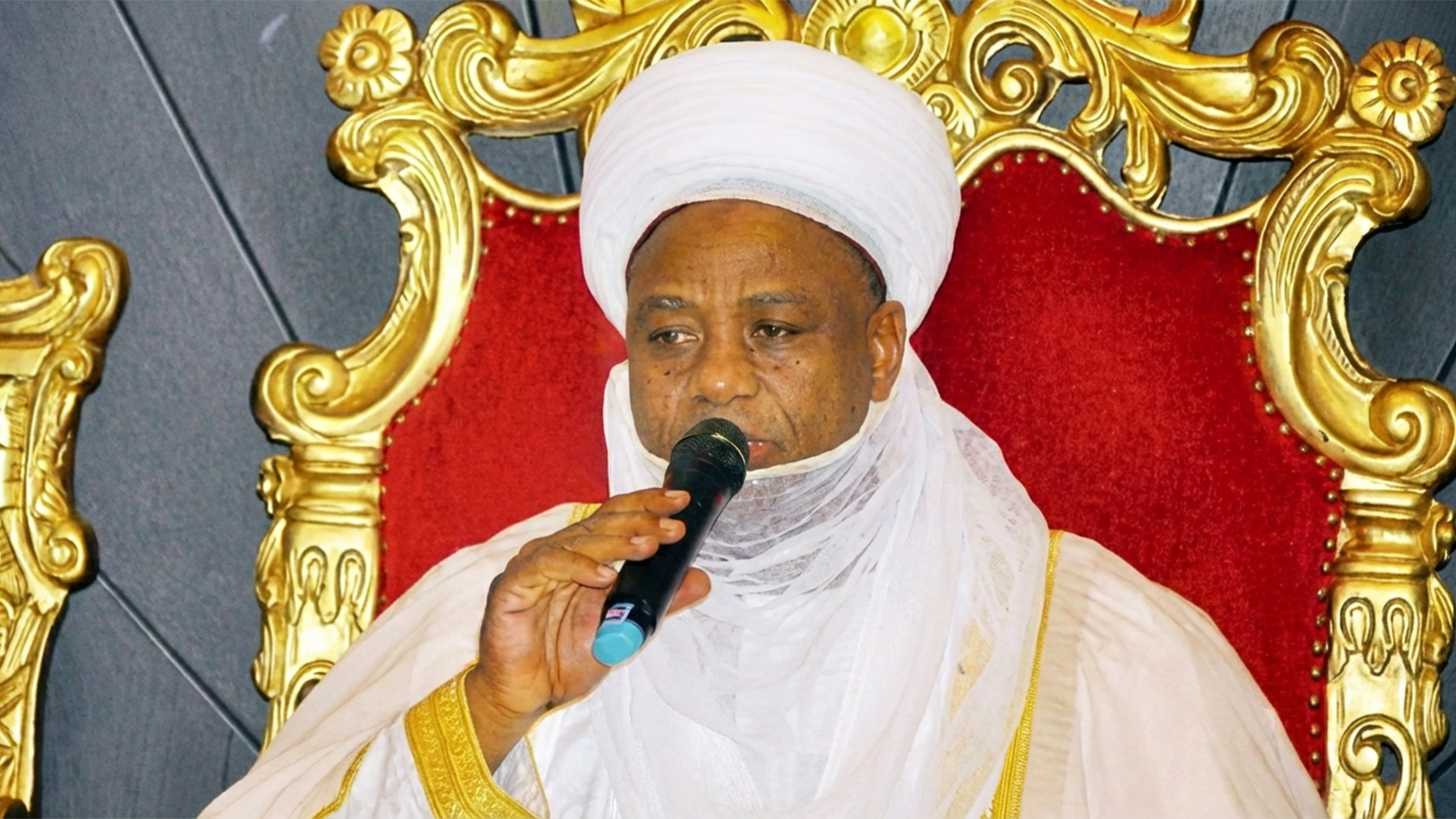
By Danladi Bako
“Leaders must act in the best interest of the populace, maintain accessibility for the oppressed and loose legitimacy if they fail to establish justice” – Shehu Usman Danfodiyo (1754 – 1817).
Paradoxically the context of soldiering, war-mongering and peace-making look estranged, unconnected and at parallel with each other. When these distinct elements of power, conflict resolution and leadership contestation all aggregate into one personality, when also the components all tether towards the same trajectory of peace building, the locus of thought about power and leadership now rests with Michel Foucault’s dictum that “power is not just held by governments and kings, it flows through every day social interactions.”
When power is vested in a leader and in this case a Sultan, what readily challenges the mind and thought is how would he handle this intoxicant called power and its utilization for the public good. Many a man has fallen by the wayside while navigating the exercise of his power, while many others have self-destruct in the control and execution of their plans and policies because of a lack of preparedness for power and some deficiency in governance adaptability quotient.
Sultan Saad was installed as the 20th Sultan of Sokoto via a letter of appointment in November 2006 at the age of 50, equipped with a member of national institute graduation certificate, incredible knowledge of Nigeria having served in numerous military formations and an innate capacity for making friends very easily with all and sundry. From Sultan Ward primary school Sokoto along with Kabir Tafida and Rilwanu Bello in the 60s to Barewa College, Zaria with Ahmed Mora and others in the 70s, he moved into course 18 of the Nigerian Defense Academy along with Bala Shagari and Gen Dambazau completing the course and decorated as a Second Lieutenant.
His postings took him to Nnewi and Nsukka in the South East, South South, Saki South West, Ilorin in the North Central and Bauchi and Baga in the North East. It was literally evident that providence and fate was preparing him for the role of a national leader and traditional kingship. It was not by accident that he trained and served in one of the most difficult and dangerous sections of the Army – the Armoured Corps. The army irrespective of the corp, they are trained to kill. It’s as simple and as direct as that. It was not surprising that the ECOMOG interventions in Liberia and Sierra Leone became his next assignment in the 90s.

As a Commander of armed forces in those battle fields he had to deploy tact and control effectively at all times. Winston Churchill once said “Leadership is the intelligent use of power”. Growing up as a prince and son of Sultan Abubakar III he knew and understood the dynamics of power and power relations at local, sub-national, national and international levels.
In preparation for becoming a Sultan, fate sent him to National Institute for Policy Studies, Kuru Jos where peace building and national integration are key elements of the course outline. In fact, his dissertation was on conflict and peace resolution. He once said “I have seen the devastating effects of war, and it is my conviction that we must do everything possible as a nation to avoid war. Peace is always the best option.”
It is the aggregation of these life and professional experiences that manifests in his interpretation of his role as Sultan of the Sokoto Caliphate. As he always reminds his audience, the word “Islam” means peace.
At his presentation in Harvard University Boston, Massachusetts USA in 2010, he lectured the audience about “Islam , peace and democracy in West Africa” pontificating that Islam and democracy can and do co-exist harmoniously in Africa. At the State Department of the American Government, he regaled the army generals with relevant instances stating to corroborate the fact that Islam is a religion of peace.
Two years later at Chatham House in London, Sultan Sa’ad preached peace to the motley crowd of intellectuals and policy makers. He reiterated the peace mantra at his meeting with Prince Charles at Clarence House in 2010. Further visits to Council for Foreign Relations in Washington DC and Wilson Center Washington were followed by lectures at Columbia University Washington and United States Institute for Peace where Ambassador John Carson hosted His Eminence the Sultan.
Similar other peace advocacy trips took the Sultan to Oxford in England last year and as Co-President of the Religion for Peace which is a United Nations body at the Global meeting in Istanbul Turkey, the whole mantra of peace building and advocacy has become a gargantuan responsibility.
At home, the Sultan’s peace building efforts are truly encapsulated in his leadership of the Nigerian Inter- religious Committee (NIREC). Being a very pragmatic and committed advocate of peace , Sultan Sa’ad interacts with and displays huge accommodation for adherents of other faiths and religions.
Indeed, a Christian delegation once visited him at the Palace and they requested to pray the Christian way and he obliged them.
Another famous quote from Shehu Usman Danfodiyo comes in handy here. He postulated that “the death of a thousand good men is not as tragic as having an unfit man in a position of national leadership.”
What greater testimonial of Sultan Muhammad Sa’ad Abubakar’s liberalism while also stoutly defending the doctrines of Islam and the teachings of the Caliphate founding fathers.
As Sultan Sa’ad clocks 70 on August 24, 2026, his legacies as a quintessential leader are already manifesting to all and sundry. He remains a national treasure we are all proud of.
• Nasir Danladi Bako, PhD, OON is also Kogunan Sokoto.

