 Follow Us on Google News
 Follow Us on Google Discover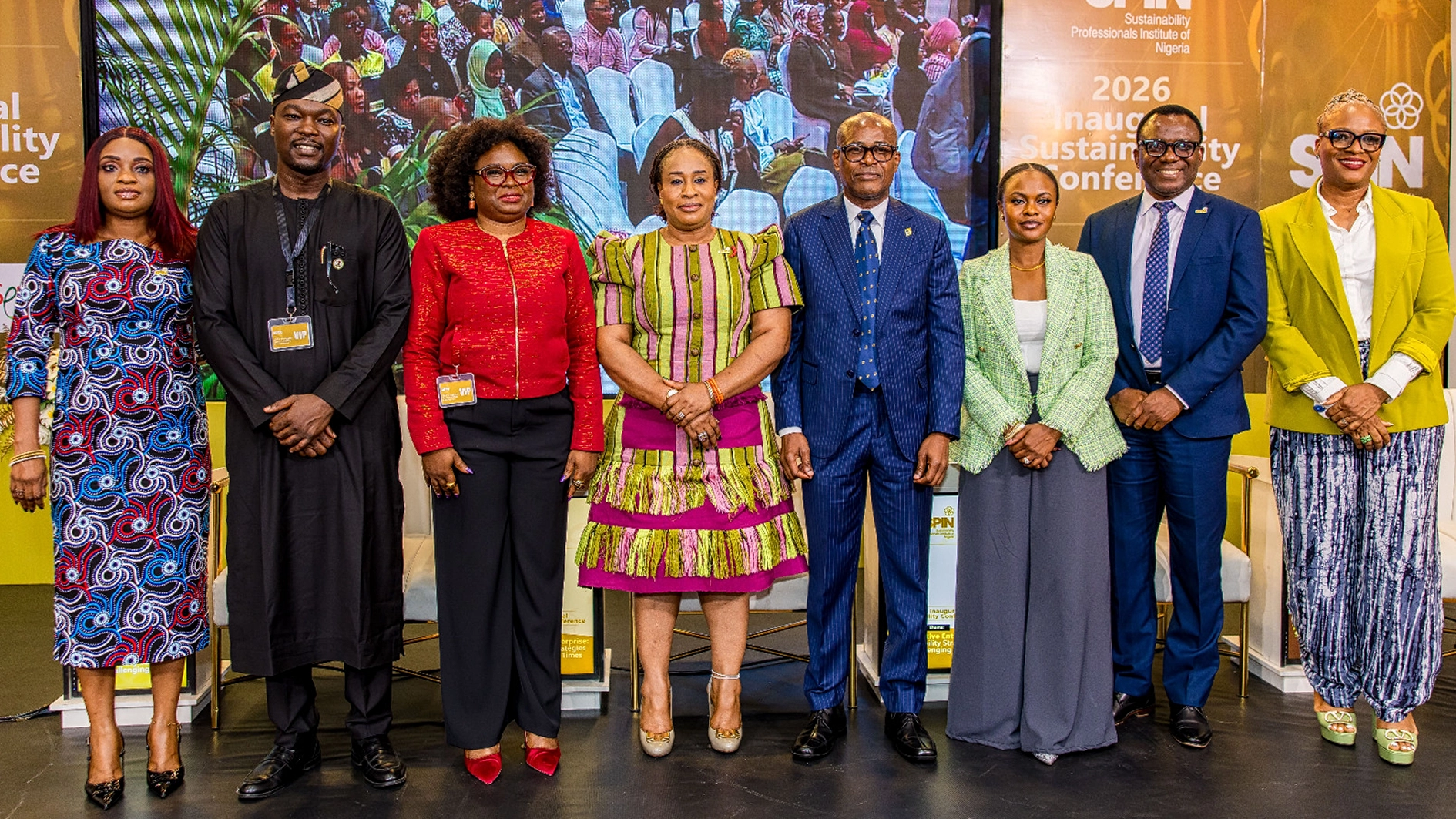
FirstBank has screened corporate transactions valued at more than N10 trillion for environmental, social and governance (ESG) risks as the lender moves to integrate sustainability considerations more deeply into credit decisions and expand financing opportunities linked to Nigeria’s transition to cleaner energy.
The bank’s Managing Director/Chief Executive Officer, Olusegun Alebiosu, disclosed this in Lagos at the inaugural Sustainability Conference of the Sustainability Professionals Institute of Nigeria (SPIN), sponsored by FirstBank.
Alebiosu, who spoke through the bank’s Executive Director, Risk, Biyi Olagbami, said 505 corporate transactions were subjected to ESG risk screening in 2025, compared with 237 transactions valued at over N3 trillion screened in 2024.
He said the development reflected the bank’s decision to integrate environmental and social considerations into its credit underwriting process, particularly as businesses and financial institutions face increasing exposure to climate, environmental and social risks.
According to him, FirstBank had finalised its Green Product Credit Policy, aligning its lending standards with its Climate Policy, Environmental and Social Management System, International Finance Corporation Performance Standards and IFRS S1 and S2.
He said the policy provides for sector-specific screening covering oil and gas, power, construction and agriculture, allowing the bank to assess ESG-related risks before financing decisions are made.

“The harder the environment, the more sustainability strategy earns its place as a core risk and growth discipline, not an add-on,” he said.
Alebiosu said the approach was particularly important against the backdrop of currency volatility, inflation, tighter capital conditions and a global pullback in ESG appetite, which he said had placed additional pressure on banks’ balance sheets.
Rather than suspend sustainability initiatives during periods of economic pressure, he said financial institutions needed to recognise sustainability as both a risk-management tool and a source of new business opportunities.
He said FirstBank was therefore expanding its climate-finance portfolio through Alternative Energy Finance for individuals, Solar Financing for small and medium-sized enterprises and a green mobility addendum to its vehicle finance offering.
Alebiosu described Nigeria’s transition to cleaner energy as “first and foremost, a financing gap”, arguing that banks had an important role to play in providing the capital required to support the shift.
He said the bank’s sustainability strategy had also supported its broader financial performance, with gross earnings rising to N3.4 trillion in 2025 despite the challenging operating environment.
Beyond lending, Alebiosu said FirstBank would publish its first Sustainability Report this year in line with IFRS S1 and S2, while continuing its commitments to the UN Women’s Empowerment Principles, the UN Global Compact and the Nigerian Sustainable Banking Principles.
He said the bank was also using financial literacy, entrepreneurship and climate education initiatives, including its FutureFirst programme, to extend its sustainability efforts beyond corporate transactions.
“A sustainability strategy that does not reach ordinary Nigerians is not really a strategy,” he said.
Alebiosu added that FirstBank retained Nigeria’s Best Bank for ESG title at the 2025 Euromoney Excellence Awards for the second consecutive year and disbursed N48 billion to women and women-led businesses in 2025.
He said financial institutions that maintained their sustainability commitments despite economic pressures would be better positioned to influence the direction of responsible banking and financing in Nigeria over the next decade.

