 Follow Us on Google News


 Follow Us on Google Discover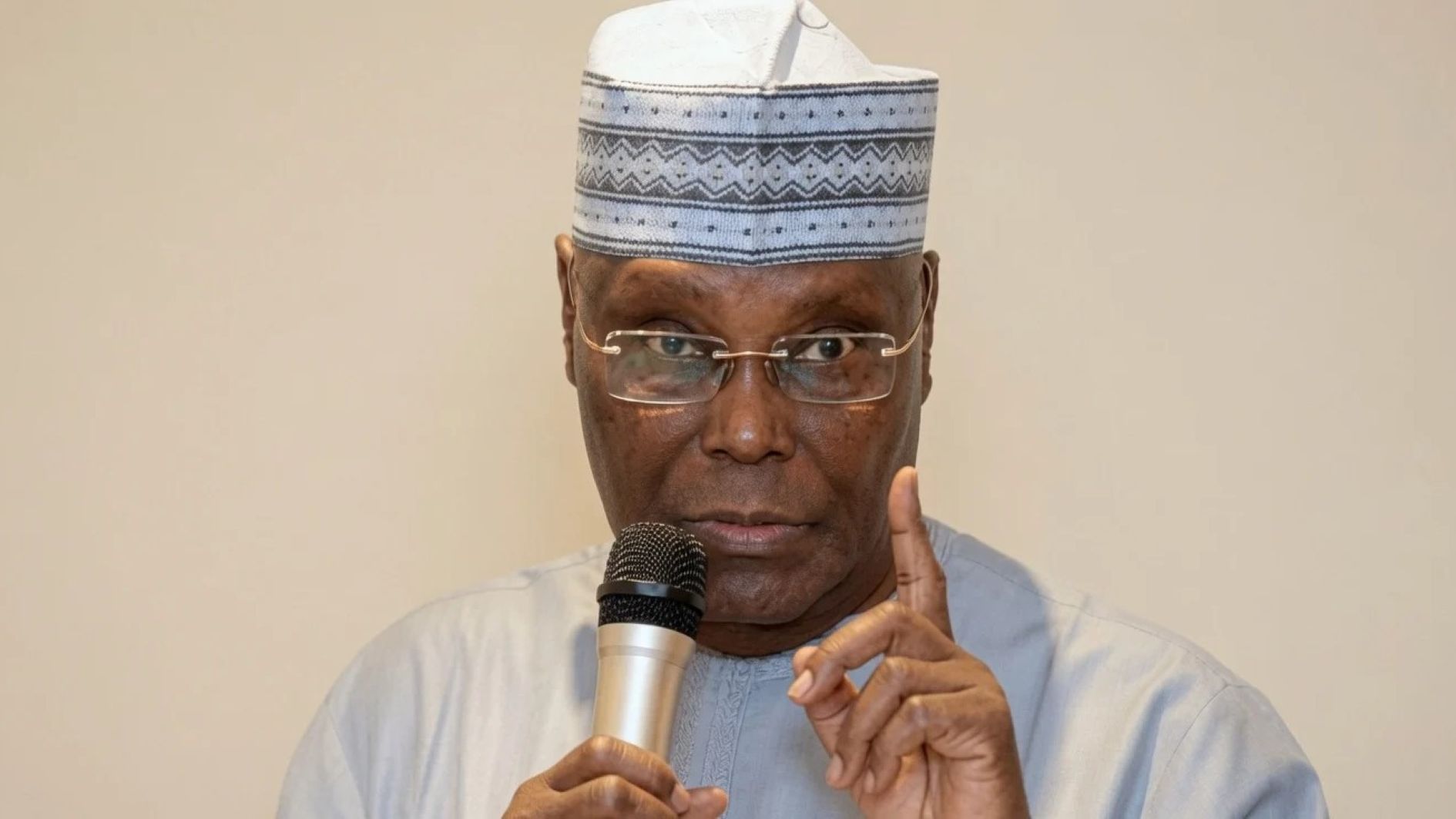
• Atiku cites N7.13tr energy-security expenses, says subsidy persists
• Presidency accuses Atiku of exploiting economic hardship for votes
• APC chair demands funding plan, warns of renewed fiscal pressure
• Hashim calls Atiku ‘father of subsidy removal’, demands explanation
• Sowore says Atiku represents recycled political elite
• Duke seeks shift from Tinubu’s economic policies
• Atiku proposes capped, targeted subsidy with exit plan
Forever Vice President Atiku Abubakar’s promise to restore a targeted petrol subsidy if elected has triggered a fresh political and economic debate, with the Presidency and the All Progressives Congress (APC) accusing him of an opportunistic policy reversal, while other presidential contenders question both the government’s approach to subsidy removal and the former vice president’s record.
Atiku, who vowed that neither President Bola Tinubu nor his supporters could stop him from implementing the policy, accused the Tinubu administration of presenting subsidy removal as an economic reform while granting fiscal concessions to oil investors.
In a statement issued in Abuja by his Senior Special Assistant on Public Communication, Phrank Shaibu, Atiku said the government’s claim that petrol subsidy had been abolished was difficult to reconcile with tax credits and other incentives available to petroleum operators.
The presidential candidate of the African Democratic Congress (ADC) cited the audited accounts of the Nigerian National Petroleum Company Limited (NNPC), arguing that the figures showed that the government was still absorbing some petrol price differentials after the subsidy removal announcement.
“In 2023, NNPC’s accounts recorded approximately N4.84 trillion as energy-security expenses and related shortfalls, while its 2024 audited financial statements subsequently recorded about N7.13 trillion under energy-security expenses,” the statement said.

Atiku said NNPC had explained that the expense partly arose from the difference between the exchange rate used to determine the regulated PMS ex-coastal price and the prevailing exchange rate when import obligations were settled.
He argued that describing the expenditure as a “shortfall” rather than subsidy did not change its substance.
“Nigerians do not eat semantics. Whether government calls it subsidy, under-recovery, shortfall or energy security, public resources were being used to bridge a gap between economic cost and the price at which petrol was sold. You cannot abolish subsidy at the podium and resurrect it in the accounts under an alias,” he said.
Atiku also cited the Deep Offshore Oil and Gas Projects Incentives framework, under which qualifying petroleum developments can access production tax credits beginning at $3 and $4.50 per barrel.
He accused the government of applying different economic standards to corporations and ordinary Nigerians, arguing that while oil investments received fiscal incentives, households facing rising living costs were expected to bear the full impact of petrol price increases.
“The government can protect a multibillion-dollar oil investment from risk, yet it says protecting the Nigerian worker from crushing hardship is bad economics. It can bend policy to make every barrel of crude more profitable but tells a struggling mother that making the litre of petrol she needs to take her children to school more affordable is irresponsible,” he said.
The former Vice President said his proposed Atiku Economic Recovery Plan would introduce a targeted and limited intervention, distinct from what he described as the opaque and corruption-ridden subsidy regime of the past.
The statement said the proposal would be “a targeted, capped, transparently budgeted and independently audited intervention with a clearly defined exit mechanism”, alongside accelerated domestic refining, increased competition, mass transportation and measures to restore household purchasing power.
Atiku also demanded that the government disclose details of petroleum tax concessions already granted, including the beneficiaries and the revenue forgone by the government.
He accused the administration of protecting corporate interests while imposing hardship on citizens, describing the approach as “classic economic apartheid”.
He said Nigerians deserved greater transparency on the fiscal incentives granted to oil companies and the economic rationale for such concessions.
Presidency accuses Atiku of playing politics with subsidy reversal
THE Presidency accused Atiku of playing politics with the Nigerian economy.
It described Atiku’s position as a sharp reversal of the economic stance he adopted during the 2023 presidential campaign, when he advocated the removal of the subsidy regime.
The Special Adviser to the President on Media and Public Communications, Sunday Dare, made the position known in a statement, accusing Atiku of exploiting the economic difficulties confronting Nigerians for electoral advantage rather than offering a sustainable alternative to the government’s reforms.
Dare recalled that Atiku had previously described petrol subsidy as unsustainable, opaque and susceptible to corruption, arguing that his renewed call for its restoration ahead of another election cycle was contradictory.
He said the policy reversal amounted to an attempt to turn the hardship associated with economic reforms into political capital.
According to Dare, “Atiku’s vacillation stands as a monument to a fading presidential ambition gone completely awry, exposing a man willing to burn down national economic stability for a fleeting headline.”
The Presidency acknowledged that subsidy removal had imposed short-term adjustment pressures on households and businesses but maintained that the reform had freed substantial resources for allocation to the three tiers of government and created room for investment in productive sectors.
Dare said the reform had also contributed to the emergence and expansion of domestic refining capacity, reducing Nigeria’s exposure to fluctuations in the international petroleum market and foreign exchange pressures associated with imported refined products.
He argued that a return to the former subsidy regime would reverse those gains and reopen avenues for rent-seeking and financial leakages.
“The old import subsidy regime was not merely a pricing mechanism; it was a black hole of rent-seeking, round-tripping and monumental corruption that starved health, education and infrastructure of vital capital,” he said.
Dare warned that restoring the subsidy could undermine investor confidence in the downstream petroleum sector, weaken the development of local refining capacity and place renewed pressure on the nation’s foreign exchange position.
He also accused Atiku of abandoning the long-term economic principles he previously espoused in favour of populist messaging aimed at citizens grappling with rising living costs.
The presidential aide said responsible leadership required defending difficult but necessary reforms while addressing their social consequences, rather than promising to reverse them for political gain.
“True leadership requires the courage to defend difficult, foundational reforms even when the political weather is rough, rather than pandering to populist illusions for ballot-box validation,” Dare said.
The Presidency urged Nigerians to scrutinise competing economic proposals ahead of the 2027 elections, particularly policies with significant implications for public finances and economic stability.
Dare said the Tinubu administration remained committed to reforms aimed at reducing fiscal leakages, strengthening domestic production, expanding government revenue and creating a sustainable foundation for economic growth.
He said the administration would not be distracted by what it described as politically motivated attempts to reverse reforms undertaken to address longstanding structural weaknesses in the economy.
The Presidency also challenged Atiku and other advocates of subsidy restoration to explain how the policy would be financed sustainably without recreating the fiscal and governance problems associated with the former regime.
Dare said Nigerians deserved policy consistency and credible alternatives rather than electoral promises driven by the desire to exploit temporary economic difficulties.
“Atiku’s subsidy U-turn is not a coherent economic alternative; it is politics being played with the Nigerian economy,” the Presidency said.
APC chair faults Atiku’s plan to reverse petrol subsidy removal
THE APC National Chairman, Nentawe Yilwatda, criticised Atiku’s proposal to reverse the removal of petrol subsidy, describing it as a troubling policy reversal that raises questions about the opposition’s preparedness to govern Nigeria.
Yilwatda said Nigerians deserved more than election-season declarations, arguing that any proposal to restore the subsidy regime should be subjected to rigorous scrutiny, given the fiscal burden subsidies placed on public finances and the distortions they created in the economy.
The APC chairman spoke during a visit to the headquarters of the City Boy Movement in Abuja, where he inspected the organisation’s facilities and interacted with its leadership.
He said the opposition had been challenged repeatedly over the past three years to present its alternative policies to Nigerians, but had yet to offer a coherent and convincing governing agenda.
Yilwatda said it was therefore suspicious that, about months before the 2027 general election, Atiku was proposing a policy that could reverse what he described as difficult economic adjustments and potentially set the country’s development trajectory back several years.
“Economic policy cannot be reduced to election-season promises. Nigerians deserve to know precisely where the money will come from, what sectors will bear the cost and whether such a policy can be sustained without reopening the fiscal pressures that necessitated reform in the first place,” he said.
He maintained that the removal of subsidy was a difficult but necessary policy decision, adding that its consequences required complementary measures to cushion the impact, expand social intervention and strengthen productive sectors of the economy.
In a statement by his Special Adviser on Media and Information Strategy, Abimbola Tooki, Yilwatda said the test of leadership was the ability to take difficult decisions, explain them to citizens and remain committed to policies capable of delivering sustainable growth.
He urged Nigerians to scrutinise competing economic programmes ahead of the 2027 elections and distinguish between policies aimed at addressing structural problems and promises offering short-term political appeal at the risk of creating longer-term fiscal difficulties.
Yilwatda also urged voters to examine the records and policy positions of presidential aspirants, including the history of disputes involving Atiku and former President Olusegun Obasanjo, particularly allegations surrounding corruption in the privatisation exercise undertaken during the Obasanjo administration.
He said issues of accountability and economic governance should remain part of the national debate ahead of the 2027 elections.
Hashim carpets Atiku over promises to restore oil subsidies
PRESIDENTIAL candidate of the Accord Party, Gbenga Olawepo-Hashim, also cautioned Nigerians against falling for what he described as a campaign gimmick by Atiku.
Hashim, in a statement, described Atiku as the “father of subsidy removal” in Nigeria’s Fourth Republic, arguing that his recent reversal on the policy required an explanation and an apology to Nigerians.
He said Atiku, President Bola Tinubu and Labour Party presidential candidate, Peter Obi, campaigned for subsidy removal in the 2023 presidential election, while he, Omoyele Sowore and Adewole Adebayo opposed the policy.
“Some candidates who campaigned in the last election to remove subsidies are now reversing themselves without even regretting their earlier display of ignorance and lack of compassion for the people,” he said.
Hashim said changing one’s position was not wrong if circumstances or evidence had changed, but politicians should explain the reasons for such reversals.
“Atiku’s recantation on subsidy removal without an apology is dishonesty. If you change your position because circumstances or evidence have changed, tell Nigerians why you changed. There is nothing wrong with changing your mind. What is wrong is pretending that you never held the position in the first place,” he said.
He recalled that Atiku’s advocacy for subsidy removal predated the Tinubu administration, citing his role as Vice President and head of former President Olusegun Obasanjo’s economic team.
According to him, during the early years of the Obasanjo administration, the government increased petroleum product prices and removed subsidies, a decision he said he and other members of the Peoples Democratic Party (PDP) publicly opposed.
Hashim said he, Alhaji Iro Dan Musa, Harry Marshall, Abubakar Magaji and Emmanuel Ibeshi jointly addressed a press conference condemning the policy, while the National Assembly also passed resolutions against the price increase, leading to its reversal.
“We opposed subsidy removal when it was politically inconvenient to do so. We did not suddenly discover the suffering of Nigerians because another election is approaching,” he said.
Hashim, who reiterated his support for restoring subsidies on petroleum and other strategically important products, said the debate should focus on how subsidies could be targeted and transparently administered rather than treating all subsidies as wasteful.
“Our position is simple: restore subsidy on petroleum products and other strategic products where necessary, but do it intelligently. Subsidy should be targeted at protecting the Nigerian economy and Nigerian people, not at enriching intermediaries,” he said.
He proposed a system based on clear eligibility criteria, transparency, published fiscal costs and beneficiaries, measurable economic outcomes and strict accountability.
According to him, subsidies should serve as a bridge to greater domestic production rather than perpetuate dependence on imports.
Hashim also criticised politicians and sections of the media for failing to scrutinise changing political positions, insisting that the 2027 election should be about competing ideas and credible economic programmes.
“Nigeria needs originality, courage and compassion in leadership. We cannot continue recycling people because they have the biggest megaphone,” he said.
He reaffirmed his commitment to affordable energy, industrialisation, job creation, stronger purchasing power, protection of domestic productive capacity and strategic government intervention in critical sectors.
Sowore says Atiku has nothing new to offer Nigerians
HUMAN rights activist and presidential candidate of the African Action Congress (AAC), Omoyele Sowore, said Atiku has nothing new to offer Nigerians.
Sowore made the assertion in a post on his verified X handle, while criticising Atiku’s record in government and his continued involvement in Nigeria’s political establishment.
He said Atiku had been part of the country’s political leadership since the 1980s, including serving as vice president for eight years.
Sowore said the administration in which Atiku served as vice president received substantial resources for the power sector, yet millions of Nigerians continued to experience inadequate electricity.
“Atiku served as vice president for eight years during an era when enormous sums were poured into the power sector, yet millions of Nigerians remained trapped in darkness.
“After decades at the centre of Nigeria’s political system, what fundamentally different future is Atiku offering Nigerians today? Nothing!” he said.
Sowore argued that Nigeria needed a departure from the established political elite rather than another return to politicians who had previously occupied positions of power.
“Nigeria does not need another recycling of the same political elite. We need a clean break from the system that produced poverty, corruption, insecurity and darkness,” he said.
Donald Duke calls for shift from Tinubu’s economic policies
FORMER Cross River State governor and presidential candidate of the Peoples Redemption Party (PRP), Donald Duke, has called for a fundamental shift in Nigeria’s economic direction, saying the country will gain little from continuing with the economic policies of President Bola Tinubu’s administration.
Duke said Nigeria needed imaginative and strategically designed policies capable of driving economic growth, developing its natural resources and reducing poverty.
The PRP presidential candidate said the country required an economic model that would turn its vast natural and human resources into productive assets while placing citizens’ livelihoods at the centre of economic management.
According to him, economic policies should focus on developing Nigeria’s natural assets and harnessing its human capital to build a productive economy capable of creating jobs, raising incomes and improving living standards.
Duke also criticised what he described as “pandering debates” over the economy, urging Nigerians to demand informed and growth-oriented policies that would translate into tangible improvements in their lives.
He said the performance of the Nigerian economy should be assessed beyond government revenue and foreign reserves, arguing that greater emphasis should be placed on indicators that reflect the welfare and living conditions of citizens.

