 Follow Us on Google News
 Follow Us on Google Discover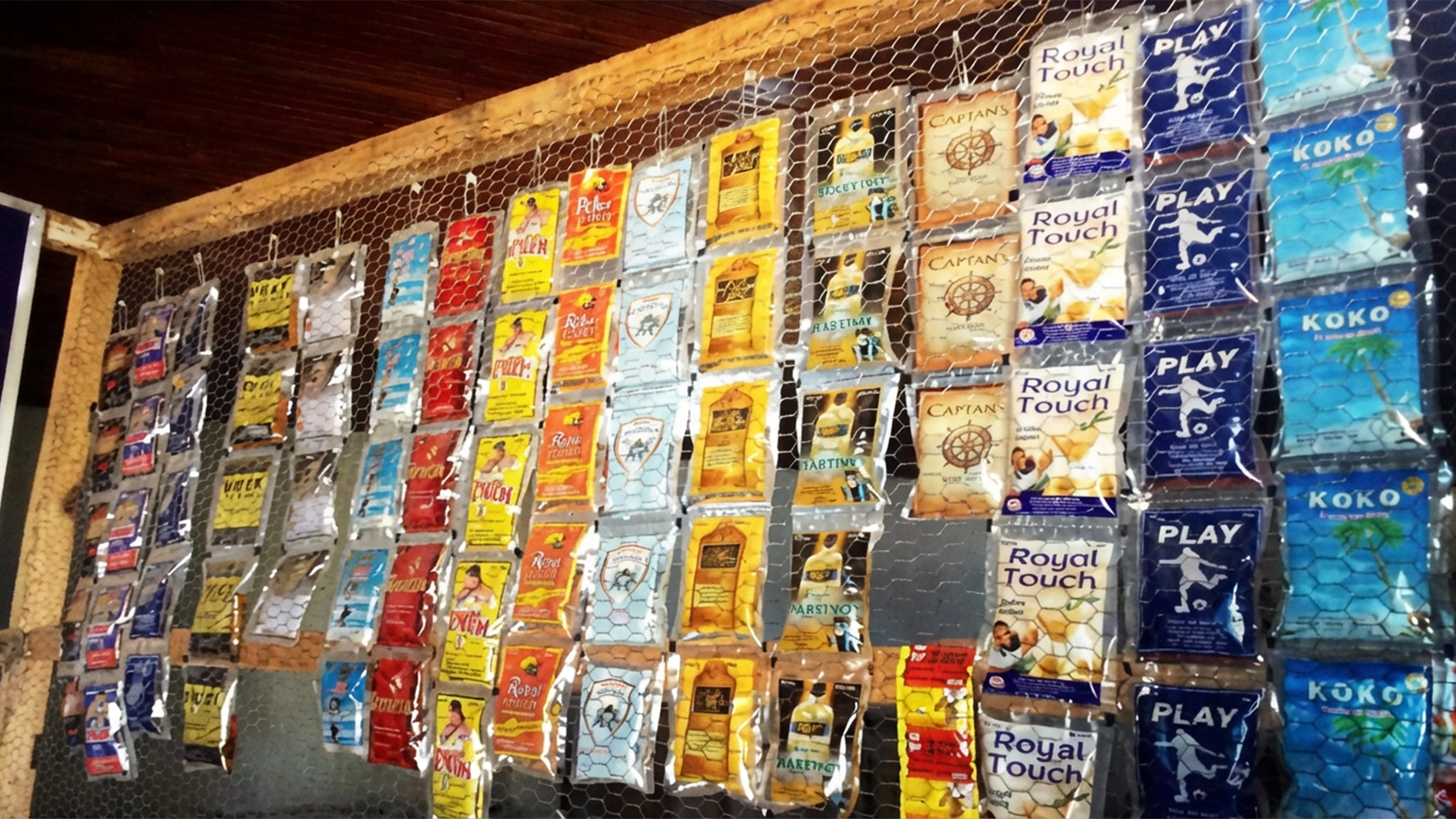
The Nigerian alcoholic beverage industry may be gradually emerging from the intense confrontation that followed the Federal Government’s renewed enforcement of the ban on sachet alcoholic drinks and small-volume containers.
But the policy continues to leave manufacturers and workers counting the cost of a major disruption to production.
President of the Food, Beverage and Tobacco Senior Staff Association (FOBTOB), Jimoh Oyibo, said the immediate tension between regulators and manufacturers on one hand and with organised labour was easing, following the reopening of sealed factories and the release of an arrested manager.
Oyibo, however, warned that the underlying challenges created by the policy were far from over, particularly as manufacturers are now being forced to restructure their production lines and rethink how to replace products that served a significant low-income consumer market.
The Federal Government’s policy prohibits the production, importation, distribution and sale of alcoholic beverages packaged in sachets and PET bottles below 200 millilitres.
NAFDAC had initially commenced enforcement in February 2024 after a sell-off period expired, but implementation was subsequently suspended amid opposition from manufacturers and labour unions.

The controversy resurfaced when NAFDAC announced that enforcement would resume, with the agency citing concerns about the accessibility of high-alcohol-content drinks to minors and other vulnerable groups.
Enforcement subsequently escalated into a confrontation between the regulator and workers in the sector, with FOBTOB and the National Union of Food, Beverage and Tobacco Employees (NUFBTE) protesting at NAFDAC’s Lagos office and later at the National Assembly over the policy and its implications for workers and the industry.
But Oyibo said labour’s involvement in the broader engagement with the Federal Government was limited because the union was not adequately carried along in the discussions between employers and government.
According to him, employers did not involve the union in the negotiation process, leaving workers’ representatives largely on the sidelines while decisions affecting their jobs and welfare were being discussed.
“The union was not carried along. At this point now, the union is just crossing their fingers and watching what is going to happen,” Oyibo said.
He explained that the union’s major interventions during the dispute were through its protests at NAFDAC offices and the National Assembly, rather than through direct participation in the negotiations that produced the current arrangement.
Oyibo said the union expected employers to eventually invite it to the negotiating table as manufacturers begin to restructure their operations and assess the impact of the policy on employment.
“I know too well that within the next few days or weeks or months, the employers are going to invite us for the meeting. And then, we should be able to agree on certain things,” he said.
According to him, the immediate priority should be ensuring that the companies survive the transition without creating unnecessary job losses.
“The important thing is that the companies should not go down the drain,” he said.
Oyibo said the immediate confrontation between regulators, manufacturers and workers was gradually easing, with factories that had been sealed reopened and an arrested manager released.
“Honestly, I think we are gradually getting over the issue. We can’t continue to drag one particular thing. We are not at peace. The agency is also not at peace,” he said.
He explained that stakeholders were now working towards ensuring that manufacturers and regulators were on the same page over the implementation of the policy.
However, the FOBTOB president said the financial consequences of the disruption were substantial.
According to him, removing the affected pack sizes from the market was effectively equivalent to shutting down an important part of the companies’ operations, given the role those products played in their production and distribution systems.
“From a financial point of view, the companies have lost substantially because taking out those key pack sizes is as good as closing the company,” he said.
Oyibo said manufacturers would now have to re-engineer their operations and invest in alternative pack sizes, a process that would take time and require additional capital.
The challenge, he noted, is that the smaller pack sizes were designed largely around affordability, meaning that replacing them with larger and more expensive alternatives could weaken demand.
“How many people are going to patronise those pack sizes? The essence of those small pack sizes is affordability. Now we are going to the sizes that people hardly patronise,” he said.
The consequences, he added, could eventually extend to employment, although he stopped short of predicting mass redundancies.
In November 2025, FOBTOB had estimated that more than 5.5 million direct and indirect jobs and over N2 trillion in investments could be exposed to the consequences of the ban.
Oyibo said the impact on workers would depend largely on how manufacturers respond to the policy and whether they are able to successfully redirect investment towards larger pack sizes.

