 Follow Us on Google News
 Follow Us on Google Discover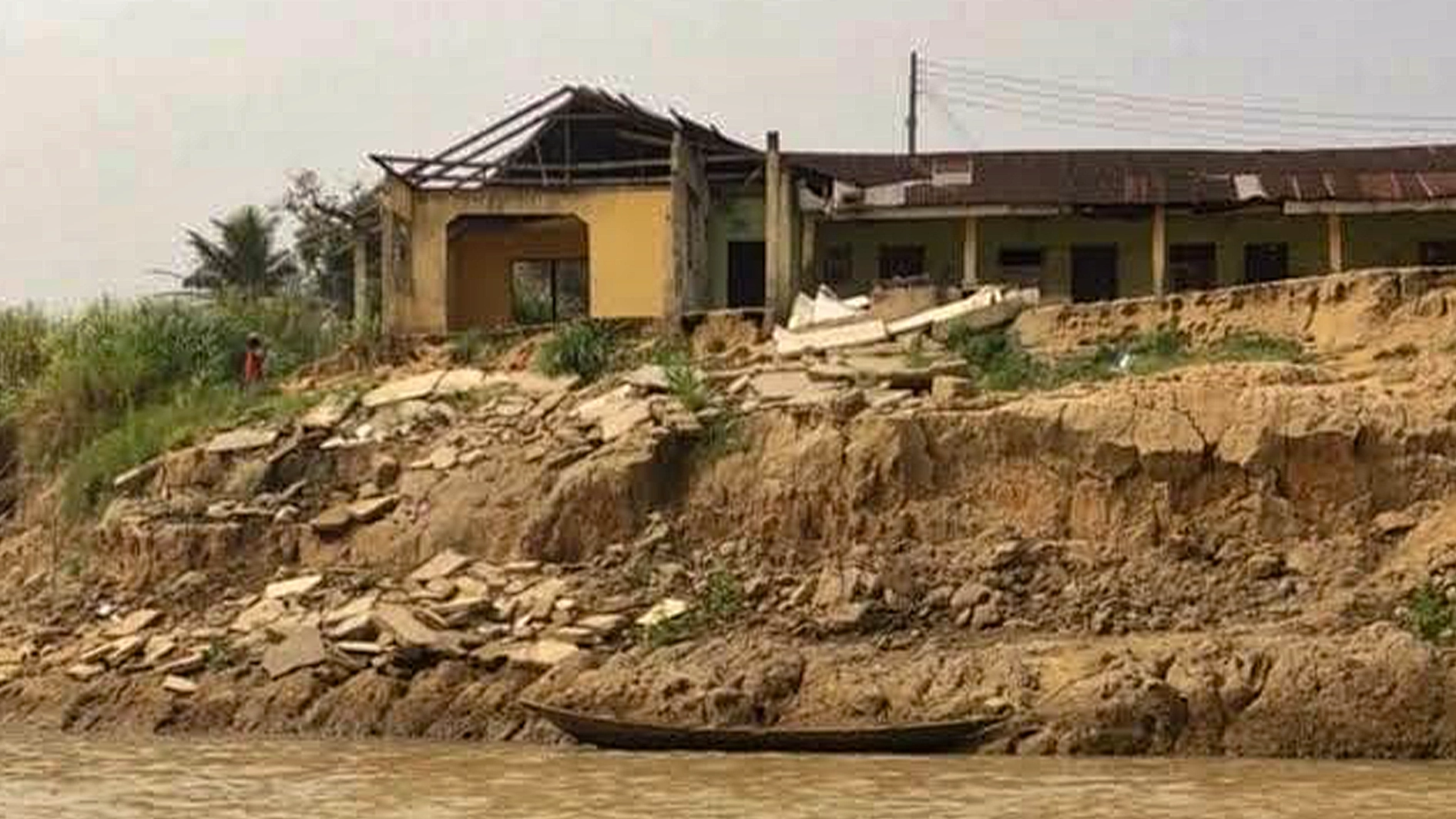
For residents of Onya community in Ndokwa East Local Council of Delta State, the River Niger is no longer just a source of livelihood. It has become an advancing threat, steadily swallowing homes, farmlands, schools and sites of ancestral significance.
Residents said the erosion along the riverbank, which has persisted for more than two decades, has reached an alarming level, with some sections of the shoreline reportedly losing as much as 10 metres of land yearly.
They warned that without urgent and professionally engineered intervention, the community could eventually be wiped out.
The President-General of Ndoshimili Development Union, Ike Onyenokwe, an engineer, described the situation as both an environmental and humanitarian crisis requiring immediate government attention.
Onyenokwe said the erosion had already consumed substantial portions of community land, leaving several houses and other structures dangerously close to the advancing shoreline.
He warned that continued inaction could lead to the extinction of the community, stressing that the scale of the destruction had gone beyond what residents could address through local efforts.

The community chairman, Owola Ndozi, said the destruction had become a painful recurring experience for residents, disclosing that several buildings had already been lost to the erosion.
Ndozi said part of his grandmother’s residence had been destroyed, while the community’s primary school had been rebuilt several times after previous structures were either swallowed by the river or rendered unsafe.
Residents also expressed concern about the movement of heavy oil barges along the River Niger, alleging that waves generated by vessels transporting crude oil from Okrigbome, Aboh and Okpai were worsening the destruction of the shoreline.
They claimed that as many as 20 barges sometimes passed along the shoreline in a single day, with some allegedly travelling at high speed.
According to them, the repeated waves generated by the vessels were destabilising the riverbank and compounding the natural erosion already affecting the community.
The Woman Leader of Onya, Janet Omuta, appealed to the government to intervene urgently before more homes and community assets were lost.
Omuta said several houses had already disappeared, adding that residents were increasingly living in fear of losing their ancestral homes.
Residents also lamented the community’s poor access to basic infrastructure, particularly its deteriorating road network, which they said had compounded the hardship caused by the erosion.
They disclosed that residents sometimes spend between N15,000 and N20,000 merely to connect with a motorable road towards Asaba-Ase.
The poor road condition, they said, makes it difficult to transport farm produce, access healthcare and education, and move people and goods in and out of the community.
The community appealed to the Federal Government, Delta State Government, Delta State Oil Producing Areas Development Commission (DESOPADEC), Niger Delta Development Commission (NDDC), National Emergency Management Agency (NEMA), oil companies and other relevant stakeholders to urgently intervene.
They specifically called for the deployment of qualified engineers and environmental experts to conduct a comprehensive assessment of the shoreline and design a durable shore-protection project capable of halting further erosion and protecting the remaining portions of the community.

