 Follow Us on Google News
 Follow Us on Google Discover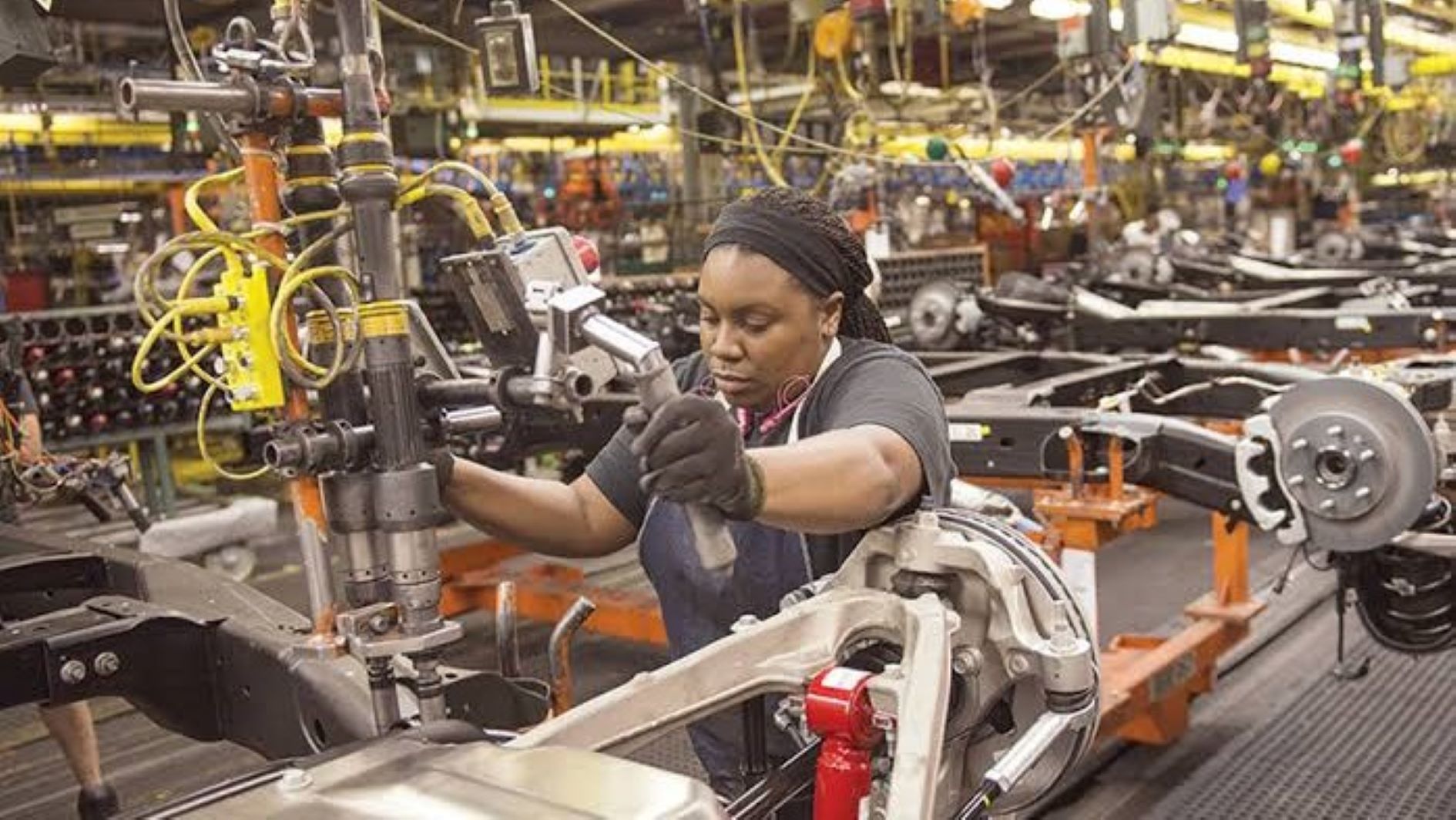
Despite the persistent crisis in power and logistics sectors, Nigeria’s economy grew by 4.43 per cent in real terms in the second quarter (Q2), 0.54 per cent above the growth rate in the first quarter.
The gross domestic product (GDP) report released yesterday by the National Bureau of Statistics (NBS) shows that in Q2, the economic growth was 0.2 per cent faster than it was in the corresponding quarter of 2025.

However, the growth in Q2 masks deterioration in some of the productive sectors, especially the industrial, electricity and gas supply sectors, which suffered a sharp contraction.
The dip in sectors that should be driving economic recovery raises questions on the extent to which the current economic reforms are translating into stronger productive capacity, cheaper and more reliable energy, increased manufacturing output and inclusive economic expansion.
According to the report, industrial sector growth slowed from 7.46 per cent in Q2, 2025 to 3.96 per cent in Q2, 2026.
But agriculture, a sector that has historically contributed about 30 per cent to national output, saw a growth of 4.39 per cent, up from 2.82 per cent year-on-year.
Services growth stood at 4.6 per cent, up from 3.94 per cent.
Experts said the slowdown in the industrial sector is significant because industrial expansion is central to job creation, manufacturing competitiveness, export diversification and reduction of the country’s dependence on imported goods.
More troubling was the performance of the electricity, gas, steam and air-conditioning supply sector.
The sector contracted by 10.63 per cent in real terms, compared with a growth rate of 11.47 per cent recorded in Q2.
The contribution of the sector to real GDP also fell to 1.05 per cent from 1.23 per cent a year earlier.
The figures present a major challenge for economic managers as reliable electricity remains one of the prerequisites for industrial and manufacturing expansion.
For manufacturers already dealing with high production costs, high logistics costs and weak consumer purchasing power, a contracting power sector suggests rising inefficiency of the sector.
The manufacturing sector offers another warning sign as it underperformed the 4.43 per cent average growth.
Although manufacturing recorded real year-on-year growth of 3.24 per cent, the figure was lower than its performance in Q1 2026 by 0.05 percentage points even as its contribution to real GDP declined to 7.72 per cent from 7.81 per cent in Q2 2025.
On a quarter-on-quarter basis, manufacturing contracted by 15.85 per cent.
The figures suggest that Nigeria’s economic recovery remains weak and shallow.
The oil sector provided some support to the economy during the quarter.
Average daily crude oil production increased to 1.72 million barrels per day in Q2, up from 1.68 million barrels per day in Q2 of 2025 and 1.55 million barrels per day in Q1. The oil sector grew by 7.31 per cent in real terms.
However, the pace of oil sector growth was substantially weaker than the 20.46 per cent recorded in Q2 of 2025.
The report shows that the oil sector accounted for only 4.16 per cent of total real GDP, compared with 4.05 per cent a year earlier.
The non-oil sector accounted for 95.84 per cent of real GDP in the quarter.
The non-oil economy grew by 4.31 per cent, compared with 3.64 per cent in Q2, driven mainly by agriculture, telecommunications, real estate, financial institutions, cement manufacturing and construction.
Trade, which was the single largest contributor to real GDP at 17.93 per cent, recorded only 2.4 per cent real growth.
Although that represented an improvement from 1.29 per cent in Q2, its contribution to real GDP declined from 18.28 per cent a year earlier.
Information and communications provided a brighter spot, expanding by 9.62 per cent in real terms and contributing 11.74 per cent to real GDP.

