 Follow Us on Google News
 Follow Us on Google Discover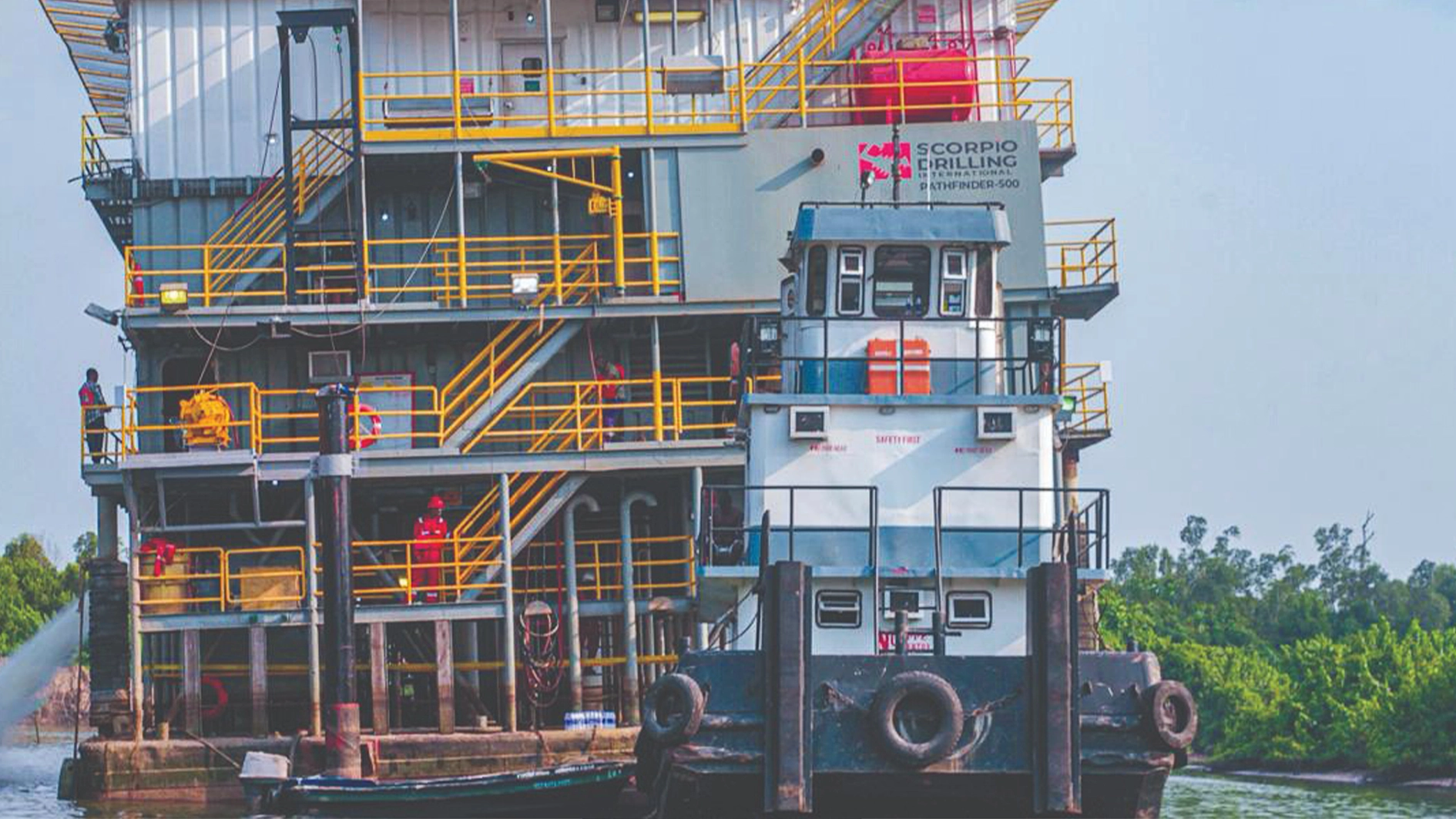
For years, Nigeria’s oil production story has been defined by the same familiar obstacles of ageing wells, delayed interventions, expensive foreign drilling rigs and declining output from mature assets. The successful deployment of Pathfinder 500 alongside a second rig, Scorpio 300, shows indigenous oil firms’ resilience in homegrown solutions. KINGSLEY JEREMIAH writes.
As the country pushes to restore oil production towards the two million barrels-per-day target, one question has persisted. Can indigenous operators provide the operational capacity needed to sustain the recovery? A recent milestone by Nestoil Group suggests part of the answer may lie not in discovering new oil fields, but in rebuilding Nigeria’s domestic drilling capacity. For some stakeholders, leveraging this quick win could help Nigeria unlock idle wells and incrementally boost oil production instead of merely waiting for the big projects.

The successful deployment of the Pathfinder 500 rig to carry out workover operations on two producing wells in Oil Mining Lease (OML) 42 represents more than another oilfield operation. It reflects a broader shift in Nigeria’s upstream industry, where indigenous companies are increasingly moving beyond ownership of oil assets to controlling the critical infrastructure required to keep those assets productive.
At a time when Nigeria’s oil production is showing its strongest recovery in years, the development raises an important question: could local drilling capacity become the missing link in sustaining higher production?
Nigeria’s crude production has steadily improved in 2026. The Nigerian Upstream Petroleum Regulatory Commission (NUPRC) recorded production rising from about 1.62 million barrels per day in January to around 1.70 million barrels by May, with June posting an even stronger performance. The regulator attributes the improvement to greater operational stability, fewer disruptions to oil infrastructure and the completion of planned maintenance. Yet beneath those encouraging numbers lies a more complicated reality. Many producing assets are mature fields inherited from international oil companies, requiring frequent workovers, well interventions and new in-field drilling simply to maintain output. Access to drilling rigs has often become one of the industry’s biggest operational bottlenecks.
Hiring rigs is expensive, mobilisation can take months and availability is often dictated by international market conditions rather than Nigeria’s production needs. For indigenous operators managing marginal and divested assets, those delays translate directly into lost barrels.
Against this backdrop, Nestoil’s Pathfinder 500 tells an unusual story. The rig had remained largely idle for roughly eight years after its acquisition, becoming a symbol of the difficulties facing indigenous investment in specialised oilfield equipment. Industry scepticism grew over whether it would ever enter productive service. That changed when Scorpio Drilling International, Nestoil’s drilling subsidiary, successfully refurbished, mobilised and deployed the rig to OML 42.
The operation involved workovers on two producing wells, was completed without any Health, Safety and Environment incidents, increased production from the asset and concluded with the rig’s safe return to base.
More importantly, it marked the first productive deployment of a drilling fleet that Nestoil hopes will become central to future redevelopment of OML 42. The Group invested about $28 million in acquiring the Pathfinder 500 alongside a second rig, Scorpio 300.
For Group Chairman, Dr Ernest Azudialu Obiejesi, the achievement validates a long-term investment strategy that many doubted would succeed.
Rather than depending entirely on hired rigs, the company sought to build in-house capability to revive older wells and eventually drill new ones as the field matures.
Unlike new oil discoveries, workovers rarely attract public attention. Yet they are among the quickest ways of increasing production. A workover involves repairing or restoring existing wells whose productivity has declined because of mechanical problems, reservoir changes or ageing equipment.
In mature fields such as OML 42, where much of the infrastructure already exists, successful workovers can deliver incremental production faster and at significantly lower cost than developing entirely new fields. That makes rig availability crucial.
Stakeholders have repeatedly argued that Nigeria’s production recovery depends not only on new investments but also on shortening intervention cycles across existing assets. Every month a producing well waits for a rig represents deferred production.
Perhaps the most significant aspect of the Pathfinder deployment lies beyond the equipment itself.
According to Nestoil, the entire refurbishment, mobilisation and operation were executed by Nigerian personnel without foreign technical support, with the rig crew comprising entirely Nigerian professionals. That represents an evolution in Nigeria’s local content journey.
For decades, the country’s localisation efforts focused largely on increasing Nigerian participation in contracts, engineering services and fabrication. The latest milestone suggests indigenous firms are beginning to take ownership of the assets themselves, from rigs to well services, while relying on Nigerian expertise to operate them.
Obiejesi argues that decades of training by international oil companies have produced a workforce capable of exporting drilling expertise beyond Nigeria. Whether that ambition scales nationally remains to be seen, but it aligns with broader policy objectives under the Nigerian Oil and Gas Industry Content Development Act.
Nestoil’s broader history helps explain why the development matters. Founded in 1991, the company has grown into one of Nigeria’s largest indigenous Engineering, Procurement, Construction and Commissioning companies, employing about 2,000 people directly.
Its expertise has traditionally centred on pipeline construction, dredging, pressure vessel manufacturing, and ship drydocking. Expanding into drilling represents a strategic extension of that capability. Through Neconde Energy, the Group holds interests in OML 42, while Scorpio Drilling International now operates both the Pathfinder 500 and Scorpio 300 rigs.
Having two operational rigs places the company among Nigeria’s relatively small pool of indigenous rig-owning operators, a distinction that carries significance in countries seeking to deepen domestic upstream capacity.
The larger question extends beyond Nestoil. Nigeria’s production recovery still faces persistent challenges, including oil theft, pipeline vandalism, ageing infrastructure, financing constraints and regulatory execution. Those structural issues cannot be solved by additional rigs alone. However, greater indigenous control over drilling infrastructure addresses one of the industry’s most practical bottlenecks.
As international oil companies continue divesting onshore assets, local operators increasingly carry responsibility for maintaining production across mature fields. Success will depend on whether more Nigerian companies can build similar operational capabilities rather than relying heavily on imported services.
The Pathfinder 500’s first productive deployment therefore offers a useful lesson. Sometimes the fastest route to higher national production is not discovering new reservoirs. It is ensuring that the wells already capable of producing never have to wait years for the tools needed to keep flowing. If replicated across Nigeria’s ageing upstream assets, that lesson could prove more valuable than the extra barrels it produced.

