 Follow Us on Google News
 Follow Us on Google Discover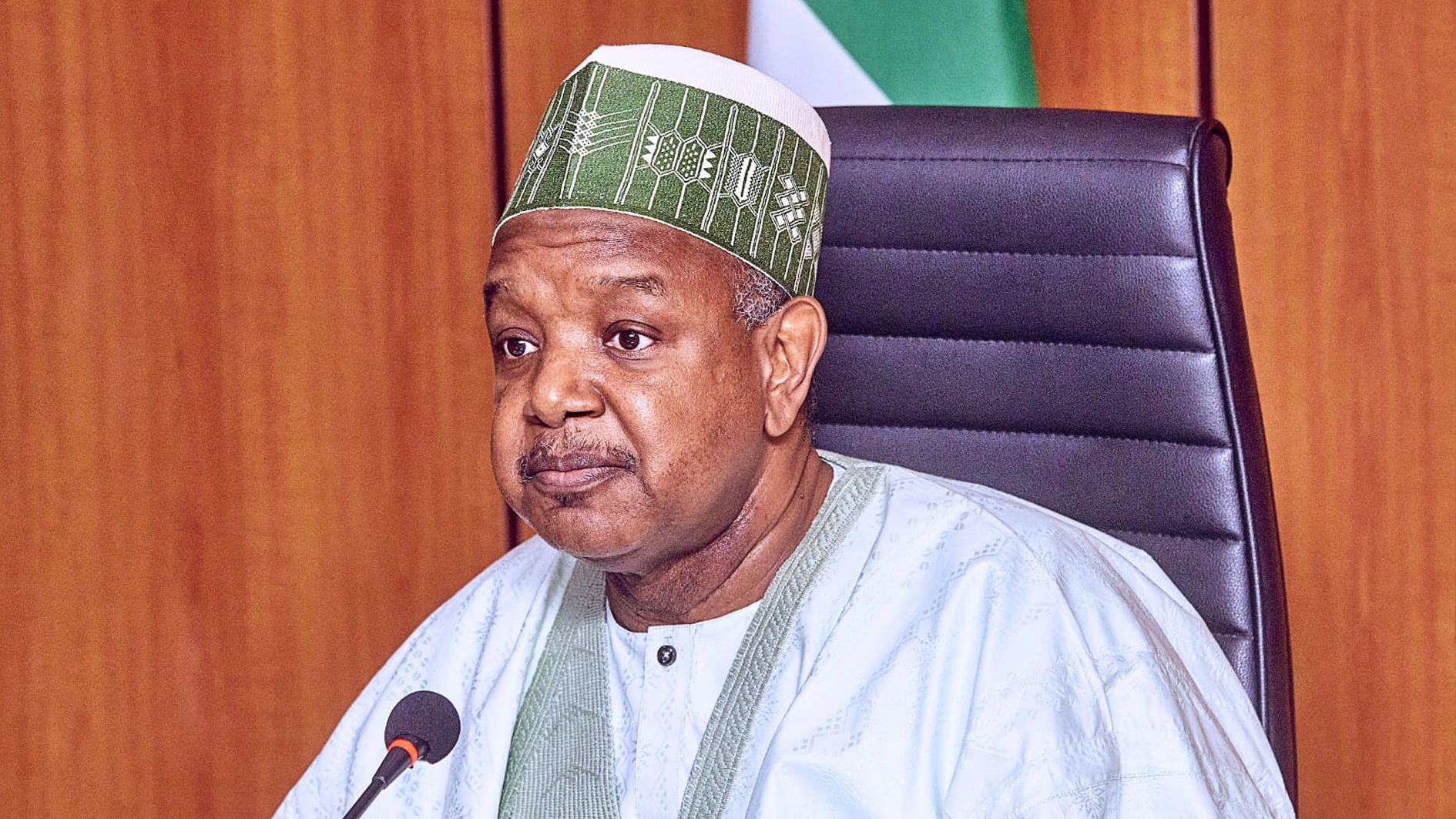
The Federal Government has set a $1 trillion economy target for 2030, putting President Bola Ahmed Tinubu’s far-reaching economic reforms under mounting pressure to translate increased government revenues into higher production, jobs, investment and improved living standards.
Minister of Budget and Economic Planning, Senator Abubakar Atiku Bagudu, acknowledged that the removal of petrol subsidy and the foreign exchange reforms had triggered significant economic turbulence and intensified hardship for Nigerians, but argued that the measures had also expanded the fiscal capacity of the three tiers of government.
Bagudu, however, made clear that higher revenues alone would not amount to economic transformation, insisting that states and local governments must deploy their increased resources to productive activities capable of expanding economic output.
The minister spoke at the Federal Appointees Strategic Summit on Presentation and Review of Ministerial and MDAs Budget Implementation, where he challenged government officials to demonstrate measurable results from the administration’s reform programme.
The development comes as the Tinubu administration seeks to move the economy beyond fiscal stabilisation towards rapid expansion, with the $1 trillion gross domestic product ambition by 2030 emerging as a major benchmark for the success of its economic programme.
Bagudu said the government had not fully anticipated the scale of economic turbulence that followed the reforms, which was compounded by global uncertainties, geopolitical conflicts, food-price pressures and disruptions to international trade.

But he argued that the resulting increase in revenues available to the Federal Government, states and local governments represented an important structural change in Nigeria’s public finances.
“Rather than keeping additional revenues at the centre, the President has taken the position that we should give local governments and states more money and energise everyone so that we can interrogate and fulfil our responsibilities,” he said.
The minister’s position effectively shifts part of the burden of delivering economic growth from the Federal Government to the states, which have received stronger allocations following changes in federation revenues.
Bagudu said the additional fiscal resources should translate into better infrastructure, education, security, productive investments and public services.
The argument is that increased allocations must ultimately produce economic activity rather than merely finance recurrent expenditure.
He recalled periods when some states struggled to pay salaries despite relatively high international oil prices, leaving governments with limited resources for infrastructure and other development priorities.
He also cited Federal Government interventions aimed at addressing outstanding financial obligations to states, saying the measures were intended to strengthen the federation’s overall fiscal capacity.
But with the administration now targeting a $1 trillion economy, the bigger economic question is whether the additional fiscal space can be converted into higher productivity and private-sector investment rather than simply larger government spending.
Bagudu said improvements in some economic indicators, including the revenue-to-GDP ratio, indicated that the reforms were beginning to strengthen Nigeria’s fiscal foundations.
He also defended the administration’s tax reforms, saying they were designed to improve efficiency in revenue collection rather than unnecessarily increase the burden on citizens.
However, he warned against treating the emerging fiscal gains as the end of the reform process.
According to him, President Tinubu has repeatedly challenged members of his administration to ensure that reforms ultimately produce tangible benefits for Nigerians.
That challenge is particularly significant given the scale of the administration’s economic ambition.
Bagudu said the $1 trillion economy target by 2030 was ambitious but achievable if the key elements of the National Development Plan were effectively implemented.
He stressed that expansion of the economy must be inclusive, generate opportunities, reduce poverty and improve living standards.
The minister said the National Economic Council had increasingly focused on encouraging states to expand domestic production and build stronger productive economies.
He argued that increased allocations would have limited impact if governments failed to invest in activities capable of increasing output and creating sustainable economic opportunities.
The call comes at a critical point for Nigeria’s sub-national governments, which now have greater fiscal resources but also face intense pressure from citizens over the cost of living, unemployment, infrastructure deficits and declining purchasing power.
Bagudu said the Federal Government expected states to use their resources to stimulate production and strengthen their local economies.
He also rejected claims that Federal Government expenditure was structured to favour particular regions, saying spending on security, infrastructure and livelihood support was designed as national intervention.
According to him, security expenditure supports communities affected by insecurity, while infrastructure investment is intended to improve connectivity, facilitate commerce and widen economic opportunities.
Bagudu therefore tasked federal appointees with documenting government projects and deliverables and communicating their impact to Nigerians, particularly those outside Abuja.
He said government officials must be able to explain not only the immediate pain associated with the reforms but also the economic changes being pursued to establish a more sustainable fiscal and economic framework.

