 Follow Us on Google News
 Follow Us on Google Discover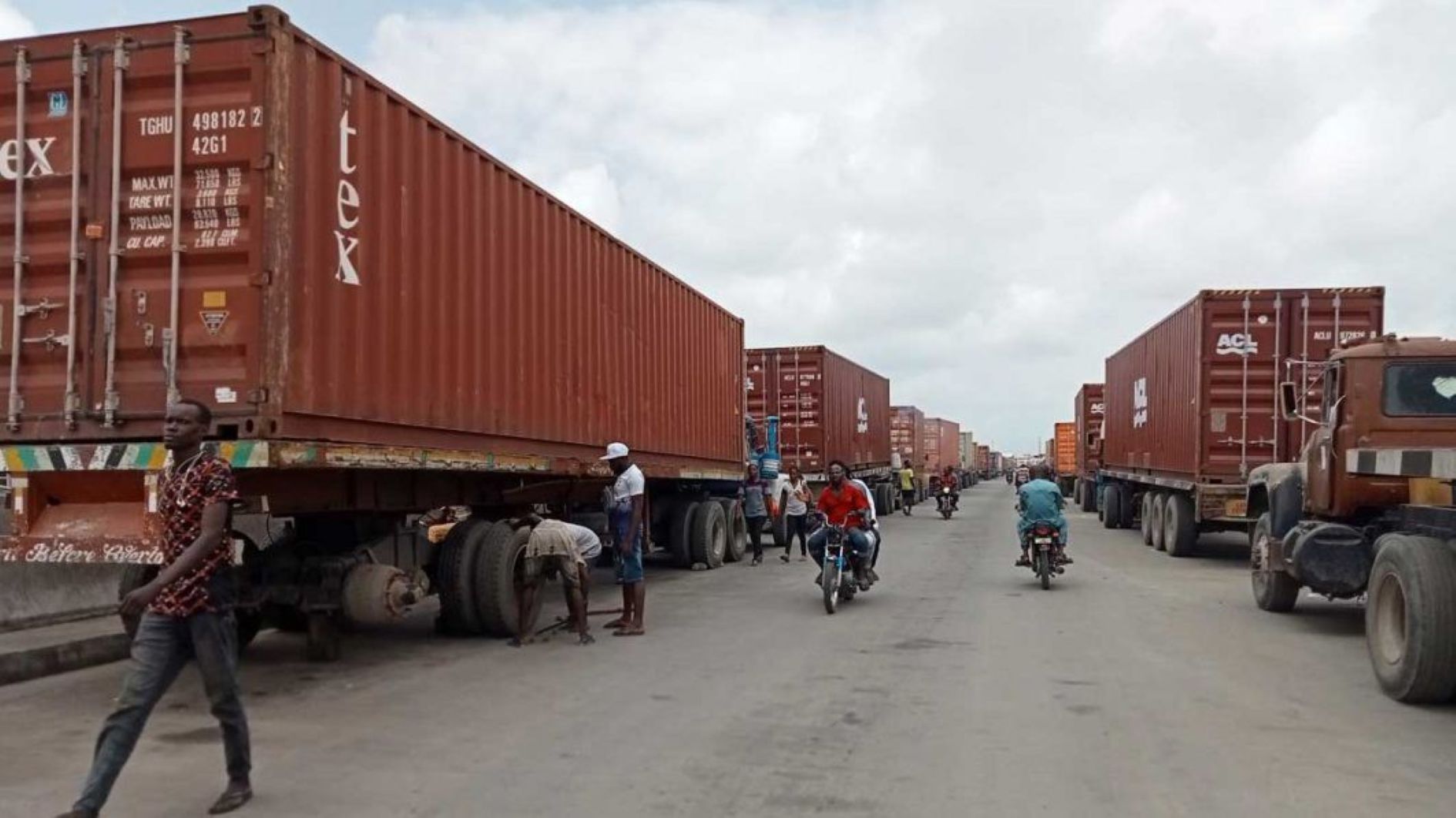
The Federal Government’s port modernisation must be measured by tangible improvements in cargo movement, turnaround times, logistics costs, tariff structure, efficient hinterland connectivity and export capacity, rather than the volume of money spent on infrastructure, stakeholders have said.
According to the stakeholders, Nigeria controls over 70 per cent of cargo destined for Africa, but loses it to neighbouring countries’ ports due to the expensive trading system and cumbersome regulations.
They spoke against the backdrop of growing concerns over port costs, congestion, cargo evacuation and the competitiveness of Nigerian ports at the 2026 Maritime Lecture of the Maritime Reporters Association of Nigeria (MARAN), held in Lagos.
Delivering the keynote address, the Special Adviser to President Bola Tinubu on Policy Coordination and Head, Central Delivery Coordination Unit, Hadiza Bala Usman, said the country could only attract regional and international cargo by integrating infrastructure, technology, regulation, security, tariffs and hinterland connectivity.
She noted that reports of the cost of clearing a standard 20-foot container through Apapa reaching about N14 million to N15 million, compared with lower costs at some competing West African ports, should concern policymakers.
Usman, a former Managing Director of the Nigerian Ports Authority (NPA), said the total cost comprises several different charges, including statutory port tariffs, terminal handling charges, shipping-line charges, detention, demurrage, haulage, documentation and clearing costs.

“Charges cannot remain frozen indefinitely while infrastructure deteriorates, but neither can users be required to pay any amount demanded. Tariffs must be linked to value and performance,” she said.
She said eliminating duplicated and obsolete charges and regulatory interventions would significantly reduce the cost of doing business at Nigerian ports.
The former NPA boss called for a comprehensive review of Nigeria’s port tariff structure, arguing that the focus should shift from individual charges to the total cost of moving cargo through the Nigerian supply chain.
Usman also called for a predictable, transparent and performance-based tariff regime, with tariff adjustments supported by published methodologies, international benchmarks and measurable improvements in service delivery.
She further advocated the publication of a yearly Port Economic Performance Report covering vessel and truck turnaround times, cargo-handling productivity, equipment availability, customs clearance, total logistics costs, digital transactions, export connectivity, customer satisfaction and dispute-resolution timelines.
In his address, Minister of Marine and Blue Economy, Adegboyega Oyetola, represented by the General Manager, Corporate and Strategic Communications, NPA, Seyi Iyawe, said the Federal Government was pursuing an ambitious programme, which included port modernisation, stronger regulation, improved maritime security, deep-sea port development, digitalisation and efficiency to make the country’s maritime sector investment-friendly and globally competitive.
Oyetola said the objective was to create ports that could move cargo, accommodate larger vessels, reduce turnaround time and lower the cost per unit of cargo handled.
The minister also cited investments in modern marine crafts, including tugboats, mooring boats and pilot boats, as part of measures to improve vessel movement, safety and operational efficiency.
Also speaking, Executive Director, Operations and Technical, Tantita Security Services Nigeria Limited, Dr Warredi Enisuoh, advised the Federal Government to adopt a broader approach to port modernisation that incorporates cargo evacuation, road infrastructure, rail, inland waterways, truck management and the reduction of multiple checkpoints and collection points.
He cited the Port of Lomé in Togo as an example of how strategic investment in deeper channels and streamlined processes could enhance a port’s competitiveness.
Enisuoh noted that the growth in vessel sizes globally made deeper ports increasingly important, observing that some modern container ships now have capacities of over 20,000 TEUs, far beyond the capacity of many traditional ports and anchorages in Africa.
He argued that Nigeria must urgently deepen and expand its port infrastructure to accommodate larger vessels and compete effectively with neighbouring maritime gateways.

