 Follow Us on Google News
 Follow Us on Google Discover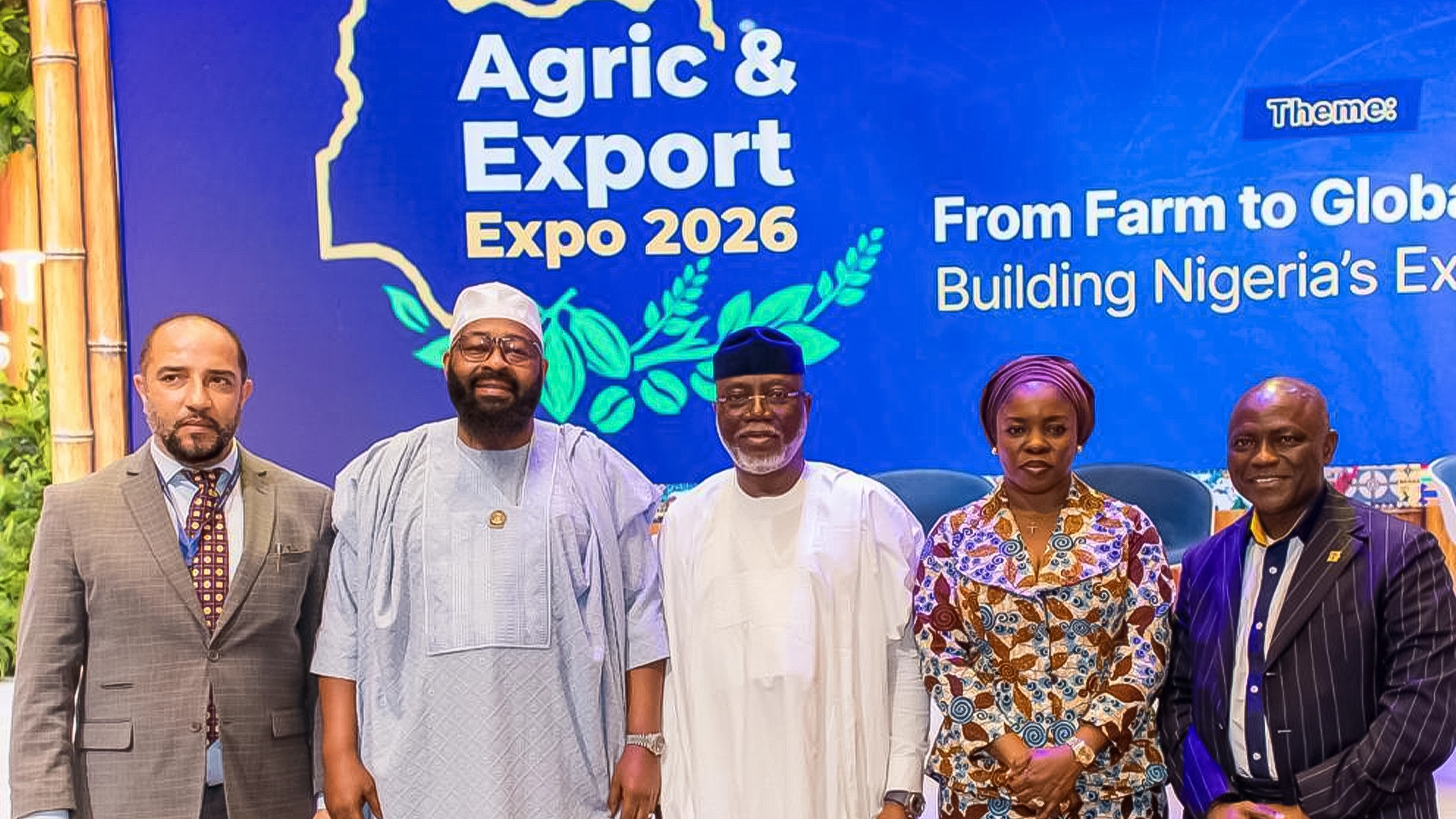
FirstBank Group and the governors of Lagos, Ondo and Niger States have outlined investments across the agricultural value chain to reduce Nigeria’s dependence on food imports at the fifth edition of the bank’s Agric and Export Expo in Lagos.
The two-day event, themed, “From Farm to Global Markets: Building Nigeria’s Export Value Chain,” attracted more than 2,000 participants and 100 exhibitors focusing on strengthening domestic production and moving agricultural commodities from farms to local and international markets.
FirstBank Group’s Chief Executive Officer, Olusegun Alebiosu, said the bank’s support for agribusinesses over the past two decades would continue, with greater focus on value addition across the agricultural value chain.
Addressing delegates, Lagos State Governor, Babajide Sanwo-Olu, represented by the Commissioner for Agriculture and Food Systems, Abisola Olusanya, said financial institutions must tailor their funding models to the operating realities of agribusiness if Nigeria is to unlock the sector’s economic potential.
“A good harvest without financing cannot become a good business, and a good product without access to markets cannot become a successful export. Our financing structures must recognise the realities of agriculture, including planting and harvest cycles, rather than imposing conventional short-term financing models on long-term agricultural businesses. This is an area where institutions such as FirstBank can make a transformative difference,” Sanwo-Olu said.
He also called for greater local value addition by agro-processors, warning that exporting raw commodities limits the economic benefits Nigeria can derive from its agricultural resources. He said the state was investing in infrastructure, including the Lekki Deep Sea Port and the Lagos Rice Mill, to support agricultural processing and trade, positioning the Lagos as a gateway for agricultural exports under the African Continental Free Trade Area.

Niger State Governor, Mohammed Bago, said Nigeria’s food import bill which has already exceeded $3 billion this year, could hit $4 billion by December, stressing the need to strengthen domestic food production before focusing on exports.
“We need to develop our local market. We need to feed ourselves. Food sovereignty is very paramount,” he said.
Bago said Niger State had established a special purpose vehicle to drive agricultural investments outside the bureaucracy of government. He said the vehicle had secured a $100 million financing line from Saudi EXIM Bank, guaranteed by Saudi dairy company, Almarai, for irrigation and livestock feed production.
The governor also said the state was developing a greenhouse complex at Minna Airport City in partnership with a Turkish firm with plans to produce flowers and fruits for export to markets including Russia.
Bago cited sugar production as another area where Nigeria could reduce import dependence, saying the country imports 97 per cent of its sugar consumption despite the availability of sugarcane in parts of Niger State. He also highlighted the productivity gap in livestock production, saying dairy cattle on his farm produced about 40 litres of milk daily, compared with an average of one litre from a typical Fulani-herded cow.
Bago linked Nigeria’s food deficit to insecurity, arguing that states with strong irrigation and farming activities recorded less banditry because agricultural activity reduced the space available for criminal operations. He also raised concerns about Nigeria’s wider trade imbalance structure, saying imports account for about 80 per cent of the country’s trade against 20 per cent exports, far from the 70-30 export-import ratio he considered ideal.
Brazil’s Consul-General in Lagos, Ronaldo Vieira, drew on his country’s two-century agricultural journey to make a similar point, saying sustained growth in agro-exports comes from government, researchers, financiers and farmers working in tandem rather than in isolation.
The Ondo State Governor, Lucky Aiyedatiwa said his administration was working to move farmers beyond raw cocoa production to processing and value addition. He said the state had distributed more than two million cocoa seedlings this year and established a steering committee to help farmers comply with new European Union deforestation regulations, which could affect access to premium markets.
Alebiosu said the partnership FirstBank was building with the state governments and private investors would need to extend beyond the exhibition itself with the bank focused on supporting farmers and processors to export finished products rather than raw commodities.
“It’s a partnership that endures, and a partnership that supports economic development,” he said, adding that the bank would continue working with states to narrow the gap between Nigeria’s food import bill and its agricultural production potential.

