 Follow Us on Google News
 Follow Us on Google Discover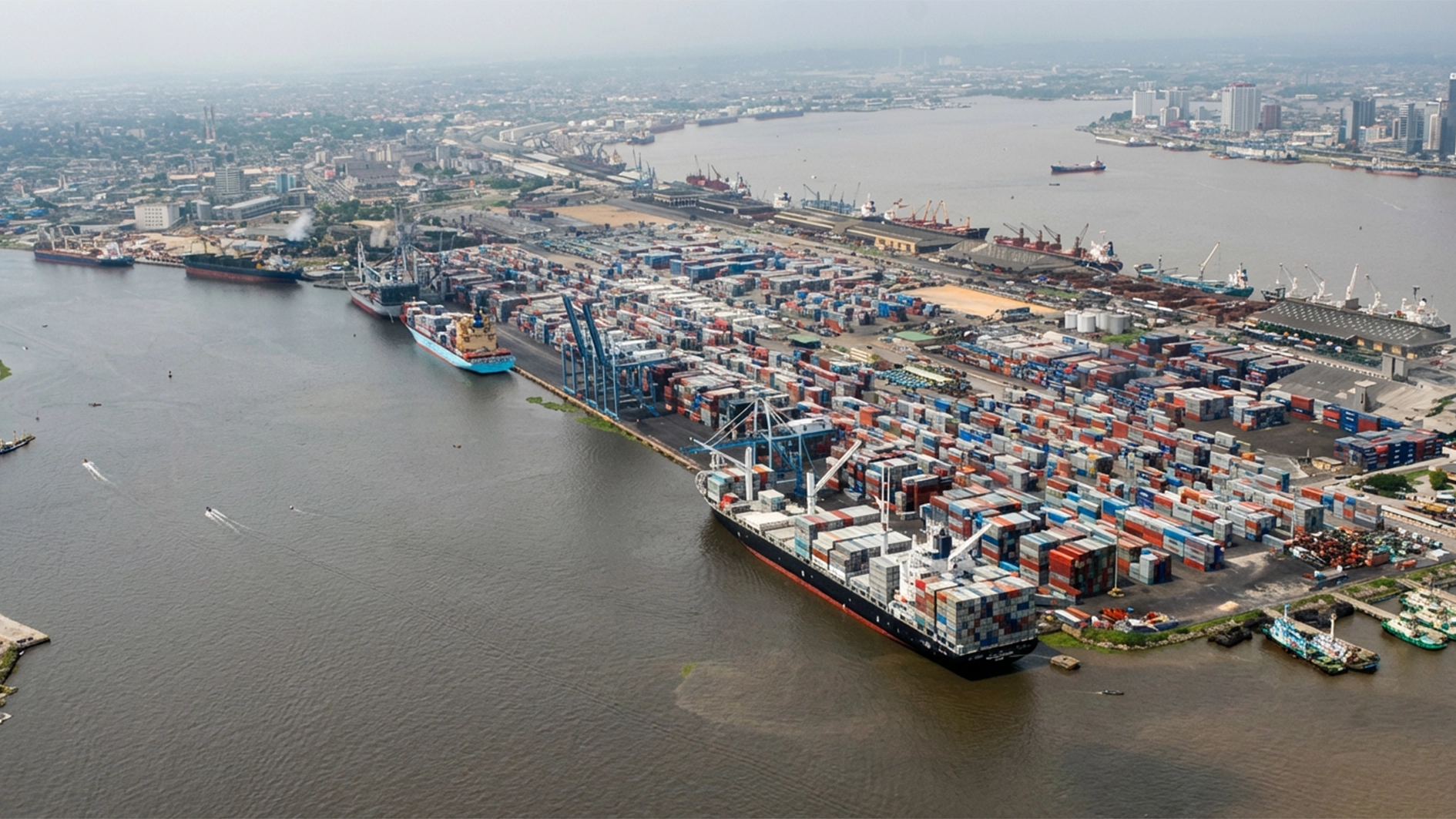
Nigerian shipping capacity may struggle to capture the global market due to weak cabotage law enforcement, the Federal Government’s inability to secure cargo for indigenous operators, and limited financing for acquisition. These challenges might leave beneficiaries of the Cabotage Vessel Financing Fund (CVFF) in debt and unable to repay, ADAKU ONYENUCHEYA reports.
Nigeria may not compete in the global shipping industry and lose out on the maritime freight transport market estimated to hit $632.36 billion in 2026, despite controlling over 80 per cent of the cargo destined for Africa.
According to a recent analysis by Mordor Intelligence’s Global Maritime Freight Transport Market, the industry size, valued at $599.78 billion in 2025, is expected to reach $823.57 billion by 2031, at a Compound Annual Growth Rate (CAGR) of 5.43 per cent.
Already, the country is losing an estimated $8–$9 billion yearly to foreign shipping lines due to its absence in international maritime trade, since the Nigerian National Shipping Line (NNSL) was liquidated 31 years ago.
Nigeria currently does not have a national carrier. The government encouraged private participation in the shipping industry with the Coastal and Inland Shipping (Cabotage) Act, 2003 to protect and grow indigenous tonnage.
The Federal Government went further by establishing the Cabotage Vessel Financing Fund (CVFF), managed by the Nigerian Maritime Administration and Safety Agency (NIMASA).

The CVFF is a two per cent surcharge on contracts awarded to Nigerian vessels, to help indigenous shipowners buy ships, build local shipping capacity, create jobs, and stop the billions lost to foreign vessels.
However, 23 years after the Cabotage Act, Nigeria has yet to develop local shipping capacity and is missing out on the global freight market, even as it continues to record capital flight annually.
The Nigerian Ports Authority (NPA) Operational Performance Review recorded 4,477 vessels that called at the country’s ports for import and export activities in 2025, with about 1,201 vessels already recorded in the second quarter of 2026.
However, all the vessels are foreign-owned, while Nigerian shipowners continue to struggle to compete in the market and retain freight earnings within the country.
More worrisome is that foreign vessels are also capturing the freight generated by the Dangote Refinery’s expanding operations, transporting refined petroleum products to markets across Africa, Europe and beyond.
This has further heightened concerns about Nigerian shipowners’ inability to compete, as they lack the vessels and financial capacity required to participate meaningfully in the lucrative trade.
That shift carries direct implications for shipping volumes, port throughput, marine logistics, storage and vessel demand.
This formed the discourse at the Nigerian Chamber of Shipping (NCS) Members’ Evening, held in Lagos and themed ‘A Public–Private Dialogue: Unlocking Efficiency in the Marine and Blue Economy Value Chain’.
The event brought together representatives of government departments and agencies, captains of industry, shipowners, port and terminal operators, maritime professionals, service providers, academia, and other stakeholders in the maritime logistics chain.
Issues of particular concern raised at the event were the delayed CVFF disbursement to beneficiaries, the government’s inability to provide cargo guarantees, and insufficient financing for vessel purchases to compete efficiently.
Lack of cargo guarantee
Indigenous shipowners have waited for over 20 years to receive the CVFF but have failed to qualify for the funds due to a failed credit assessment by their primary lending institutions.
The Guardian learnt that the requirements from banks included long-term contracts and cargo guarantees, which demonstrate cash-flow viability and provide assurance that the financed vessels or businesses would have sufficient cargo to generate revenue.
However, given the state of cargo insecurity for indigenous operators, the CVFF fund may not move the needle, considering the sector’s illiquidity.
Stakeholders expressed concern that the fund would only increase borrowers’ liabilities and leave beneficiaries indebted due to failure to repay their debts.
Shipowners and maritime lawyers are also worried that there are no contracts or cargo guarantees for indigenous shipowners, as the NNPC Ltd and Dangote jobs are given to foreigners, while local operators are left to subsist.
The Guardian understands the government does not prioritise local firms in contract awards. This leaves foreign firms grabbing most of the lucrative jobs that would keep local operators afloat.
This is despite the cargo reservation provision for Nigerian shipowners in the Cabotage Act 2003.
Senior Partner and Head of the Arbitration and Alternative Dispute Resolution (ADR) Practice Group at Olisa Agbakoba Legal, Dr Olisa Agbakoba, stressed that the absence of cargo for vessel owners was a major reason commercial banks were reluctant to finance applicants under the CVFF, despite the availability of funds within the banking system.
Agbakoba said many qualified shipowners could not secure the cargo commitments required by banks to demonstrate their ability to repay loans, urging the NIMASA Governing Board to use the cargo reservation provisions of the Cabotage Act to establish a stronger link between vessel financing and cargo availability.
Drawing comparisons with the United States, the Senior Advocate of Nigeria pointed to the long-standing U.S Cargo Preference Act of 1904, which reserves certain cargo and maritime trade for American vessels, as an example of how government policy could be used to build domestic shipping capacity.
Agbakoba also argued that major maritime nations had historically protected their domestic shipping industries, stressing that Nigeria should similarly use government policy to create guaranteed cargo opportunities for indigenous shipowners rather than relying solely on direct government funding.
Also, a maritime lawyer and Shipowner, Dada Labinjo, told The Guardian that current disbursement plans risked plunging indigenous shipowners into generational debt, as they fail to consider the realities of the Nigerian maritime sector.
Labinjo analysed the financial pressure faced by shipowners, saying: “While shipowners secure the $25 million to purchase a vessel, they are left with expenses such as crew salaries (N4 million monthly for 10 crew members on a small vessel).
“For charter, a vessel has a maximum of N5 million per trip, with up to three charters monthly, generating about N12 million.
“The vessel also spends on food supplies for the crew, which is between N1 million and N1.5 million monthly, while for bunker fuel, it is approximately N4 million to N5 million monthly, regardless of activity.
“The vessel also undergoes maintenance and servicing, which costs around N5 million monthly. Freshwater supply, a necessity, costs N400 million per tonne, with a small vessel requiring 20 tonnes.”
For berthing fees, Labinjo explained that at the Naval Dockyard, berthing costs about N187,000 daily, amounting to about N5.6 million for a month of inactivity.
Even if a vessel secures work after a period of idleness, the debt accumulated during downtime often takes at least a year to clear, he noted.
“Now, imagine if your ship has no job for three months or six months, which happens. That is why you have ships parked at Marina, Kirikiri and Port Harcourt with no jobs.
“Assuming in the following month you have a job, all these bills will also come in. But what about the outstanding ones? You will start paying for them little by little. It will take you about one year to liquidate them and be free. Unless you want to go and do illegal bunkering,” he stated.
Former President of the African Shipowners Association (ASA), Nigeria, Ladi Olubowale, explained the major challenge confronting shipowners was not only the cost of acquiring vessels, but also the availability of cargo to support financing and operations.
He said the country could capture significant value from the movement of crude oil and other cargo from its terminals if Nigerian shipowners were supported with cargo commitments and financing structures that would enable them to acquire vessels.
He said access to cargo and bankable contracts was critical to building a competitive indigenous shipping fleet.
According to Olubowale, Nigeria was losing about $70,000 revenue from the daily movement of crude oil from terminals including Forcados, Bonny and Escravos, arguing that the volume of cargo generated by the country’s oil industry could support the development of a Nigerian-owned fleet.
Olubowale urged major cargo owners, particularly large industrial operators, to provide long-term cargo commitments to indigenous shipping companies through contracts of affreightment (COAs).
He posited that such contracts would give indigenous shipowners the confidence and financial backing needed to secure vessels, even where domestic banks were unwilling or unable to provide adequate financing.
$25 million not enough
The cost of ocean-going vessels for maritime trade depends on the type, age, size, and whether they are newbuild or secondhand.
A good international trading vessel costs between $50 million and $300 million, according to industry analysts.
President, Nigerian Chamber of Shipping, Aminu Umar, stressed that existing financing arrangements were inadequate to enable indigenous shipowners to acquire the vessels required for major cargo operations in the country.
Umar said the vessels required for such operations were huge and required hundreds of millions of dollars in capital, thereby raising the question of how operators could acquire them when the maximum CVFF financing available to them was $25 million.
He also disclosed that vessels currently used by operators to move export cargoes within the West African region cost about $50 million for smaller vessels.
The NCS President said improved access to finance was critical if indigenous operators were to take advantage of the growing demand for shipping services, particularly as the number of vessels required for cargo operations at the Dangote refinery increases.
Strict cabotage act enforcement
The strict enforcement of the cabotage law and effective implementation of cargo reservation provisions would strengthen Nigerian-owned vessels and ensure the success of the CVFF.
Umar argued that providing financing without guaranteeing cargo for indigenous operators would not sufficiently develop the nation’s shipping capacity.
The NCS President cited an experience involving one of his company’s vessels to demonstrate the economic consequences of weak enforcement of cabotage regulations.
According to him, the vessel had loaded cargo from Haifa, Israel, for discharge at Nissi, a port in the eastern Mediterranean region of Turkey, when it developed engine problems after arriving in Turkish waters.
Umar said the company was required to transship the cargo, but could not secure a Turkish-owned or Turkish-flagged tanker because of Turkey’s strict cabotage regime.
He said the Turkish authorities do not entertain requests to bring in a foreign-owned or foreign-flagged vessel for the operation on their waters, noting that the company eventually had to wait from September until December before the cargo could be transshipped, resulting in losses of not less than $2 million.
Umar also drew a comparison with the United States, where the Jones Act restricts certain domestic maritime activities to qualifying American vessels, arguing that Nigeria could achieve similar benefits for indigenous shipowners if the cargo reservation provisions contained in its cabotage law were enforced.
Private sector to cut high cost
The high freight rate and demurrage from port delays have pushed Dangote Group to seek its own solution.
The Group Vice President, Oil and Gas, Dangote Petroleum and Petrochemicals, Devakumar Edwin, said the decision of the company to acquire its own fleet of bulk carriers and oil tankers was to reduce freight costs, minimise shipping delays and strengthen the movement of crude oil, petroleum products and fertiliser.
According to him, this follows the company’s experiences of persistent delays in cargo handling, vessel availability and port clearance, which he said had continued to impose high costs through demurrage and other logistics expenses.
Edwin said the company had also encountered major logistical challenges during the construction of its industrial facilities, particularly delays in moving imported equipment from Nigerian ports to project sites.
He recalled that during the construction of one of the group’s cement plants, a specialised piece of equipment could not be moved because the only low-loader in Nigeria capable of handling it was tied to another contract.
The equipment eventually had to be moved by barge to an area outside Lagos, where it remained for about one-and-a-half years before it could be deployed, he explained.
Edwin said the group would commence negotiations in China for the vessels’ construction, adding that the initial acquisition would be on a modest scale, with plans to expand the fleet as operations grow.
He stated that the company had deliberately designed its Single Point Mooring System (SPMS) to accommodate some of the world’s largest vessels, allowing them to discharge or load cargo quickly and thereby reduce exposure to demurrage.
The Dangote executive explained that the facility was designed so that even a Very Large Crude Carrier (VLCC) could discharge within a day, while the largest product carriers could similarly complete loading within a day.
“We have not concluded any clear thoughts on how many vessels we are going to acquire, and how the funding is going to go. You know, the secondhand vessels are relatively cheaper, but we are looking at new vessels.
“That is why we want to go to China, negotiate with the shipbuilders, and order the vessel. The delivery time must be at least three years,” he stated.

