 Follow Us on Google News
 Follow Us on Google Discover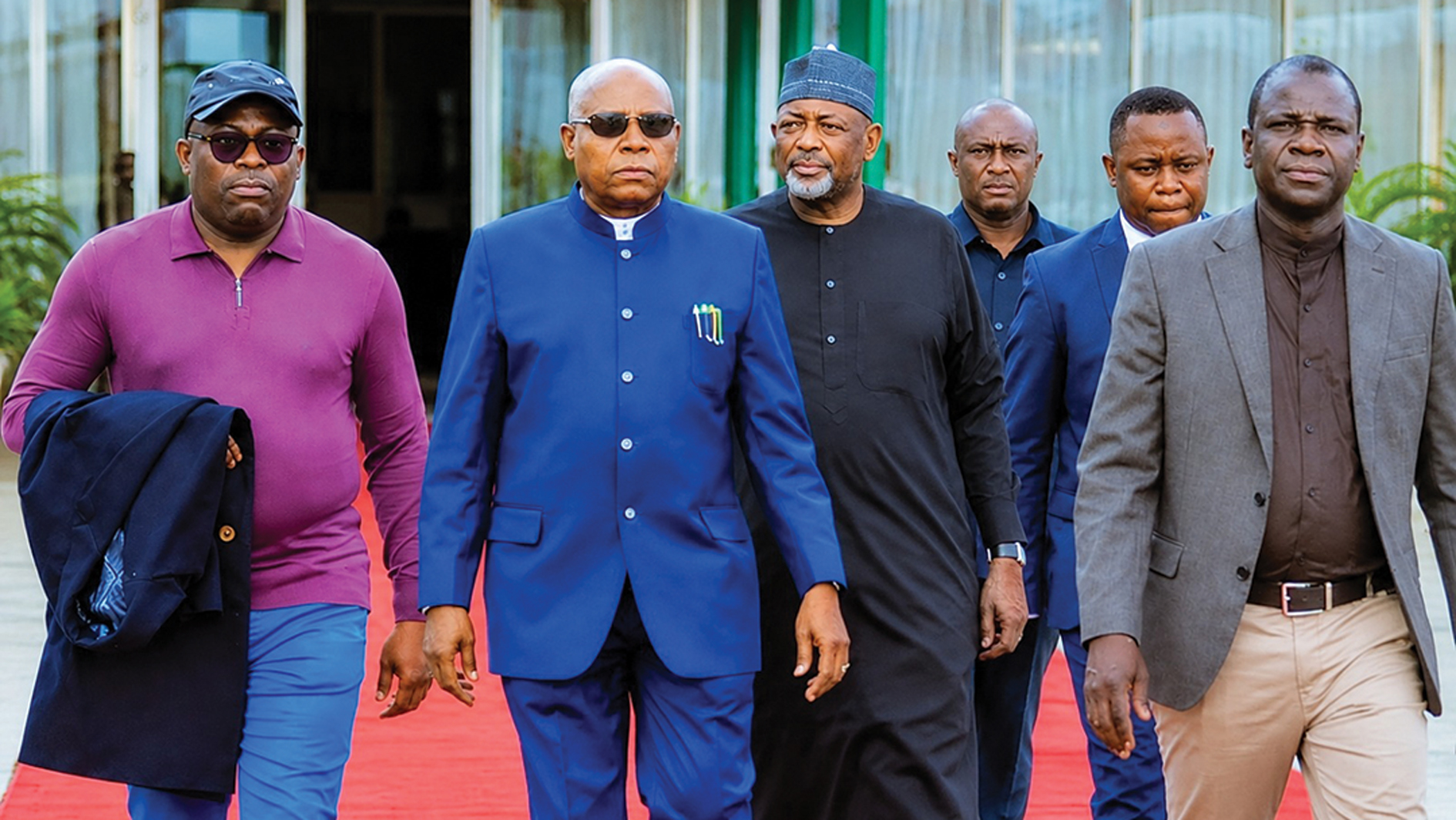
• Ex-VP raises questions over President’s U.S. legal history, $9m lobby deal
• Tinubu’s absence no cause for concern, Nigeria’s envoy says
• UNGA discussions highlight Africa’s $247b yearly climate financing gap
Former Vice President Atiku Abubakar has demanded an explanation from President Bola Tinubu over his decision not to attend the 81st United Nations General Assembly in New York, questioning whether the President’s past controversies in the United States have become a burden on Nigeria’s foreign relations.
Tinubu has mandated Vice President Kashim Shettima to lead Nigeria’s delegation to the 81st UNGA, which begins its high-level General Debate tomorrow.
Shettima departed Nigeria yesterday for New York.
In a statement by his Senior Special Assistant on Public Communication, Phrank Shaibu, Atiku said Tinubu had also been absent from the 79th UNGA in 2024 and the 80th in 2025, with Shettima representing him on both occasions.
Atiku said the repeated absences required an explanation, arguing: “The United Nations General Assembly is one of the world’s most important diplomatic gatherings. It brings together the representatives of the UN’s 193 member states and provides a unique platform for presidents and prime ministers to defend their countries’ interests, negotiate partnerships and shape global decisions on trade, security and development.

“Vice President Shettima may represent Nigeria capably, but representation by delegation cannot permanently substitute for the personal authority, visibility and responsibility of the President.”
He added: “Tinubu cannot continue to treat Nigeria’s seat at the world’s biggest diplomatic table as though it were an inconvenient appointment that can be endlessly outsourced.”
Atiku also questioned the economic implications of the President’s absence, saying UNGA sidelines provide opportunities for leaders to engage investors, development partners and other governments.
“When a President makes himself absent from that stage for three consecutive years, his country loses opportunities,” he said.
“Investment does not follow silence. International capital does not pursue a country whose leader repeatedly abandons the room in which consequential economic relationships are being built.”
He further linked Tinubu’s absence to Nigeria’s reported $9 million engagement of a U.S. lobbying firm.
Documents filed under the U.S. Foreign Agents Registration Act show that the Federal Government, through Kaduna-based Aster Legal, retained Washington-based DCI Group in a deal valued at $9 million to help communicate Nigeria’s security efforts and maintain U.S. support for counterterrorism efforts.
Reports said the initial $4.5 million retainer was paid, with the arrangement structured at $750,000 per month.
Atiku said the spending raised questions about why the administration would invest heavily in improving Nigeria’s standing in Washington while the President repeatedly stayed away from the UNGA in New York.
“Why hire lobbyists to speak for Nigeria in America when the Nigerian President cannot summon the courage to appear at the world’s biggest diplomatic gathering on American soil?”
Atiku also questioned an earlier statement by Nigeria’s Permanent Representative to the UN, Jimoh Ibrahim, that a seat had been secured for Tinubu “not too far from where the U.S. President Donald Trump will be seated.”
“The seat was secured, but the President disappeared,” Atiku said.
“If proximity to President Trump was considered such a diplomatic achievement, why did Tinubu abandon the opportunity and send his deputy?”
He raised questions about Tinubu’s history in the United States, referring to a 1993 forfeiture case in the US District Court for the Northern District of Illinois.
“The complaint stated that the funds represented proceeds of narcotics trafficking and money laundering,” Atiku said.
“A supporting sworn affidavit by an Internal Revenue Service criminal-investigation agent similarly stated that funds in accounts controlled by Bola Tinubu were connected to drug-trafficking proceeds. The proceedings eventually resulted in the forfeiture of approximately $460,000 to the United States government.”
Atiku acknowledged that there was no announced legal restriction preventing Tinubu from travelling to the United States, but questioned whether his past legal controversies had influenced his decision.
“We are not asserting that Tinubu is legally prohibited from entering the United States. The Presidency has announced no such restriction,” he said.
“But if no legal, diplomatic, medical or personal impediment exists, why has Tinubu repeatedly avoided the UNGA since 2024?”
He asked whether “one man’s personal history” had become a burden on Nigeria’s diplomatic engagement.
Atiku also criticised what he described as a contrast between Tinubu’s domestic political posture and his international engagements, saying: “Nigeria is bigger than Bola. Our diplomatic influence, economic interests and international reputation must not be subordinated to Tinubu’s American baggage,” he said.
“After committing up to $9 million to American lobbyists, Nigerians deserve more than silence, evasions and another empty presidential seat at the United Nations.”
He demanded that the Presidency state whether Tinubu was free to travel to the United States and explain the reason for his third consecutive absence from the UNGA.
“If there is no impediment, the Presidency must explain this serial absenteeism. If an impediment exists, Nigerians have a right to know,” Atiku said.
The former vice president ended by directly questioning the President over the reported seat secured near Trump.
“Mr Bola, your seat was reportedly secured near President Donald Trump. Why did you refuse to occupy it?
“What exactly are you afraid of in America?” he asked.
Tinubu’s UNGA absence no cause for concern, says Nigeria’s envoy
MORE than 60 per cent of those listed to speak at the ongoing 81st session of the United Nations General Assembly are being represented by either their vice presidents or foreign ministers, Nigeria’s Permanent Representative to the UN, Ambassador Jimoh Ibrahim, has said.
The envoy is also Chairman of the UN Committee on Budget and Administration.
In a statement issued by the Nigerian Mission to the United Nations in New York, he said it is not unusual for countries to delegate representation to senior government officials when their presidents are unable to attend.
“The Vice President and the Minister of Foreign Affairs are adequately positioned to represent Nigeria at the General Assembly and participate fully in the diplomatic engagements surrounding the session,” he said.
The envoy explained that President Tinubu would not personally attend the session as he is currently in France on annual leave.
“The absence of the President should not be interpreted as Nigeria being inadequately represented. Our delegation will continue to participate fully in the proceedings,” he said.
Ibrahim urged Nigerians to view the country’s participation within the broader context of diplomatic representation, stressing that Nigeria would continue to play its role fully at the General Assembly.
While the controversy over Tinubu’s absence centred on Nigeria’s diplomatic representation, other discussions at the UNGA have focused on the wider economic challenges confronting African countries, particularly the financing of climate action and development.
Africa’s climate goals threatened by $247b yearly funding gap
AFRICAN countries require an estimated US$277 billion yearly to implement their climate commitments, but receive roughly US$30 billion in climate finance, highlighting a funding shortfall that Sahara Power Enterprise Group says must be urgently addressed to build resilient economies across the continent.
Group Managing Director, Kola Adesina, disclosed this at a United Nations General Assembly roundtable on Sustainable Global Investment, Economic Resilience and Climate Financing.
Adesina said sustainable investment, economic resilience and climate finance should be pursued as interconnected priorities, particularly as Africa continues to face significant infrastructure, energy, food security and employment challenges.
“Africa’s most pressing challenge is expanding its productive capacity at scale. We need sustained investment in energy, infrastructure, industry, agriculture, and enterprise development to create jobs, strengthen competitiveness, and support long-term resilience,” he said.
He noted that almost 600 million people in Sub-Saharan Africa lack access to electricity, while the continent faces a yearly infrastructure financing gap of between $68 billion and $108 billion.
Adesina said the global investment landscape presents significant opportunities for Africa, noting that foreign direct investment reached approximately $1.6 trillion in 2025, while assets linked to sustainable investment strategies grew to $16.7 trillion globally.
He said climate finance remained critical to resilient growth as African economies face increasing exposure to droughts, floods, extreme heat and other climate-related risks, despite the continent contributing less than four per cent of global greenhouse-gas emissions.
“Africa requires substantial investment not only to grow, but also to protect the infrastructure, businesses, food systems, and communities that underpin development,” he said.
Adesina called for innovative financing structures to unlock more capital for climate mitigation and adaptation projects, as well as stronger project preparation, greater mobilisation of African institutional capital, deeper local-currency financing markets and increased regional collaboration in energy, transport and logistics infrastructure.
Drawing on Sahara’s experience, he highlighted the company’s investments across LNG, LPG, gas-to-power infrastructure and logistics, alongside its commitment to a net-zero ambition by 2060 through strategic gas infrastructure development, renewable energy integration and nature-based solutions.
The discussion aligns with Sahara’s Beyond XXX platform, a future-focused commitment to advancing sustainable development through investments, innovation, talent, collaboration, environmental stewardship and solutions that create long-term value across Africa and beyond.
“Africa’s opportunity lies in building resilient prosperity, where investment translates into productive capacity, jobs, reliable infrastructure, and sustainable economic growth that endures for generations. That is the kind of future sustainable investment and climate financing can help unlock across the continent,” he added.

