 Follow Us on Google News
 Follow Us on Google Discover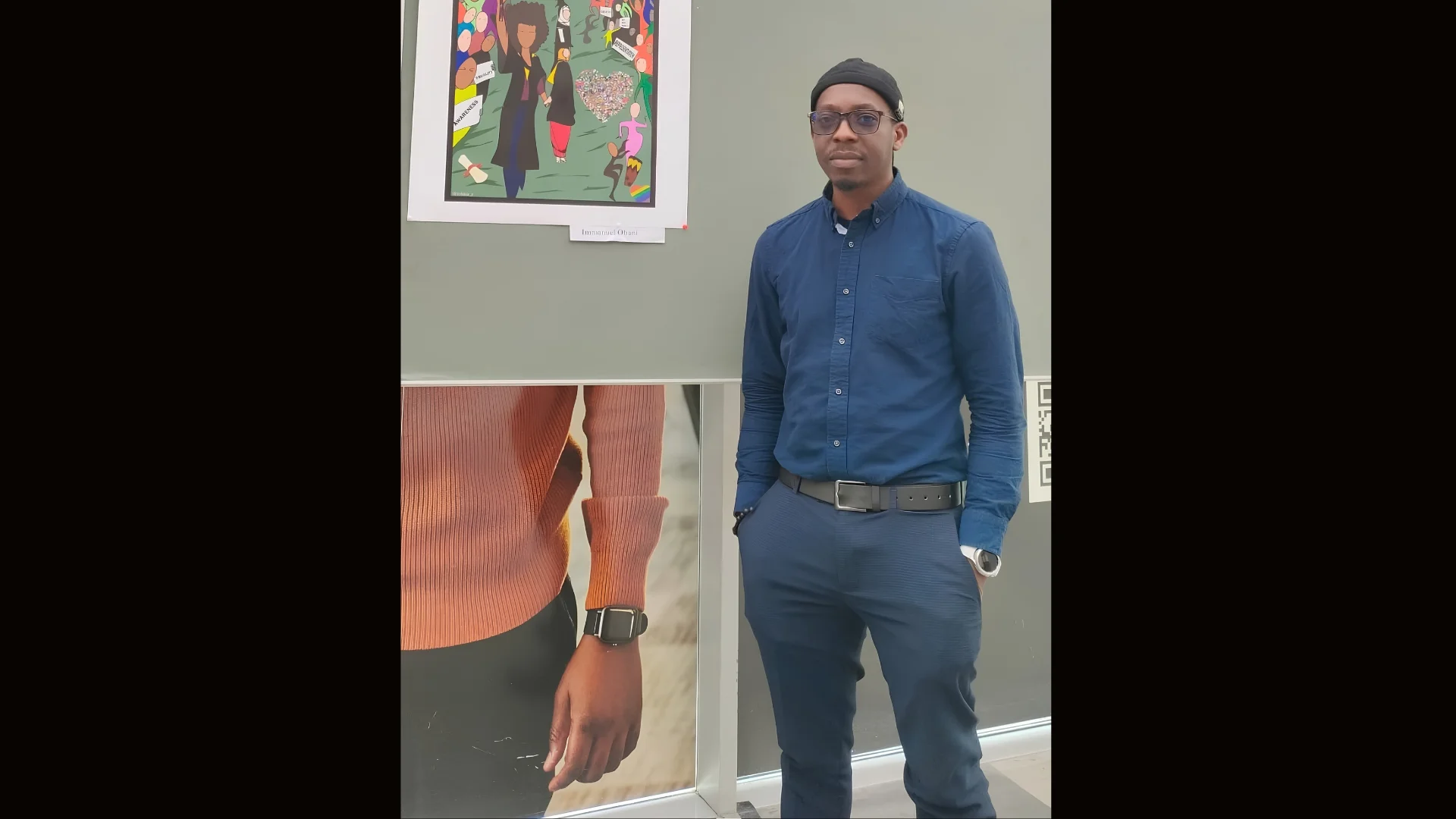
It is not every time that you see a work which interrogates the institution that hosts it in a manner that is as aesthetically striking and hopeful as Decolonizing the University, the digital work by Nigerian-born, UK-based artist Immanuel Obani. The work was exhibited at the University of Bradford in February 2024 as part of Creating Inclusive Spaces, a project funded by the Brad-iCOUNT Fund.
The exhibition brought together contributions from university staff and students, using visual art to encourage dialogue around decolonisation, diversity and the creation of inclusive academic environments.
Immanuel, a multidisciplinary visual artist working across acrylic, oil, charcoal and digital media, explores identity, cultural heritage and lived experience through portraiture and visual storytelling. His practice draws on ancestral memory and the experience of the diaspora, considering the relationship between individual identity and collective experience.
“I wanted to make a work that didn’t just talk about inclusion from the outside. The university building is right there in the background, because the conversation has to happen inside the institution, not around it,” Immanuel says.
Texture and layering play a central role in the work, allowing the composition to carry both visual and conceptual weight. Immanuel began with a sketch mapping out every element, from the central torchbearer to the surrounding figures and the university building, before building up colour and shading digitally. Each element was developed on its own layer, allowing him to refine figures, symbols and architecture individually while controlling how they sit in relation to one another. The result is a composition in which meaning unfolds as the viewer’s eye moves across the surface, with contrasting colours and forms distinguishing individuals while drawing them into a shared movement. “I build the image the way a community is built: piece by piece, with every figure needing space to stand on its own before it becomes part of the whole,” Immanuel says.
In Decolonizing the University, he presents a digital composition featuring a central figure holding a burning torch, surrounded by individuals representing different cultures and communities. The University of Bradford building forms the backdrop, positioning the work within the environment it seeks to examine.

The torch serves as a symbol of knowledge, awareness and transformation. “The torch is about light, but also fire. Knowledge can illuminate, but it also asks us to burn away old narratives that left people out,” Immanuel explains.
Across the artwork, figures hold signs bearing words including equality, inclusivity, allyship and representation. A heart composed of international flags introduces another layer of meaning, reflecting cultural diversity and the connections between people from different backgrounds. Together, the surrounding figures create a sense of collective movement towards a more inclusive environment.
Rather than presenting decolonisation as a singular event, the composition approaches it as an ongoing process involving awareness, dialogue and collective participation. “Decolonisation isn’t a statement you make once. It’s something a community keeps choosing, together,” he points out.
Decolonizing the University was awarded joint first place in the exhibition’s associated Poster and Painting Competition, recognising its creative vision and contribution to the wider Creating Inclusive Spaces initiative. The exhibition formed part of the university’s broader equality, diversity and inclusion programme, engaging staff, students and external visitors.
Since arriving in the UK, Immanuel has created compelling visual narratives and led diverse creative projects, from portraiture and digital composition to community-focused work, bringing ideas to life with a strong artistic vision rooted in ancestral memory and cultural heritage.
His work has been exhibited in the United Kingdom, including at the University of Bradford, and has contributed to ongoing conversations around identity, belonging and the representation of diaspora experience within contemporary visual art.
He continues to develop his practice through exhibitions, commissions and community arts projects, with a focus on producing work that is both visually resolved and conceptually grounded within contemporary discourse.

