 Follow Us on Google News
 Follow Us on Google Discover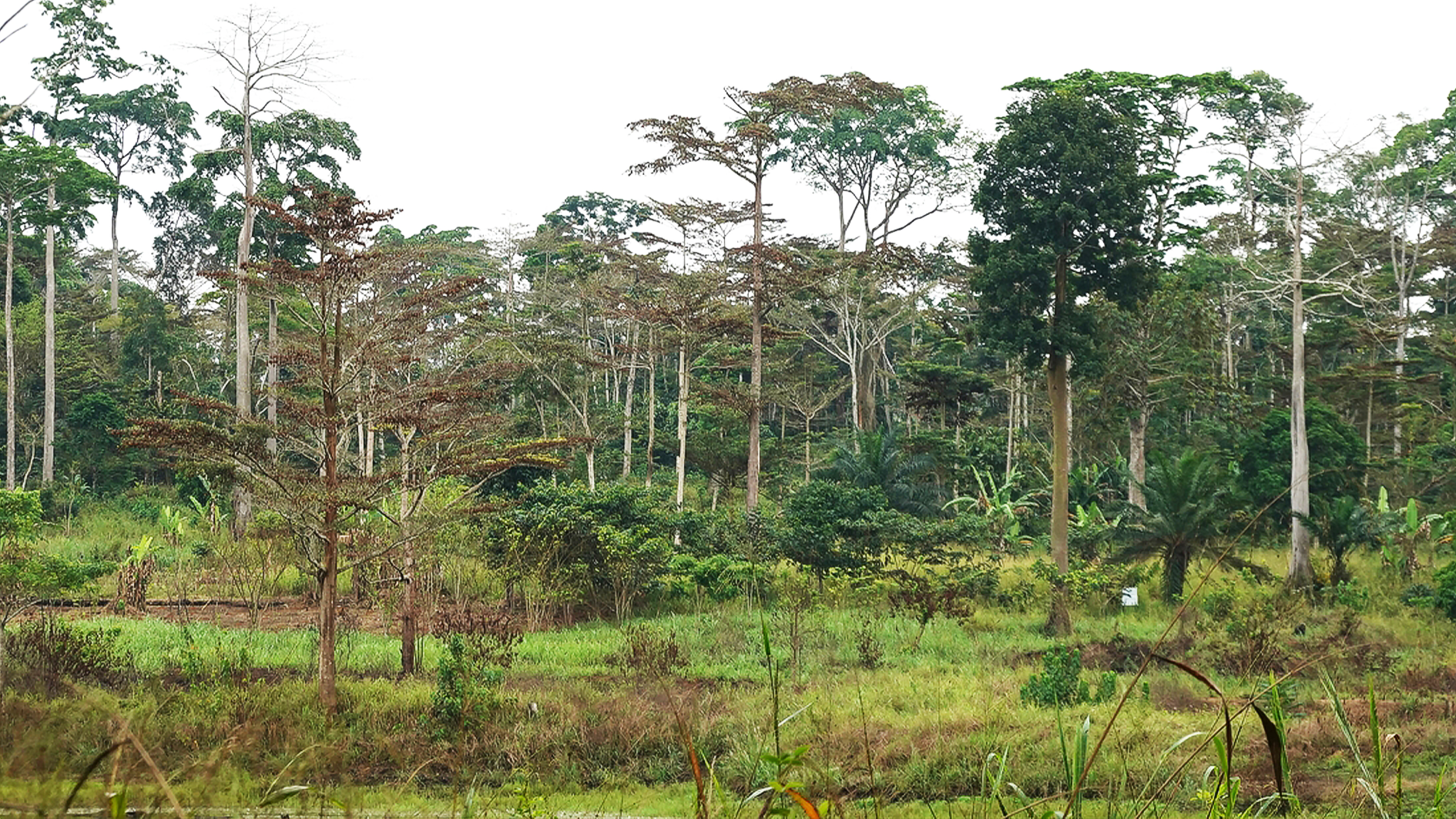
For years, Nigeria’s corporate sector has treated biodiversity as a charitable cause: plant trees, clean up communities, donate to conservation and move on. But as forests disappear, wetlands are degraded and natural habitats come under mounting pressure, conservation experts are warning that nature loss is no longer somebody else’s problem. It is becoming a business risk, threatening the resources, supply chains and ecosystem services on which companies depend.
The warning marks a significant shift in Nigeria’s environmental conversation. Biodiversity is moving from the margins of corporate social responsibility into the boardroom, where decisions on investment, lending, procurement, supply chains and risk are made.
At the centre of that shift is Nigeria’s National Business Action Plan for Biodiversity, developed by the Nigerian Conservation Foundation (NCF) and Natural Eco Capital, in collaboration with the Federal Ministry of Environment and with support from Business for Nature. The framework is designed to translate Nigeria’s National Biodiversity Strategy and Action Plan 2025–2030 into concrete actions for businesses and financial institutions.
Nigeria’s revised biodiversity strategy contains 23 national targets and is aligned with the Kunming-Montreal Global Biodiversity Framework, with the objective of halting and reversing biodiversity loss by 2030. But conservationists warn that those targets will remain largely aspirational if the private sector continues to treat nature as an externality rather than an economic asset.
Dr Joseph Onoja, Director-General of the NCF, puts the issue bluntly: “Nature loss is a material business risk.”
According to him, the era when companies could hide biodiversity interventions under corporate social responsibility budgets should be over. Nature, he said, must be integrated into corporate strategy, risk management, capital allocation, procurement, operations and remuneration.

The argument is straightforward. Businesses depend on functioning ecosystems, whether they recognise it or not. Water, fertile soils, forests, fisheries and other natural systems provide inputs and services that underpin entire value chains. When those systems deteriorate, the consequences can travel quickly through the economy. A degraded watershed can worsen flooding and water shortages. Loss of pollinators can affect food production. Deforestation can undermine soil quality and agricultural productivity, while pollution can damage fisheries and increase the cost of obtaining clean water.
For companies, those pressures can eventually translate into disrupted supply chains, higher operating costs and stranded investments.
That is the contradiction the new Business Action Plan seeks to address: businesses can generate profits from natural resources while much of the cost of degrading those resources is transferred to communities, government and future generations.
Chief Executive Officer, Natural Eco Capital, Dr Eugene Itua, said the private sector has become increasingly familiar with climate change and carbon-related risks, but biodiversity has received far less attention despite companies’ dependence on nature.
“The private sector wasn’t really doing anything in this sphere, and we saw that as a need,” Itua said.
The new plan, he explained, provides businesses with a practical pathway into the implementation of Nigeria’s biodiversity strategy, helping companies understand their “impacts and dependencies on nature” and integrate biodiversity into their institutions and business decisions.
That means moving biodiversity from an environmental department or occasional corporate donation into the machinery of business itself.
The financial sector is particularly important. Onoja argues that banks cannot continue financing major infrastructure, extractive, energy or agricultural projects without considering their impact on the ecosystems on which communities and economies depend. A bank considering a loan, an investor assessing a project or a board approving a new development may therefore have to ask a question that has historically been ignored: what happens to nature if this decision goes ahead?
The financing challenge is substantial. Nigeria’s revised NBSAP estimates that about $474 million will be required to implement its 2025–2030 biodiversity targets, including capacity building. The strategy calls for resources from multiple domestic and international sources and a dedicated resource mobilisation and financing plan.
The Business Action Plan consequently has a role beyond corporate environmental reporting. It is also an attempt to bring businesses and financial institutions into the financing equation, at a time when government and donor resources alone are unlikely to meet the scale of Nigeria’s biodiversity needs.
But finding the money is only part of the challenge. The more difficult question is whether capital will protect ecosystems or finance activities that accelerate their destruction.
That policy challenge also has a legislative dimension.
Former member of the House of Representatives and sponsor of the Climate Change Act 2021, Dr Sam Onuigbo, argued that Nigeria must move beyond environmental declarations towards practical policies, investable opportunities and bankable projects that can generate economic value while protecting natural capital.
His intervention broadens the debate. Biodiversity protection, in this context, is not simply an environmental obligation. It is part of how Nigeria manages its economic assets.
The Climate Change Act provides a framework for addressing natural capital and nature-based solutions, reinforcing the argument that environmental considerations should be integrated into national development planning rather than treated as an afterthought.
For Onuigbo, however, legislation alone cannot deliver the change. Businesses, government institutions, communities, academics, young people, development partners and other stakeholders must have defined roles in converting commitments into practical interventions.
That is particularly important because biodiversity protection cannot be achieved from Abuja alone. A national policy will eventually confront a farmer clearing forest for cultivation, a developer converting a wetland, a mining operation affecting a river or a company sourcing raw materials from degraded landscapes.
The communities living closest to those ecosystems will also bear much of the cost when they disappear.
Onoja is equally concerned about corporate environmental programmes that produce impressive numbers without demonstrating genuine ecological benefits. A company may announce the planting of 100,000 trees, for instance, but the figure means little if the wrong species were planted, natural habitats displaced or the trees failed to survive.
“It is not every green that is green as biology,” he warned.
The distinction matters. Biodiversity is not simply about putting more vegetation into the ground. A natural forest is a complex system of indigenous plants, animals, insects, fungi, soils, water systems and human communities. Replacing it with a plantation of a few commercial species may increase tree cover without restoring biodiversity.
The same scrutiny applies to corporate claims of being “nature positive”. Companies will increasingly be expected to establish baselines, demonstrate additionality and durability, use measurable indicators and subject results to independent verification.
In other words, businesses will have to show what changed, where it changed and whether the change can be sustained.
That could expose the weakness of an approach to corporate environmental responsibility that has often been measured by activities rather than outcomes.
The Business Action Plan also envisages stronger roles for regulators and institutions, including the Financial Reporting Council, Central Bank of Nigeria, Securities and Exchange Commission, Nigerian Exchange, National Parks Service and relevant federal and state agencies.
Their involvement matters because voluntary corporate promises have limits. Without credible disclosure, measurement, regulation and enforcement, biodiversity commitments can easily become another layer of corporate language rather than a change in corporate behaviour.
There is also growing interest in biodiversity credits and other forms of nature finance as possible sources of private capital. But the emerging market will require strong governance, transparent measurement and safeguards for communities to prevent biodiversity finance from becoming another avenue for questionable environmental claims.
For the Business Action Plan, the principle is clear: avoid environmental damage where possible, reduce unavoidable impacts and consider offsets only for eligible residual impacts.
The real test, however, will come after the launch. Onoja says the implementation roadmap will operate through 30-, 90- and 180-day actions and continue through 2030. Success should not be measured by conferences, policy documents or the number of trees planted.
It should be judged by whether pressure on biodiversity falls, ecosystems recover and businesses begin to take measurable responsibility for their dependence and impact on nature.
That would require a profound change in corporate culture.
For decades, the dominant model has been simple: government protects the environment, conservation organisations campaign for it and businesses contribute when convenient. The emerging model is different. Government must regulate and enable, businesses must act and financial institutions must decide whether their money will support environmental restoration or accelerate destruction.
Onuigbo’s intervention adds another requirement: the transformation must be embedded in policy, law and economic planning, so that protecting natural capital is not left to voluntary corporate goodwill.
If nature is the infrastructure supporting agriculture, water, food, livelihoods and countless commercial activities, destroying it while treating conservation as charity amounts to consuming an asset without accounting for its depletion.
Nigeria’s biodiversity crisis is therefore no longer just about forests, wildlife or disappearing wetlands. It is about what happens when the natural foundations of economic activity are steadily eroded while their destruction remains largely invisible on corporate balance sheets.
The bill for that neglect will eventually arrive. The question is whether Nigerian businesses will begin accounting for the value of nature, financing its protection and changing the way they operate before the economic cost of its loss becomes impossible to ignore.

