 Follow Us on Google News
 Follow Us on Google Discover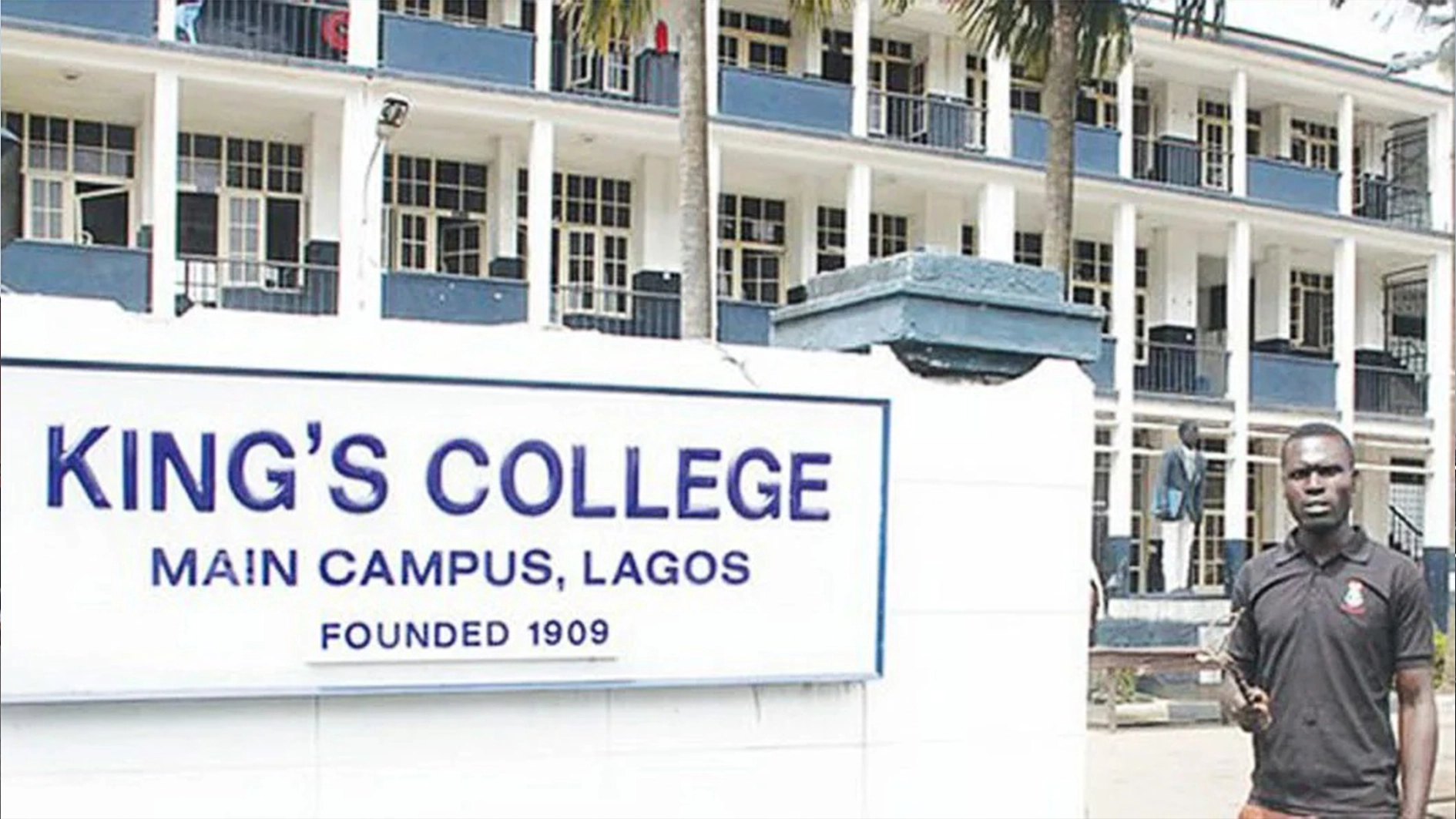
The controversy surrounding the planned concession of King’s College Lagos and the subsequent protest by 117 Unity Colleges nationwide clearly points to the federal government’s failure to consult school stakeholders before the concession. This is unfortunate because an issue that could have been resolved amicably is fast becoming an intractable problem.
For instance, a faction of the Association of Senior Civil Servants of Nigeria (ASCSN) just suspended its indefinite shutdown of all Unity Colleges, defying the government’s directive for students to resume the 2026/2027 academic session on Sunday, September 20. The latest development has deepened the lingering dispute between the Federal Ministry of Education and organised labour over the proposed 35-year concession of King’s College Lagos to the King’s College Old Boys Association (KCOBA), leaving parents caught between conflicting directives from the government, unions, and school authorities.
While the government has recently indicated its decision to review the concession, it needs to do more to assure parents and teachers of its sincerity and commitment to inclusion in the repositioning exercise. A way forward could be for the government to maintain its ownership of the school while KC is turned around.
Beyond that, this is an opportunity to revisit all public schools, identify their defects over the years, and work towards restoring their credibility to accomplish their original mission of providing quality education to children. To calm restive nerves on the concession plan, the Federal Government’s ownership of the 116-year-old King’s College should, for now, be kept intact to allow the proponents’ mission to be accomplished and the opponents’ fears to be dispelled.
The origin of the impasse is worth tracing to the failure of the government that owns the college to sustain and improve on the cherished values, standards and integrity of the institution. In other climes, such century-old institutions are treated as the pride of the country and are given special attention because they have also become historical monuments that tourists admire.
Sadly, however, King’s College, and indeed all other Unity Colleges, have deteriorated in terms of learning facilities, a befitting environment and teachers’ commitment. Consequently, the students’ body is far from the pride and high standard associated with their predecessors, while most of the schools are mere shadows of their old glory. That situation is enough to prompt the old students who benefitted from the institution when it was revered to seek a drastic turn-around of the school, as a gesture of good intention.

It was hardly surprising, therefore, when the President of the King’s College Old Boys Association (KCOBA), Alhaji Kashim Ibrahim-Imam, announced that the Federal Government had granted the association a concession to manage the college for 35 years. And in preparation for implementation of the agreement, a N100 billion endowment fund was launched, with the First Lady, Mrs Oluremi Tinubu, donating N10 million; Ibrahim-Imam N1billion; former Board of Trustees (BoT) Chairman, Chief Philip Asiodu N100 million; and the current BoT Chairman, Alhaji Femi Okunnu N100 million. According to Ibrahim-Imam, the intention is to finance infrastructure renewal, teacher development, digital technology, innovation, research and students’ welfare.
Ibrahim-Imam, who described the development as a defining moment in the history of the college and a potential blueprint for the renewal of public education in the country, noted that the arrangement would enable the old students’ association to partner with the government in upgrading the school’s infrastructure, strengthening governance, and improving learning outcomes without changing the ownership. The KCOBA president allayed the fear that the government sold the college to the association, saying it was not a privatisation agreement. He added that the agreement was a culmination of years of careful planning, sustained advocacy, constructive engagement and unwavering commitment by generations of Kingsmen who refused to accept that decline should define the future of their alma mater.
Without doubt, the logic of KCOBA’s explanation is strong. Apparently, parents and teachers at the college were not carried along and, suspecting foul play, launched a protest that the Chairman of the PTA, Mr Peter Olowoseye, said had become necessary because almost all stakeholders were opposed to the concessioning. According to him: “Parents are not in support of the move. Senior civil servants are also saying no to it. The community is also not in support. The old boys should not see the college as their property. They attended the school just like the current students are doing. King’s College is a public property.” He urged KCOBA to give to the college willingly, not wanting to take over. Olowoseye cautioned: ‘There is no private entity that can assemble the kind of teachers we have in the college. We say no to concession, under whatever guise it is being planned.’
As the old students are responsible for mobilising funds for the revival project, it is not unreasonable that they wish to be directly involved in the execution of the project, particularly how the money is spent. All the same, the repositioning task can be handled by their association under an arrangement that gets them involved in the management of the institution.
Notably, however, the other stakeholders nurse the fear that the arrangement could turn out to irredeemably hurt their interests; and that an ulterior motive existed for the concession as the school may be priced out of the patronage or reach of most members of the public. This fear is not unfounded.
Across the country, especially in the urban centres, many public markets, residential estates and other facilities that were renovated or repositioned by the government have been priced out of what the original occupants or tenants could afford after the completion of the projects. There are vast areas of land where structures erected by poor people were demolished and the locations have been turned into residential and business arenas for the elite.
A way forward is for the old students to design a framework for monitoring the execution of the project with a view to ensuring that the money is spent for the real purpose and the set standards are not compromised. There could be a condition that the KCOBA would swiftly stop the project if it noticed any corruption or derailment in any form in the handling of the jobs.
If the declaration by the KCOBA president is true that the intention is not to take over the public school, it should not be difficult for the association to accept execution of its revival plan in a way that the ownership by the Federal Government is not altered, and to dispel allegations of ulterior motive.

