 Follow Us on Google News
 Follow Us on Google Discover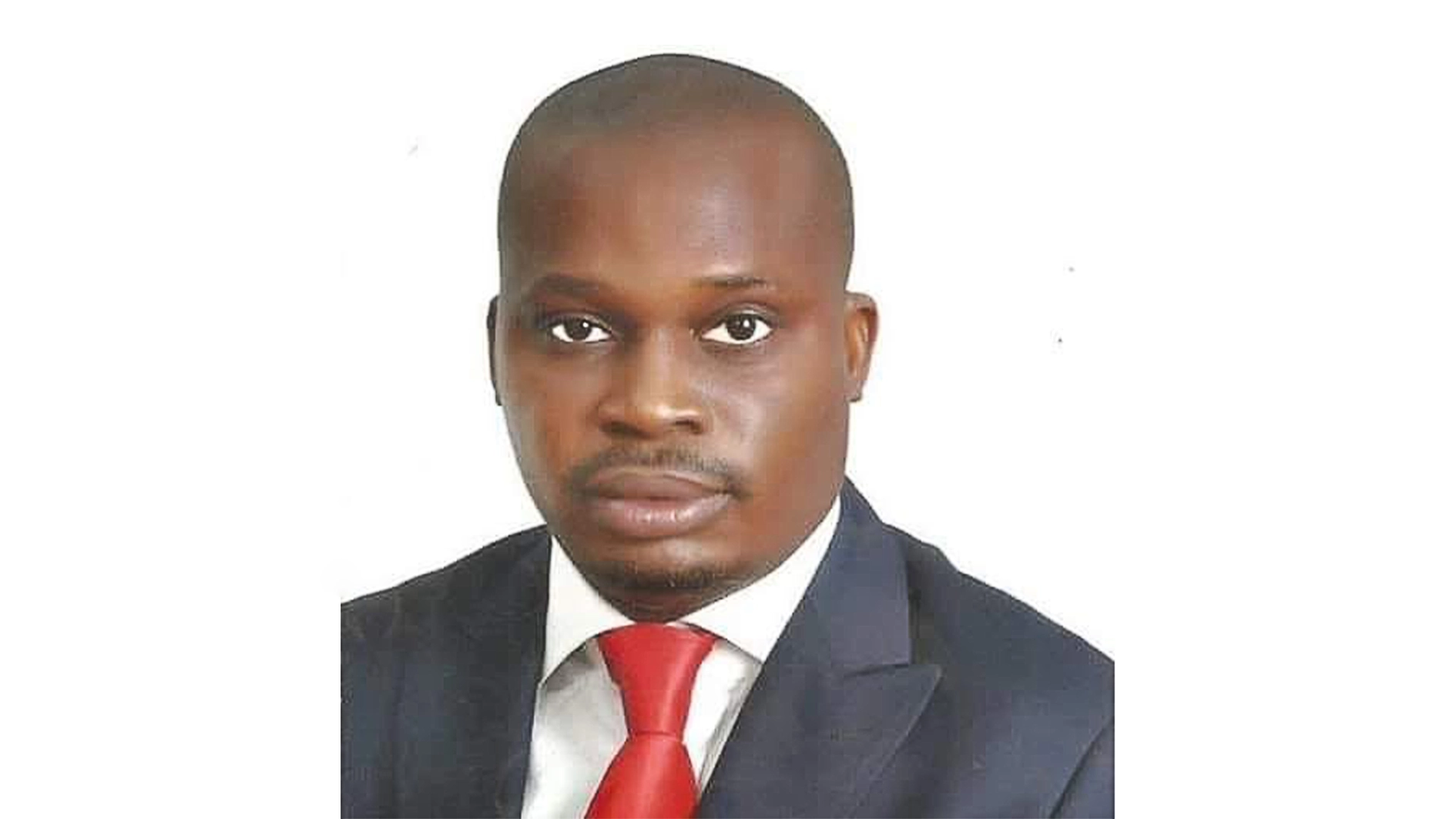
A lecturer and political scientist, Dr Jasper Uche, was the running mate to the Peoples Democratic Party (PDP) governorship candidate in the 2023 general elections in Abia State. Uche, who has since joined the Labour Party (LP), spoke with LAWRENCE NJOKU on the administration of President Bola Tinubu, governance in Abia State, and other national issues.
There are insinuations that the incumbent administration of President Bola Tinubu has impoverished Nigerians through its economic policies and is now attempting to buy them back with contrived palliatives, a few months before the elections. What can you say about this?
Every administration has its challenges. Unfortunately, the problem with the present administration began on its first day in office. President Tinubu’s abrupt withdrawal of the subsidy on Premium Motor Spirit (PMS) without ready and commensurate buffers sparked a roller-coaster of galloping inflation and economic disempowerment.
Prices of goods and services rose sharply. The knock-on effect has been a continued decline in the purchasing power of millions of citizens who go out daily to eke out a living, including the working class, informal businesses, the elderly, students and a large share of youths Not in Employment, Education or Training (NEET).
But trust Nigerians. They are incredibly dogged and resilient. They have moved from patience to long-suffering, waiting for the government’s promises to improve their material conditions.
The economy has also not been helped by a powerful coterie of market players who exploit weak institutions at the expense of the majority. Ironically, people in government live large while preaching to the masses to make sacrifices. National budgets are scarcely implemented, with little or no oversight by the legislature, yet borrowing is routine, and allocations to the three tiers of government have increased exponentially.
Despite increased resources, poverty remains rife. The number of multidimensionally poor Nigerians is over 100 million. The cost of food, rent, transport, healthcare and building materials is no longer affordable to many. There has been no adequate stopgap intervention.

During the blockade of the Strait of Hormuz, several European countries provided subsidies in critical sectors, tax cuts and palliatives to cushion the impact of the crisis. In Nigeria, citizens were largely left to fend for themselves. Consequently, hardship has triggered mental health disorders in many distraught citizens.
So, the idea of buying over people with palliatives ahead of the elections cannot be the silver bullet. People are becoming more aware, more self-centred and more sophisticated.
In what specific areas would you rate the administration of President Tinubu highly that could make Nigerians return him to power?
In fairness, President Tinubu is a courageous leader. He is a hard-nosed reformer. For the first time in 17 years, the nation’s external reserves have hit $53.30 billion. Again, it takes raw guts to push through reforms aimed at widening the country’s tax net.
He is also gradually devolving power from the centre to the sub-national level, including the transfer of authority to generate, transmit and distribute electricity to the states; creation of development commissions in the six geopolitical zones; sponsorship of the executive bill for state police; direct funding to local governments following the Supreme Court ruling in the suit filed by the Attorney-General of the Federation, Lateef Fagbemi (SAN); as well as the establishment of federal universities in marginalised territories such as Southern Kaduna and Ogoni in Rivers State.
But I doubt whether these strides would mobilise organic support for him. Allegations of large-scale corruption, impunity by state actors and opacity in government finances, especially in the management of funds saved from subsidy removal, are likely to dominate campaign debates. Social media also has a way of bringing these issues to voters’ fingertips.
President Tinubu will also be judged by what critics regard as a less impressive firefighting approach to banditry, kidnapping and the displacement of agrarian communities by criminal herders. Inadvertently, the nation has created a “kidnap economy”, which SBM Intelligence reported involved nearly 8,000 kidnapped persons who paid N7.8 billion in ransom between July 2025 and June 2026.
What should be the greatest worry for Nigerians as they prepare to vote in the 2027 general elections?
The impartiality of INEC is a serious concern. INEC has not discharged itself as an independent body.
Nigerians feel that INEC may claim another “glitch” in its portal if the real-time results of the 2027 presidential election do not favour the incumbent. That is why the lacuna in the Electoral Act worries many citizens.
The politicisation of the anti-corruption war is another matter of concern. While corruption cases involving key figures in the ruling APC have allegedly been dropped by anti-graft agencies, the fight against corruption has instead become a tool for blackmail, co-optation, and soft landings in exchange for political support as part of the 2027 permutations.
Another worry is the impunity of the political elite. We seem to have learnt nothing about the transience of power and life.
How would you rate the judiciary so far, especially in the last three years of the Tinubu administration?
The truth is that the perception of the Nigerian judiciary over the last three years has left much to be desired. Before now, people could predict the outcome of a suit based on the facts and the law. However, today, that is no longer tenable, especially in political and election-related cases.
Our judiciary is one of the most distrusted institutions, according to Afrobarometer surveys. Judgments are allegedly purchased. We now hear of “judicial capture” – a situation where courts are allegedly hijacked to do the bidding of the political class and powerful vested interests. This is very dangerous.
Justice Samson Uwaifo (rtd.) of the Supreme Court once noted that, “A corrupt judge is more harmful to society than a man who runs amok with a dagger in his hand in a crowded street.”
We must rise to address the root causes, beginning with the mode of recruitment. In the UK, it takes about 17 rigorous stages to appoint a judge of the superior courts. In Nigeria today, a son of ‘a nobody’ can hardly make it to the Bench.
The enormous powers of the CJN should be curtailed. New laws should moderate open hobnobbing between the political class and the Bench. The recently built Judges’ Quarters in Abuja by the executive arm cast a serious doubt on the doctrine of judicial independence. In the same manner, why are we not building even low-cost houses for teachers and doctors?
States such as Enugu, Abia, and Anambra recently celebrated 35 years of their creation. How would you evaluate these states in terms of governance, among other things, over the past 35 years?
Thirty-five years in the life of a man, state or nation is no mean feat. At 35, the three states ought to have outgrown certain developmental foundations. It took South Korea just 30 years to move from an aid-recipient country to one of the world’s strongest economies.
Apparently, each state had to grapple with its peculiar challenges in corporate visioning, leadership recruitment, patriotic citizenry, elite consensus or dissensus, the quality of manpower and followership, and worldview. But, on balance, Anambra and Enugu states have been ahead of Abia because of the political economy of sycophancy.
Currently, the three governors are doing relatively well. They are well-educated, well-exposed, visionary, and cosmopolitan in their approach to governance.
Governor Charles Soludo has liberated Anambra State from the siege of criminals, fake prophets and money ritualists who were bent on disorienting young people. He has built solid infrastructure and phenomenally repositioned the state.
However, I take exception to his plan to build another airport at Ndikelionwu. It is a misplacement of priority. His high-handedness shows that it is an unpopular project. Why not invest in building agro-allied and ICT-related industries to create direct and gainful jobs? The state can privatise the industries while retaining a majority equity stake.
The idea that government has no business being in business is an old-fashioned neoliberal ideology foisted on the Global South by the Bretton Woods institutions.
In Enugu, Governor Peter Mbah has left no one in doubt that he means business. Moribund industries and state institutions have been revitalised. Today, the state has an airline and has embarked on major projects in health, education, agriculture and infrastructure, among other areas.
But his administration is not pro-poor. His policies are highly elitist. The self-given task of taking the state’s IGR to unprecedented heights has resulted in excessive taxation of small businesses, artisans, traders and property owners. Rents for houses and shops have gone up. People are dying in silence amid official intimidation.
The Gestapo-style traffic law enforcement is very inhumane and barbaric. It is like “point and kill”. Under Governor Alex Otti, Abia State has earned positive rankings in many dashboards. He is a repairer of the ruins. The perception of the state has changed considerably because of what I consider his sterling performance in every facet of governance.
What would have dented his reputation was the strike recently called off by ASUU-ABSU last month.
Governor Otti had approved all of ASUU’s demands as far back as April 2026. The delay in implementation, which caused the strike, was not his making, but he took responsibility, apologised to ASUU, and today, ABSU is the first state university in the Southeast to implement the 2025 FGN/ASUU agreement.
In 2023, you were the PDP’s governorship running mate in the elections in Abia State. Today, you have pitched a tent with Governor Alex Otti’s Labour Party, which defeated you in the exercise. What prompted you to join the LP and not any other party?
All politics are local. And service to the people is the motivation. I watched Governor Otti’s style of governance for almost three years, and he won my admiration. He needs support to take our state to greater heights.
The Labour Party is also doing things differently. It gives young people opportunities to serve and develop their leadership potential. Otti believes in seasoning on the job, rather than the usual turnover of short-term, poorly motivated appointees.
The Cabinet has not been dissolved for close to four years. The local government chairmen and councillors are serving four-year tenures. This has not happened in Abia in the last 27 years. You can see that the Governor’s magnetic touch has received the endorsement of some APC chieftains in the state.
His performance is superb. If you visit Abia State today, you will know that there is a new sheriff in town. There is an undeniable breath of fresh air.
Governor Otti is plucking both the low-hanging and high-hanging fruits to the delight of the majority of Abians. I said elsewhere that he has put Abia on a reset button.
His imprint is visible in road infrastructure, urban renewal, the education sector, with the recruitment of about 9,000 teachers on merit; the revamp of the health sector, including ABSU Teaching Hospital; the ongoing construction of a new Government House; the ongoing airport project; and modern bus terminals in Umuahia and Aba. Indeed, Governor Alex Otti will have an overwhelming victory at the polls in 2027.
As we approach the 2027 elections, what advice would you give to Nigerians and INEC?
Nigerians should not lose faith in the country. They should gird their loins and be vigilant against quislings masquerading as politicians.
INEC should prove the bookmakers and naysayers wrong by delivering credible elections in 2027. The institution cannot afford to disappoint after the over N1 trillion approved budget for the elections.
Notwithstanding the pressure, inducement and arm-twisting, contentment by INEC officers is a safeguard against falling into the trap of wrongdoing.

