 Follow Us on Google News
 Follow Us on Google Discover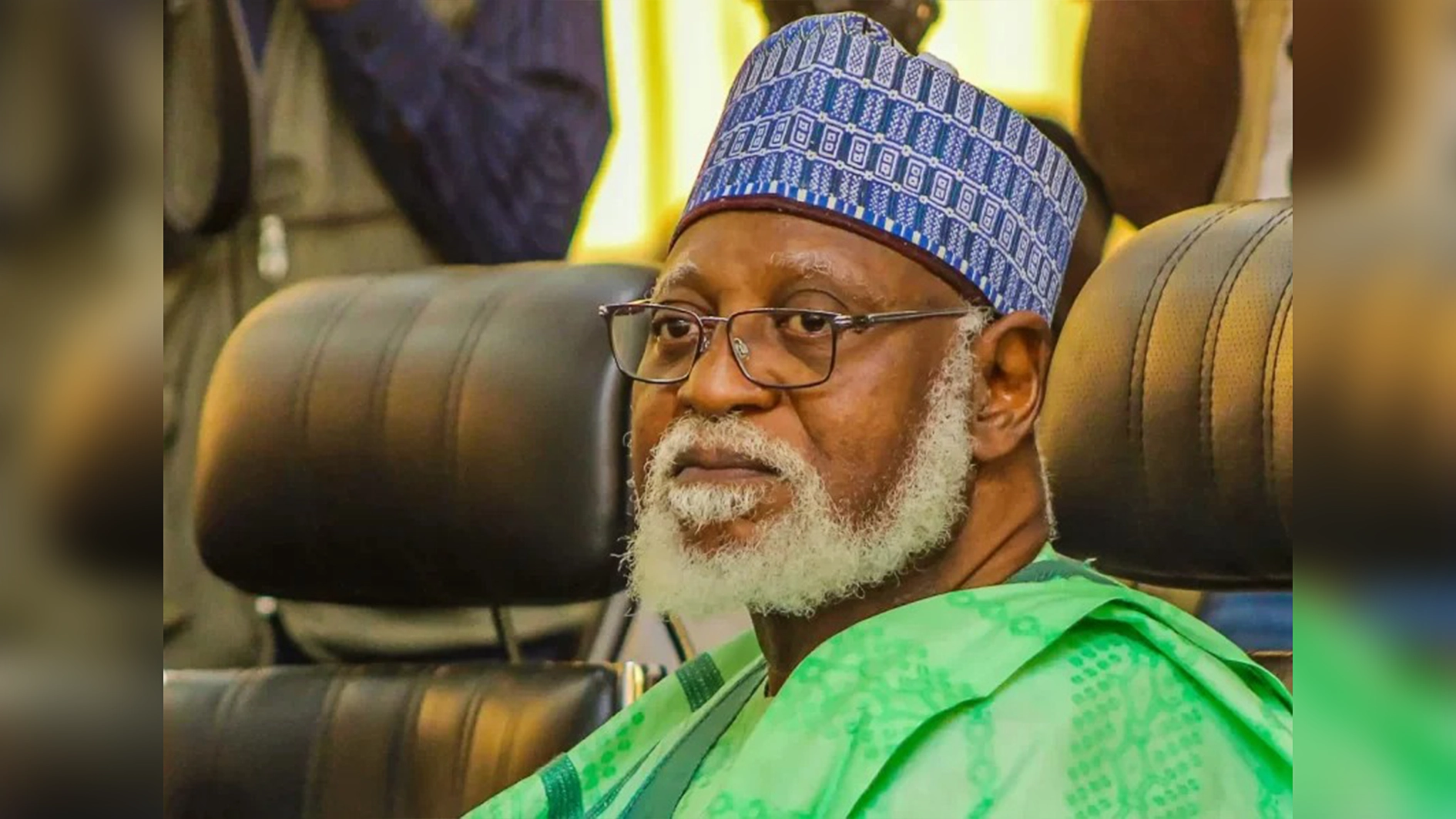
Elections in Nigeria are consistently marred by malpractices and violence. As a result, the Peace Accord was initiated in 2014 by the National Peace Committee. Twelve years after its introduction, electoral misconduct has continued to thrive. NGOZI EGENUKA reports that, since the excesses of elite politicians who sign the peace pact have continued unabated, it may be time to consider legal measures that would impose serious sanctions on parties engaging in electoral misconduct.
For over a decade, Nigerian politicians have repeatedly signed peace accords during which they pledge to conduct campaigns and elections peacefully. During this recurring ritual, they give speeches and append their signatures to the promise they made.
However, the continued violence and other forms of electoral misconduct being witnessed have raised concerns about the value and efficacy of such commitments that carry no consequences when breached.
These concerns become increasingly relevant as the country prepares for another general election. Since control of political office in Nigeria provides immense economic and political power, elections have been intensely contested, with actions such as vote buying, intimidation, bribery, rigging, thuggery, ballot-box snatching, prolonged litigation and refusal by some contestants to accept defeat on display.
Electoral violence accounted for over 800 deaths in 2011 and 629 deaths in 2019. Between April 2014 and May 2022, independent trackers recorded at least 350 deaths explicitly tied to off-cycle and pre-election violence, while the 2023 general election saw violent outbreaks across 15 states.
Also, more than 100 deaths were reported by independent civil society observers during the 2023 presidential and gubernatorial cycles. Civil society group, Connected Development (CODE), tracked 30 distinct cases of ballot box hijacking during the 2023 governorship polls in Lagos and Rivers.

Post-election reviews of 2023 government filings found over 2,000 polling stations where results were entirely omitted from official tallies due to irregularities, with violence and destruction of materials responsible for about half of those cancellations.
Just last week in Kogi State, 19 of 22 political parties expected to participate in the 2027 elections signed a peace accord, committing themselves to peaceful campaigns and rejecting violence, intimidation, ethnic and religious division, and other conduct capable of disrupting elections.
Last month – August – ahead of the 2027 elections, the first signing of the national peace accord, organised by the National Peace Committee, an initiative particularly associated with former Head of State General Abdulsalami Abubakar, took place.
For years, this initiative has sought to use dialogue and moral persuasion to reduce election tensions and promote peaceful contests.
The initiative started in 2014 ahead of the 2015 general elections, where the then-President Goodluck Jonathan and the late President Muhammadu Buhari signed the Abuja Declaration on Peace, facilitated by Abubakar, with former United Nations Secretary-General Kofi Annan.
Since then, the peace accord has evolved. For instance, ahead of the 2023 elections, presidential candidates signed separate agreements on campaign conduct and acceptance of electoral outcomes.
The commitments included issue-based campaigning, avoidance of inflammatory statements and personal attacks, and an undertaking to pursue disputes through legal channels rather than resorting to violence.
However, questions still persist, as violence has continued to mar elections. And for those who disregard the agreements, what sanctions have been given to them? These questions expose the distinction between moral persuasion and the creation of a legal mechanism that can compel obedience.
Despite the peace pact, international and domestic observers documented intimidation, violence, procedural shortcomings and other irregularities surrounding the elections. The European Union Election Observation Mission, for example, identified shortcomings in the electoral processes and made recommendations covering electoral law, institutions, political parties, campaign conduct and accountability.
Unfortunately, election observers can document events and publish findings, but do not have the authority to impose criminal, electoral, or administrative sanctions on an erring political candidate.
This limitation is opening up the conversation on whether the peace accord should be given legislative backing, such that erring politicians could be taken to court for prohibitive injunctions against further participation or even travel restrictions.
This school of thought argues that clearly defined obligations could be included in an enforceable framework so that when violated, an appropriate sanction can be applied.
For public interest lawyer, Malcolm Omirhobo, the major weakness of the National Peace Accord is its voluntary nature and absence of the force of law. Although he admitted the need for stronger institutional backing, he cautioned against turning the violation of a peace accord into a separate criminal or civil offence, adding that Nigeria’s problem has largely been about the implementation of existing laws.
“Nigeria already has the Constitution, the Electoral Act and other laws dealing with electoral violence, intimidation, incitement and electoral offences. The greater problem has often been enforcement rather than the absence of laws,” he said.
According to him, a better way would be to formally recognise the peace accord within the electoral framework, provide a transparent mechanism for monitoring compliance and require that proven breaches be publicly documented, and where they also constitute offences under existing law, referred promptly to the appropriate authorities.
“We must also be careful not to make an unelected body, such as the National Peace Committee, a parallel electoral regulator or tribunal. INEC conducts elections, and the courts determine electoral disputes.
Any strengthened peace accord must respect those constitutional boundaries. Ultimately, a peace accord cannot substitute for credible elections. Peace should not mean that candidates are expected to remain silent about genuine electoral malpractice. A candidate who believes that the law has been violated must retain the constitutional right to challenge the process peacefully before the courts,” he said.
Omirhobo stated that though observers have increased scrutiny of elections, their presence can discourage some misconduct at polling units, adding that there is also evidence that observation has contributed to reform.
He said that election observation has both helped improve Nigerian democracy and documented the problems with Nigerian elections, while regretting that the country has been better at receiving observer reports than at implementing their recommendations.
“The question is whether INEC, the National Assembly, security agencies, political parties and other institutions will implement credible recommendations and hold electoral offenders accountable.
“Observers are witnesses, not electoral policemen. They can expose defects and recommend solutions, but they cannot manufacture political will. In my view, the long-term objective should be to build Nigerian electoral institutions so transparent, independent and accountable in a manner that credible elections do not depend upon the presence or approval of foreign observers,” he added.
But the head of Department, Political Science, Lagos State University (LASU), Dr Tobi Oshodi, believes that the peace accord is good and remains a commendable effort in strengthening democratic transition in Nigeria. However, it is unnecessary to legislate it, he said.
He explained that peaceful conduct before, during, and after elections is already backed by law. He lamented that the recurring challenge with the political class in Nigeria has always been adhering to constitutional provisions.
According to him, the Peace Accord reflects Nigeria’s level of development. “You only need an accord where the contestants are either bent on perpetuating electoral fraud and violence or where election is a win-or-die contest. Where the political class is mature, issue-based, and peace-loving, then a peace accord would be unnecessary,” he pointed out.
Oshodi explained that the collection of NGOs, the media, academics, unions, and individual observers before and during elections highlights the strengths and weaknesses of the process.
In addition, he said, they also draw the attention of the local and international public to what is happening on the ground. “They serve as a check, watchdog and also gauge the success and failures of elections in Nigeria. So, the functionality of Nigerian civil society and election observers remains germane in improving the quality of elections in Nigeria,” he said, dismissing the proposal to give the peace committee legal backing.
A researcher at the Department of Political Science, Federal University Lokoja, Isah Hamza, said the significance of electoral pacts extends beyond the immediate prevention of violence, as such agreements can strengthen confidence in the democratic process and provide a framework for political actors to manage disagreements without resorting to confrontations.
According to him, when political parties and candidates publicly commit to peaceful conduct and to resolve disputes through recognised legal and institutional channels, such actions can help build public trust, and reinforce the legitimacy of electoral institutions, strengthen national cohesion and reduce tension associated with closely contested elections. Hamza stated that continuous compliance with such commitments could strengthen Nigeria’s democratic institutions and international reputation.
A research fellow at the Institute for Peace and Conflict Resolution, Augustine Modu, emphasised that when properly implemented, peace accords can address some of the conditions that fuel electoral violence.
He said one of their important functions is to create opportunities for communication and negotiation among competing political actors, helping to reduce tensions and resentment that could escalate into violence.
Bringing rival parties together around a commitment to non-violence, he said, could also provide an avenue for addressing deeper grievances, including political marginalisation and economic disparities.
Modu added that peace accords could strengthen democratic processes by setting clearer expectations for political actors and the public, adding that monitoring and enforcement provisions could dissuade candidates from violating their commitments.
A lecturer in the Department of Political Science at the Federal University, Lokoja, Peter Oyigebe, attributed the limited success of the peace accord in curbing electoral violence to deeper weaknesses within Nigeria’s political system.
He identified socio-economic grievances, manipulation of ethnic and religious identities for political gain, as factors that continue to undermine peaceful electoral competition.
Oyiegbe said that addressing these challenges would require concerted efforts to strengthen democratic institutions, promote inclusive governance, and address underlying socio-economic disparities. Oyigebe also emphasised the need to enhance the credibility and enforcement mechanisms of peace agreements to prevent election-related violence and foster a culture of peaceful political competition in Nigeria.

