 Follow Us on Google News
 Follow Us on Google Discover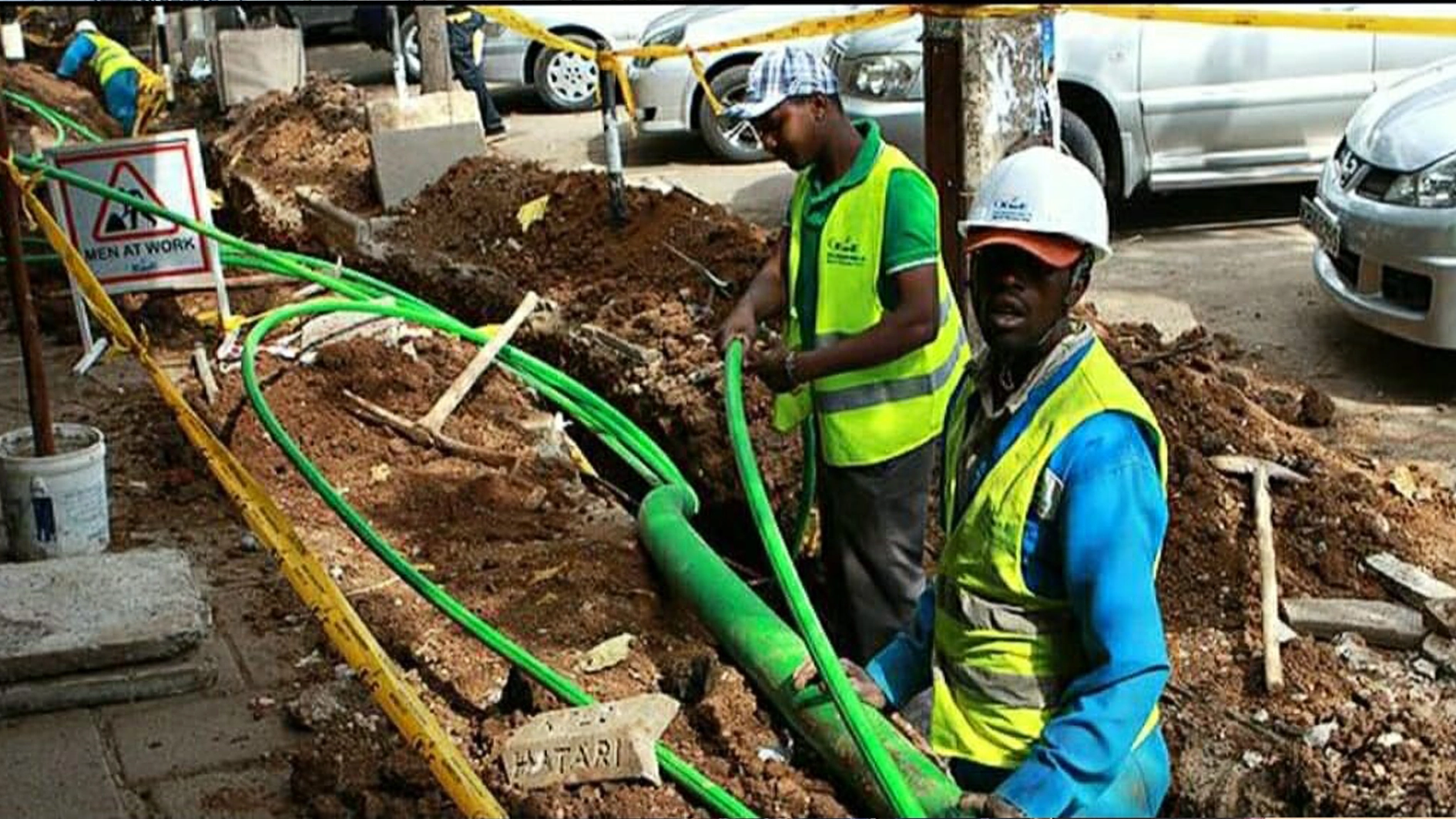
Nigerians ultimately bear the cost of frequent fibre cuts through disrupted digital transactions and services, even as telecommunications operators shoulder much of the immediate financial burden of repairing damaged infrastructure, energy expert and entrepreneur, Dare Osamo, has said.
Osamo, Chief Executive Officer of Impact Energy, made the observation while speaking on Channels Television’s Business Morning, against the backdrop of the growing incidence of damage to fibre-optic infrastructure across the country.
According to him, over 5,000 fibre-cut incidents were reported in the first six months of the year, a figure that could translate to roughly over 10,000 incidents annually, with an estimated economic cost of about N70 billion.
He said the reported cases amounted to almost 30 incidents daily, excluding unreported cases nationwide, describing the situation as a “massive and endemic issue” for Nigeria.
But the impact of a fibre cut is often felt beyond the immediate loss of connectivity. In affected areas, disruptions can knock out or degrade voice, data, SMS and USSD services, with consequences for POS transactions, mobile banking, businesses and other digital services.
The NCC has documented major fibre-cut outages affecting multiple states and services, underscoring the dependence of everyday economic activity on the underlying network infrastructure.

Osamo said the immediate financial burden of restoring damaged infrastructure generally falls on network operators, but ordinary Nigerians ultimately feel the wider economic consequences.
“The common people are the ones that bear the cost the most because the cost is affecting them the most when you can’t use some POS infrastructure and related everyday services,” he said.
The energy expert explained that while operators may seek compensation from those responsible for damaging their infrastructure, they must first restore the network before pursuing such claims.
“At the moment, most of the other costs are being borne by the telecoms company,” he further revealed, adding “Even if they are going to seek compensation, that is at the back end. One, they need to fix their infrastructure first before seeking compensation for the damages of the installation.”
Osamo identified road construction as the biggest source of fibre damage, arguing that telecommunications infrastructure and road networks frequently occupy the same corridors.
He estimated that civil works associated with road construction were responsible for almost 90 per cent of fibre cuts.
“The biggest culprits in this are the road construction,” he gave further clarity, giving context with “Because unfortunately, both the telecom infrastructure and then the road network, they occupy the same space.”
According to him, construction and modification of road networks can inadvertently damage fibre cables buried along the same corridors, creating service disruptions that can affect entire communities.
The problem, he added, is compounded by the fact that some of the roads were constructed decades before much of the present telecommunications infrastructure was deployed.
“The current mapping somehow is not sufficient to detect some of this infrastructure,” Osamo revealed.
He, however, noted that mechanisms exist for major construction projects to determine whether fibre cables are buried within their work corridors.
“There is a mechanism for major construction to be able to determine if fibre cables are beneath the corridor of work,” he said, although this requires construction companies to make the necessary enquiries from telecom operators before commencing work.
Osamo said greater coordination was therefore required between road contractors, telecom operators, government agencies and other stakeholders to minimise damage.
He called for “massive education” of communities and stakeholders, including telecom operators, construction companies, host communities, artisans, vendors and the general public.
“There is a working relationship that helps us protect this critical infrastructure asset that carries the digital economy,” he emphasized.
Osamo stressed that fibre infrastructure should no longer be viewed simply as the property of telecommunications companies, given the extent to which banking, commerce and other everyday activities now depend on connectivity.
“You don’t see it as the operator’s asset alone that is damaging,” he insisted.
His position is consistent with the NCC’s recent warning that fibre-optic networks have become critical infrastructure underpinning banking, government services, education, healthcare, commerce and emergency communications.
The commission said damage to the infrastructure can result in failed calls, stalled payments, interrupted services and wider economic costs.
For consumers and businesses in affected areas, therefore, the cost of a fibre cut is not limited to the cable that has to be repaired. It can also be measured in failed transactions, interrupted services and lost business opportunities while connectivity remains down.

