 Follow Us on Google News
 Follow Us on Google Discover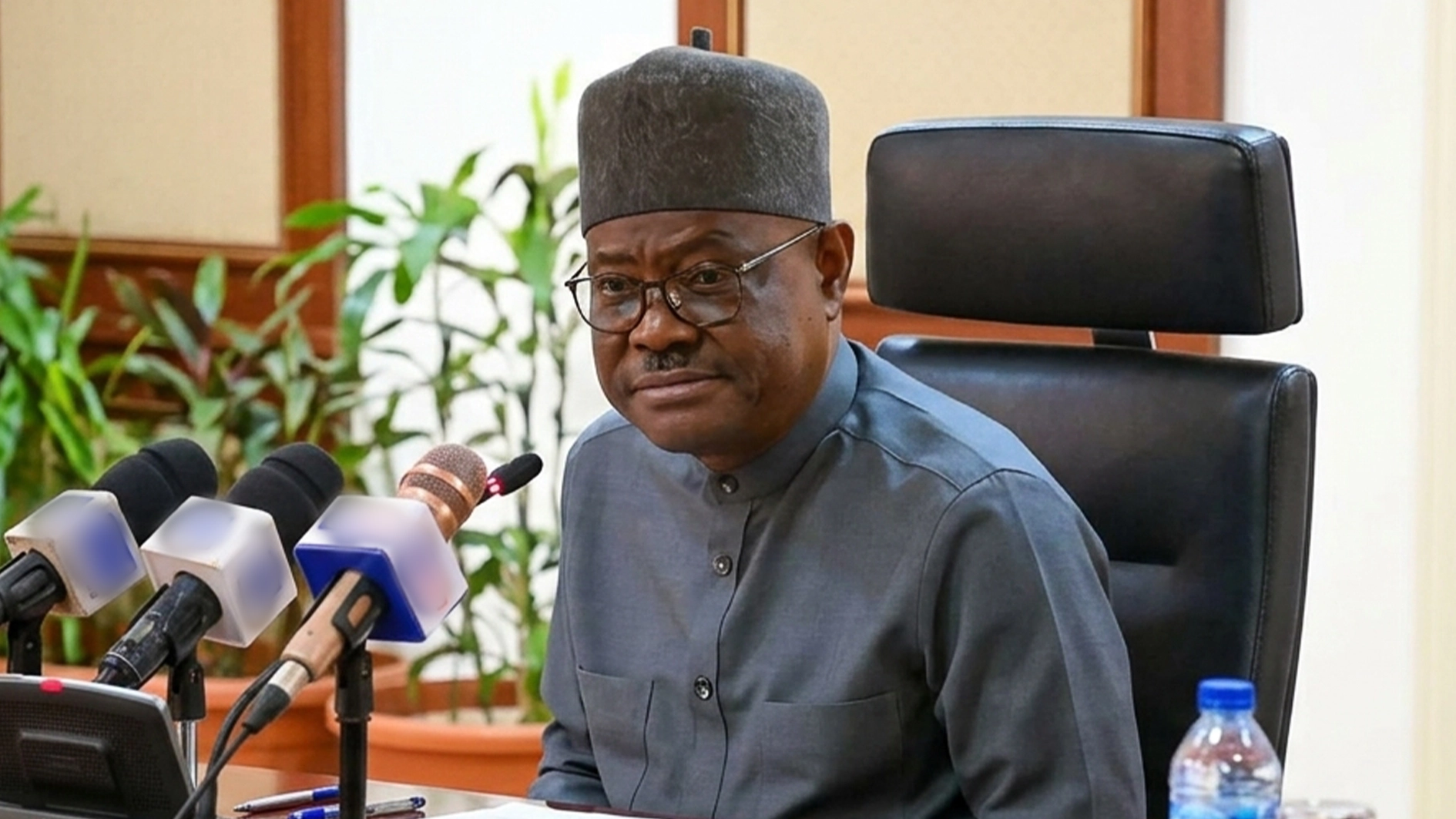
The preponderance of spokespersons, commentators and political party hype men and women make Presidential elections in Nigeria look more of an entertaining sport rather than a serious business of leadership recruitment. However, the tradition has changed slightly in the lead-up to the 2027 poll, because some ambitious commentators have risen as non-participatory gladiators to preserve obvious sibling rivalry and project their political ambition, LEO SOBECHI reports.
Most often, electoral competitions and contests are framed as in horse-racing. That explains why you get to hear of three-horse race, dark horse and backing the wrong horse. Political scientists propose that victory in democratic elections could either be through First-Past-the-Post or Two-Round system, that is where a runoff is organized to produce a clear choice after the candidates fail to reach a determined threshold or required majority.
However, whether by plurality or simple majority, how winners emerge during elections underscore the fact of the democratic ideal of popular participation. Perhaps, due to Nigeria’s recourse to the parliamentary system of government during the immediate post-independence era, despite the changeover to the presidential system in 1979, periodic elections continue to expose some of elements of the parliamentary system.
One stark example is the idea of giving political parties prime positions in the reckoning of candidates during an election. So, unlike in the United States, from where Nigeria borrowed the presidential system, the 1999 constitution posits that votes are cast for political parties that produce the candidates.
So, instead of the candidate being at the forefront for voter evaluation, the party remains the focus. That is why the refrain of ‘structure’ has gained currency in various electoral cycles. This method broaches the alternative vote or ranked choice voting and proportional representation that obtain in parliamentary jurisdictions.
It is against that intricate background that spokespersons feature prominently and strongly during campaigns for presidential elections in Nigeria. That trait came up strongly during the lead up to the 2015 presidential election, when a lot of surrogate voices emerged to outline the various positive things that Nigeria should experience in a Muhammadu Buhari presidency.

These promotional voices created a lot of lurid pictures of how life under Buhari would banish the perceived failings of the incumbent President Goodluck Jonathan’s administration. It was as a result of that chorus of benefits of ‘Change’ that, for the best time, an incumbent president was defeated by the opposition.
However, the irony of the effusive promotion of a candidate was that at the point of his election, President Buhari began to disassociate himself from the many heaven-on-earth promises that were churned out by the college of spokespersons. For instance, about the promise of making one Nigeria’s naira to equate in value to one United States dollar or providing massive jobs for Nigerian youths, the then President usual refrain was, “I am not aware.”
Many watchers of the polity argued that the evident gap between the campaign promises and mandate delivery by the Buhari administration was blamed on the then President’s decision to isolate the leaders of the Action Congress of Nigeria (ACN) tendency in the merger that produced the All Progressives Congress (APC).
Whatever be the case, the 2019 election cycle threw up a plethora of presidential spokespersons including, Femi Fani Kayode, Senator Dino Melaye, Reno Omokri, Segun Sowunmi among others.
In the succeeding electoral season of 2023, the field of presidential marketers widened to include the likes of Bayo Onanuga, Daniel Bwala, Kenneth ‘Andy’ Okonwko, Aisha Yesufu, Dele Farotimi. Nearly four years later, the culture is yet to fade, rather there have been some added innovations, including the inclusion of online representatives.
Some of these new marketers include Precious Oruche (Mama Pee), Zekeri Idris Junior and Peter Akah. The migration to online presence seems to accommodate the clamour for youth involvement in the political cum electoral process.
But, the central feature of offside marketers is the involvement of some partisan apologists that have either held or holding public office or those who were on the presidential ballot at one point. Of this pack are Governor Chukwuma Soludo, Minister Nyesom Ezenwo Wike and Yusuf Datti Baba-Ahmed. As they demarket their targets, these non-participant supporters cleverly mask their ambition for the high office.
The influence and impact of the voices of those personalities have helped to keep the buildup to the 2027 common election intense and explosive. What they say, how they say them as well as their latent and obvious motivations belie
the need for clarity on the promises of the main contenders.
Governor Soludo: Carryover Bitterness
On May 29, 2009, when Professor Charles Chukwuma Soludo left the Central Bank of Nigeria (CBN) as its governor, he disclosed that both Presidents Olusegun Obasanjo and late Umaru Musa Yar’Adua, talked him into exploring an excursion into partisan politics.
In the year 2010, in spite of the electoral abracadabra that gifted him with the Peoples Democratic Party (PDP) governorship ticket for Anambra State, Soludo contested unsuccessfully against Peter Obi and Dr Chris Ngige.
It was not only that Soludo was beaten by the duo of the All Progressives Grand Alliance (APGA) and Action Congress of Nigeria (ACN), the former CBN governor felt so embittered that the very mini bus that he donated to the church in his community was used to ferry parishioners to where Obi was endorsed for his second term in office.
Then, at the tail end of Obi’s tenure as governor, Soludo’s attempt to join APGA and re-contest for the 2013 governorship poll, he was disqualified after some political jobbers in the party fleeced him of humongous sum of money. The pain from those twin losses humbled the garrulous and proud former CBN governor.
It was after those experiences that Soludo went down on bended knees to become a hype man for Governor Willie Obiano, culminating in his legendary endorsement of Obiano’s second term ambition with the words: if it is not broken, why mend it? Having learnt the power of sycophancy, including serving guests at Obiano’s residence, the former CBN was supported to become governor in 2021.
As governor, Soludo in 2022, launched himself on the scene as one of the presidential marketers by writing a long essay in which he traduced Mr Peter Obi and dismissed his chances at winning the 2023 presidential contest.
Titled, “History beckons: I shall not keep silent,” the essay started as a defensive account of his postulation that Obi’s investments in Anambra State while he held sway, amounted to less in relative value.
Part of the vitriolic essay read: “In a democracy, it is a game of numbers. So far, I don’t see any of these–and 2023 might again be a wasted opportunity for Ndigbo! What is our Plan B when Peter Obi loses in February 2023?
“After the elections, we will see how many votes any of the leaders of the socio-cultural groups will get for Peter Obi from their wards. Sometimes I even sense a conspiracy to nudge us on a path to nowhere thereby further pushing us into irrelevance, and I pray that I am wrong. Just my two cents!”
Only those who are aware of the silent rivalry between Obi and Soludo know that the Anambra State governor had, since 2010 when he lost his first bid to be governor, dreamed of flying the flag of a national party in a presidential election. And, having graduated with first class in the Department of Economics in the same University of Nigeria Nsukka (UNN) as Obi, the former CBN governor panders to the grand illusion that he is the best brain from South East to seek the mandate of Nigerians for the Presidency.
Soludo knows that a win for Obi would bury his presidential ambition, especially given the power rotation principle between North and South of Nigeria. As such, his effusive attempts to curry President Bola Ahmed Tinubu’s favour after tipping former Vice President Atiku Abubakar to win the 2023 poll come as part of his erudition in sycophancy.
To that extent, the claim that Progressives are working together comes as a handy selling proposal to ensure that a possible Peter Obi presidency remains a chimera so that he could breathe easily the air of continued relevance in Nigeria’s politics.
Nyesom Wike: Master-Servant Antagonism
AT a point in his political career, Ezenwo Nyesom Wike looked up to the immediate past Minister for Transportation, Chibuike Rotimi Amaechi. Those who know the relationship between the current FCT Minister and the African Democratic Congress (ADC) Vice-presidential candidate, say that Wike served as the go-to enforcer within their political circles in Rivers State.
For his roles in midwifing the Amaechi governorship, Wike was rewarded with the position of Chief of Staff in the BrickHouse, the seat of government in the oil-rich Niger Delta state. But, matters took a different turn in Governor Amaechi’s second term, when the former Chief of Staff was recommended for ministerial appointment in the President Goodluck Jonathan administration.
As Minister of State, Education, Wike started dreaming big and eyeing the office of his former master. Siding with the Jonathans in the political hostilities that ensued, Wike founded the Grassroots Development Initiative (GDI), which he cleverly transformed into a political structure to amplify his governorship aspiration.
As luck will have it, Jonathan lost his re-election bid to the inchoate APC, which had Amaechi as the Director General of the Muhammadu Buhari Presidential Campaign. But, winning the Rivers State governorship in that selfsame election cycle, Wike secured the ground to sustain the supremacy battle with his former boss.
And so, with Amaechi going ahead to net the Grade A ministerial appointment, while Wike takes over from him at the BrickHouse, their political competition and rivalry were to take another dimension in 2023, when both former allies aspired the nation’s presidency. Both crashed. But, as Wike proceeded to net a Grade A ministerial appointment in Bola Ahmed Tinubu Presidency, Amaechi went to retool himself, garnering a Bachelor of law degree and being called to the Nigeria Bar.
However, in the lead up to the 2027 general election, Amaechi became what Wike failed to become in 2022: Vice Presidential candidate of a major political party. Piqued that his rival has attained that lofty political height before him as in the governorship, Wike dismissed Amaechi’s vice-presidential candidacy, stressing that anybody who had shut-down the courts in the past does not deserve to be Vice President of a democratic country.
While fielding questions from journalists during his monthly media interactive programme in Port Harcourt, the FCT Minister declared: “Rotimi Amaechi who wants to be Vice President, once shutdown the courts in Rivers State, which caused a pregnant woman to give birth in prison.”
Datti Baba-Ahmed: Painful Abandonment
As Senator representing Kaduna North Senatorial District, Yusuf Datti Baba-Ahmed had his mandate truncated by the Court of Appeal. After contesting the 2011 general election as the candidate of now defunct Congress for Progressive Change (CPC) for the Senate seat, the PDP candidate in the election, who is a former governor of the state, Ahmed Makarfi, rejected INEC’s declaration of Baba-Ahmed as winner.
The former governor successfully proved widespread irregularities through a recount as ordered by the Election Petition Tribunal. After the Tribunal nullified the election, Datti took the matter to the Court of Appeal, but the Makarfi’s return as the validly elected candidate for the Kaduna North Senatorial District was upheld.
In 2022, shortly after he defected from the PDP and joined the Labour Party (LP), where he clinched the party’s
presidential ticket, Peter Obi, chose Datti as his running mate. Believing that his party won the election, Datti claimed that none of the three front runners in the election was qualified to be sworn in as President on May 29, 2023.
He warned the then President Muhammadu Buhari not to swear-in President Bola Ahmed Tinubu, claiming that the president did not satisfy the necessary constitutional provisions to be inaugurated as President.
Stakeholders in Kaduna North said that Datti has for long dreamed of becoming president, stressing that even his senatorial gamble was to serve as a stepping stone to the presidential contest. Like Soludo in Anambra State, Yusuf Datti Baba-Ahmed believes that he is about the best candidate to be President of Nigeria in a democratic dispensation.
After failing to be on the ballot for the 2027 presidential contest, as well as his very brief stint as Senator, Datti has been shooting from both sides of his lip. When he is not attacking Vice President Kashim Shettima, he propounds the dubious argument that nobody can fix Nigeria or its economy.
With eyes set on 2031, Datti kicks against Vice President Shettima and the Vice-Presidential candidate, Senator Rabiu Musa Kwankwaso, believing that in the event of any of the two being in the presidency in 2027, his chances of fulfilling his presidential ambition would have been extinguished permanently.
Datti’s pain of abandonment seems to have been accentuated by the failure of former governor Donald Duke to consider him as Vice-Presidential candidate on the Peoples Redemption Party (PRP), to which he had hurriedly defected in anticipation of possible consideration for retention as presidential running mate.

