 Follow Us on Google News
 Follow Us on Google Discover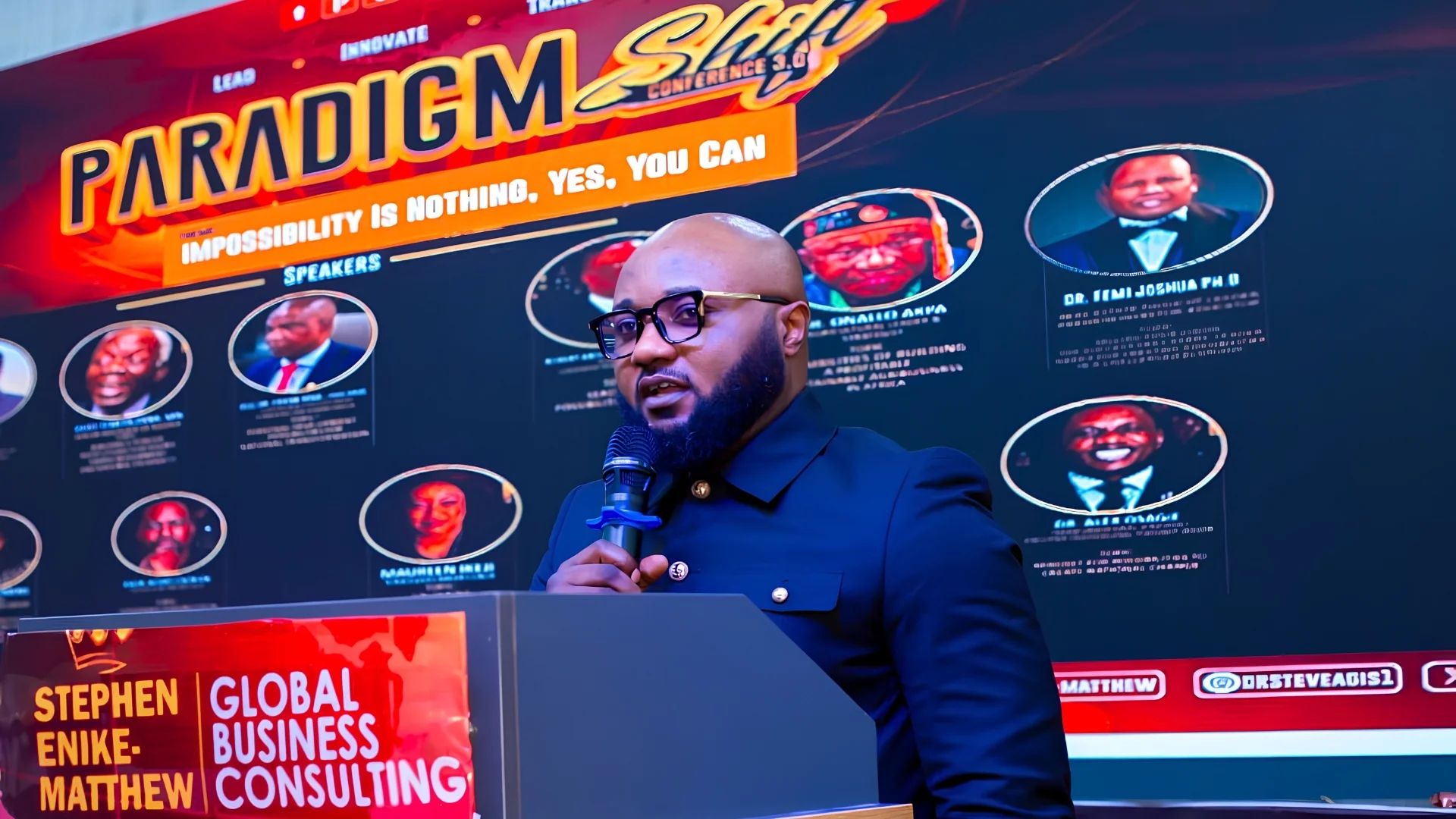
Convener of the Paradigm Shift Conference, Dr Stephen Enike-Matthew, has called for greater investment in developing a new generation of African leaders, arguing that mindset, entrepreneurship and individual responsibility will be important to the continent’s economic and social transformation.
Enike-Matthew spoke at the third edition of the Paradigm Shift Conference (PSC 3.0), held at Reiz Hotel in Abuja on Saturday, September 26.
The conference, themed “Impossibility Is Nothing: Yes You Can”, brought together entrepreneurs, professionals and participants for discussions around leadership, business development, wealth creation, personal development and women’s empowerment.
Among those identified by organisers as participants were former Deputy Inspector-General of Police Frank Mba and Jennifer Hembafan Alih, founder of the Jennifer Ubah Women and Children Initiative, alongside entrepreneurs, traditional leaders and professionals.
Addressing the gathering, Enike-Matthew said the theme was intended to challenge participants to reconsider assumptions about what they could achieve despite economic, social or personal limitations.
“Impossibility is not a fact; it is an opinion. Your opinion of yourself is more powerful than the world’s opinion of you,” he said.

He argued that difficult economic circumstances and individual backgrounds should not automatically determine people’s expectations for their future.
“The world has told you Nigeria is too hard to build wealth, your background determines your future and your dreams are too big,” Enike-Matthew said. “Today, we tear that report apart and write a new one.”
His remarks built on themes that have featured in previous editions of the conference, including self-discovery, entrepreneurship and leadership development.
The 2025 edition, held in Lagos, focused on “Building Organic Wealth Through Self-Discovery” and brought together entrepreneurs, students, business executives and other participants.
A major focus of this year’s conference was leadership and the development of people capable of taking responsibility in business, public institutions and communities.
Enike-Matthew argued that Africa’s development challenges could not be explained simply by a shortage of natural or human resources.
“Africa does not lack resources. It has lacked resolute leadership,” he said.
He described leadership as extending beyond political office or formal titles to include the willingness to accept responsibility and translate ideas into measurable outcomes.
His comments reflected a concern he had raised at the previous edition of the conference, where he warned about the consequences of failing to deliberately prepare younger Africans for future leadership responsibilities.
Enike-Matthew said leadership development should therefore involve equipping people with the ability to identify problems, develop solutions and build institutions capable of surviving beyond individual personalities.
He also linked leadership to mindset, arguing that the way individuals understand their circumstances can affect how they respond to opportunities and challenges.
“You cannot lead beyond the level of your thinking. You cannot innovate beyond the limits of your imagination. You cannot transform a world you have concluded is impossible,” he said.
The conference programme was organised around four broad areas: mindset, leadership, business and wealth creation, and women’s empowerment.
Enike-Matthew also used the conference to advocate entrepreneurship and more deliberate approaches to wealth creation.
He argued that professional or vocational ability alone was insufficient to guarantee sustainable economic success, particularly where entrepreneurs lacked financial knowledge, business structures and an understanding of their markets.
His position is consistent with comments he made ahead of the conference that entrepreneurs need to combine skills with financial discipline and systems capable of allowing businesses to grow beyond their founders.
“Skills alone are not enough to build sustainable businesses,” Enike-Matthew recently said, arguing that entrepreneurs should understand their markets and develop structures that can support long-term operations.
At PSC 3.0, he encouraged participants to consider entrepreneurship, agribusiness and professional opportunities as possible routes to creating sustainable income.
“It is not spiritual to be broke. Poverty is not humility; it is a failure of strategy,” he said.
The remark formed part of his wider argument that wealth creation should be approached deliberately rather than regarded solely as a product of circumstances.
However, Nigeria’s economic challenges extend beyond individual mindset or entrepreneurship. Access to capital, infrastructure, inflation, unemployment, regulation, education and the wider business environment also influence people’s capacity to establish and sustain enterprises.
The conference’s emphasis was therefore primarily on the areas individuals and business owners can attempt to influence directly, including skills, planning, financial discipline and enterprise development.
Another part of the conference was the launch of two books authored by Enike-Matthew, Beyond Survival and The Art of Dreaming Big.
According to the organisers, the books expand on the themes of personal development, ambition and economic independence that underpin the Paradigm Shift initiative.
The conference also featured the Africa Leadership and Development Initiative Awards, designed to recognise individuals and organisations for contributions to leadership and development.
Enike-Matthew said the recognition was intended not only to celebrate recipients but also to encourage examples of leadership that others could emulate.
He urged participants to regard the conference as a starting point rather than an end in itself.
“Do not be visitors; be participants. Do not merely take notes; make decisions. Network intentionally and connect deliberately,” he said.
The Abuja gathering was the third edition of the Paradigm Shift Conference.
Its second edition was held at the MUSON Centre in Lagos in September 2025 and focused heavily on self-discovery as a foundation for entrepreneurship and sustainable wealth creation.
The 2025 event also included grants to some entrepreneurs and discussions on developing younger Africans for leadership.
This year’s move to Abuja expanded the conversation around leadership while retaining entrepreneurship and personal development as major elements of the programme.
Enike-Matthew said the broader objective was to develop individuals capable of creating businesses, leading organisations and contributing to their communities.
The challenge will be translating the motivational themes discussed at such gatherings into measurable outcomes for participants.
Entrepreneurship in Nigeria operates within difficult economic conditions, while leadership development requires more than individual ambition. Access to education, finance, mentorship, functioning institutions and economic opportunities can significantly influence outcomes.
For Enike-Matthew, however, those structural challenges should not prevent individuals from developing their capabilities or attempting to create opportunities.
He urged participants to leave the conference prepared to apply what they had learnt rather than treating the programme simply as an inspirational gathering.
“If anyone tells you it cannot be done, look them in the eye and say: Impossibility is nothing. Yes, I can,” he said.
As PSC 3.0 ended in Abuja, its central proposition remained that developing Africa’s next generation of entrepreneurs and leaders must begin with changing how people understand their abilities, responsibilities and possibilities.
Whether that philosophy produces lasting impact will ultimately depend on what participants and the initiative itself build beyond the conference hall.

