 Follow Us on Google News
 Follow Us on Google Discover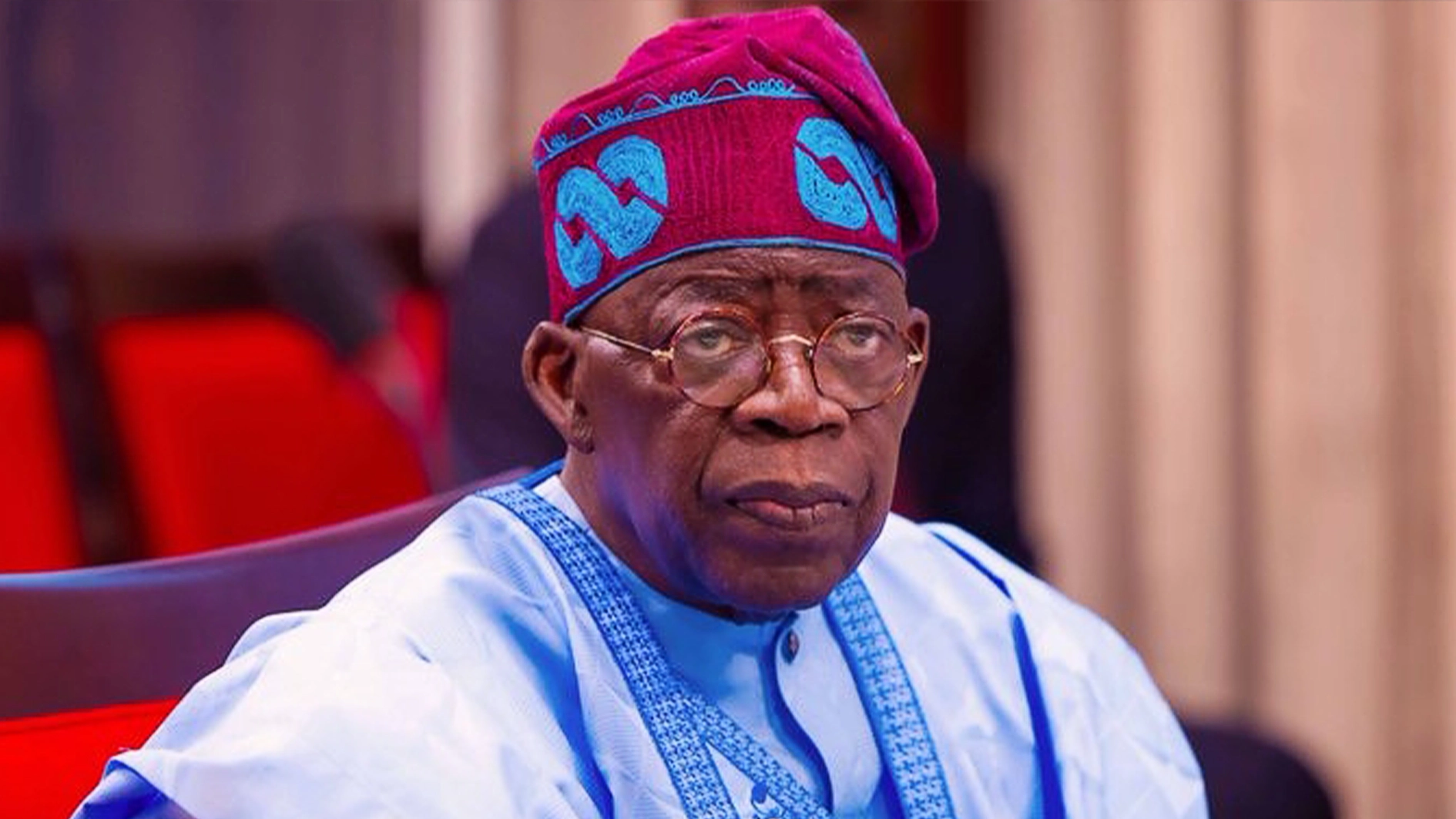
● President says painful reforms have corrected Nigeria’s economic course
● Promises lower living costs, jobs, industrial growth, wider prosperity
● HURIWA blames poor governance, weak institutions, insecurity for economic woes
● Okorie warns ethnic, religious sentiments may shape 2027 elections
● Ugwu blames leadership, corruption, urges credible polls, greater voter participation
● Ojedokun seeks security, fiscal reforms, decentralisation to strengthen governance
● Ayoola, George decry resource mismanagement, poverty, weak infrastructure
● Igbuzor urges governance built around devt, active citizenship
President Bola Tinubu yesterday declared that Nigeria had reached a “turning point,” saying the painful economic reform phase was over and the country had entered a new “age of prosperity” focused on reducing the cost of living, creating jobs and ensuring that the benefits of economic growth were widely shared.
Tinubu made the declaration in his Independence Day address to mark Nigeria’s 66th anniversary, titled “From Reform to Prosperity”, in which he defended the economic policies of his administration and urged Nigerians to stay the course.
The President’s speech came as some stakeholders and analysts regretted that, despite various reforms embarked upon by successive Federal Governments, the country was yet to come out of the woods economically and socially.
Respondents who spoke to The Guardian, such as former Deputy National Chairman of the Peoples Democratic Party (PDP), Chief Bode George, reviewed the years since independence and concluded that the country had failed to make the progress expected of a nation with its resources and potential.
“For 66 years, we’ve gone through a lot of experiences, the good, the bad, and the ugly. Politically, we have not been able to move in the direction of civilised countries,” he said.

For its part, the Human Rights Writers Association of Nigeria (HURIWA) asserted that Nigeria’s promise of economic prosperity, security and social justice remained undermined by poor governance, weak institutions and insecurity.
Meanwhile, Tinubu said the reforms undertaken since his assumption of office had corrected the country’s economic direction, describing them as painful but necessary treatment for longstanding structural problems.
Using a cancer patient as an analogy, the President said Nigeria had for too long treated the symptoms of its economic problems rather than confronting their underlying causes.
“By 2023, poverty was rising, and hope was nearly gone. The country’s situation was darker than ever. We had no choice but to act,” he said.
Tinubu said previous administrations had chosen “morphine” by sustaining inefficient arrangements and postponing difficult decisions, while his administration chose to “excise the cancer”.
He acknowledged that the reforms had produced painful “side effects”, but argued that the hardship should not be confused with the underlying economic problems they were designed to address.
“Our reforms did not create the weaknesses in our economy. They confronted them,” he said, while warning against attempts to reverse the policies and return to what he described as the “abuse of addictive subsidies”.
According to him, three and a half years into his administration, economic indicators showed that the reforms were yielding results.
He said the economy had grown by more than four per cent this year, with both the oil and non-oil sectors contributing to what he described as a period of stable growth.
Tinubu also cited reduced oil theft, a substantial fall in inflation from its peak, rebuilt foreign reserves and a more stable foreign exchange market as evidence of progress.
He said Nigeria recorded its highest-ever non-oil export revenue in 2025, exceeding $6 billion.
“These are not idle claims. International observers, journalists, NGOs and multilateral institutions can see the change,” he said, adding that foreign direct investment continued to rise.
Tinubu said the focus of his administration had now shifted from correcting the country’s economic course to delivering “shared and widespread prosperity”.
He said prosperity meant more than economic growth and improved statistics, but a country where farmers could produce more cheaply and earn decent returns, factories had reliable electricity, businesses could access credit, and young people could find productive employment.
He identified reducing the cost of living as the immediate priority of the new phase, saying the government would seek to achieve this by lowering the cost of producing and transporting goods.
He acknowledged that millions of Nigerians continued to struggle with food, education, healthcare and transportation costs.
He attributed the hardship to decades of low productivity, inadequate infrastructure, insufficient opportunity and weak institutions, saying the problems predated the reforms of his administration.
“We cannot erase in four years what accumulated over generations. But we can change its course. We can build an economy that steadily lifts people out of poverty while ensuring that those who remain vulnerable are not abandoned along the way,” he said.
“Our objective is not to manage poverty more efficiently. We will defeat it,” the President affirmed.
He acknowledged that achieving the goal would take time, discipline, sustained economic growth and the creation of millions of productive opportunities.
He maintained that Nigeria was entering the new phase from a stronger position because, in his assessment, the fundamental direction of the economy had been corrected.
“The age of reform has done its work. Now begins the age of prosperity,” he said.
Tinubu urged Nigerians to look ahead rather than reconsider the sacrifices associated with the reforms, declaring that the country had “passed through our own Red Sea”.
ldren could aspire beyond the circumstances of their birth.
“Our destination is in sight. Our foundations are strong. Our direction is clear. So let us go forward. No looking back,” Tinubu added.
BUT HURIWA said poor governance, weak institutions and insecurity continued to hinder Nigeria’s prospects for economic prosperity, security and social justice.
he rights group said the country could still achieve sustainable economic growth and improve the living standards of citizens if competent leadership, accountability and effective governance were entrenched at all levels.
Its National Coordinator, Emmanuel Onwubiko, said Nigerians could begin to feel the benefits of economic growth if the country elected leaders committed to sound economic policies, transparency and efficient management of public resources.
“The country’s current economic difficulties, including rising living costs, unemployment, underemployment and high energy and commodity prices, have placed considerable pressure on households,” he stated, adding that Nigeria needed leadership capable of developing and implementing coherent economic, social and environmental policies.
Making a case for the channelling of revenues from public institutions and natural resources through transparent managers, he criticised the continued reliance on borrowing, saying greater attention should be paid to domestic revenue mobilisation, accountability and the effective management of proceeds from crude oil exports and other sources of government revenue.
titutionalise good governance and to elect a president who would not be globe-trotting and going about cap in hand to pick up loans from all conceivable places, yet there is a lack of transparency and accountability in the management of revenues.
“Nigeria has not done enough to provide an environment in which citizens could live, work and invest without depending excessively on private alternatives. The prevailing security challenges stem from weaknesses within the security architecture, alleged procurement irregularities and institutional failures.”
On whether Nigeria’s political leaders and institutions could build a system in which accountability, justice and equal citizenship would take precedence over ethnic, religious, regional and partisan interests, HURIWA answered in the negative.
It alleged that political considerations continued to influence the application of justice and governance, citing what it described as inconsistencies in the treatment of separatist activists and other political actors.
The organisation specifically referred to the continued detention and prosecution of Nnamdi Kanu, leader of the Indigenous People of Biafra (IPOB), and contrasted his case with the treatment of Yoruba Nation agitator Sunday Adeyemo, popularly known as Sunday Igboho.
HURIWA argued that such differences in the treatment of political and self-determination movements raised questions about equality, equity and consistency in the administration of justice.
The organisation also raised concerns over the influence of political affiliations on the handling of security and governance issues, insisting that national institutions should operate according to clearly defined laws and principles rather than partisan or personal interests.
HURIWA maintained that Nigeria’s democratic development would remain fragile unless institutions were strengthened to guarantee accountability, equal citizenship and respect for the rule of law.
The group said the challenges confronting the country were not insurmountable, stressing that effective leadership, institutional reform, transparency and responsible management of public resources could help restore citizens’ confidence and place the economy on a sustainable growth path.
It urged Nigerians and political leaders to prioritise the national interest, competent governance and institutional accountability in addressing the country’s economic, security and social challenges.
NATIONAL Chairman of Igbo Agenda Dialogue, Dr Chekwas Okorie, noted that with the right reforms, Nigeria could build a strong economy, provide effective security, improve its infrastructure and build institutions that are responsive to the yearnings of the people.
Okorie stated that the country had moved from bad to worse and was now divided along ethnic and religious lines because of the attitude of its leaders, stressing that this could have implications for the coming elections unless something drastic was done to prevent it.
He blamed past and present leaders for the slide, explaining that the way appointments were made and infrastructure projects sited was partly responsible.
Okorie added: “Reforms have not helped the country, and this is the challenge of the present government. The challenge of the government in power is to tell us what they have done with the mandate they got in nearly four years at the moment that will make an average Nigerian believe they should go to the polls and vote for them.
“I have not seen them tell us what they have done with the four years. The opposition parties are mentioning every day what they would do differently and deriving from what the government in power is doing badly. They come up with policies that they are not prepared to implement. The most difficult thing for any politician to do at the moment is to defend the APC government. We are citizens, and we know what is going on; but the election will be an opportunity to ask them to continue or be booted out.
“Let me add that this country is so divided along the lines of ethnicity and religion. I have been saying this since last year: that irrespective of the manifesto that the candidates in the 2027 elections would be throwing around, the 2027 elections would likely be characterised by ethnic and religious sentiments, and that has already begun. It is already dominating the campaigns and conversations both on social media and in churches and mosques.”
ACTIVIST and former Labour leader, Osmond Ugwu, attributed the country’s problems to poor leadership and corruption, saying Nigeria could reach any level it desired if corruption were tackled and good leadership enthroned.
Ugwu stated that the country could still build an economy in which ordinary citizens feel the benefits of growth through productive jobs and rising productive capacity.
He agreed that it was possible to provide sufficient security and basic infrastructure for citizens, adding that political leaders should aim to build institutions where accountability and the rule of law take prominence.
“The problem of Nigeria is leadership with proper focus for this country. We can build the kind of economy where everybody can be happy if we have leadership that is committed and focused. All these years we have not had the kind of leadership that should advance the cause of the country. That is why we are suffering.
“If we have the leadership that is people-centred, focused, mindful of people’s rights, and averse to corruption, we would advance our cause. It is leadership that created the corruption in the first place. I believe that we can do better as a country if we have the right leaders. It is not too late in the day to make that advancement. Since we have tried several methods so far, we can think of making the change,” he noted.
On how to get the right leadership, he said it could be achieved through free, fair and credible elections devoid of manipulation, in which the people’s votes count, stressing that, with this, “we can get the right leadership we want.”
Ugwu therefore urged Nigerians to insist on obtaining their voters’ cards and participating in the electoral process. He said the current leadership had not demonstrated that it was different from those that preceded it and therefore should be voted out for a new set of leaders.
Olu Ojedokun, Law Professor at Lead City University, Ibadan, said Nigeria could build an economy in which ordinary citizens benefit more directly from growth, but he cautioned that reversing years of economic and institutional weaknesses would take time.
He advocated a more responsive security architecture, adequate funding for security institutions and a tax system capable of generating resources for public services, even as he questioned whether citizens should continue to bear the immediate burden of adjustment while waiting for future benefits.
ernance at the state and local government levels, noting that decentralisation could bring government closer to citizens and make public institutions more responsive to local needs.
NIGERIA still possesses the human and material resources required to create a safer and more prosperous society, said Dr Adebukola Ayoola of the Department of History and Diplomacy at the University of Ilesa. She, however, lamented that “the main inhibition to achieving that is mismanagement of our natural and human resources.”
While identifying fiscal irresponsibility, misplaced priorities and poor economic decisions among the problems holding the country back, she called for committed and compassionate leadership capable of placing the public interest above personal considerations.
Bode George also questioned aspects of the structure of the Nigerian state, including census, representation and the organisation of local governments, and urged that the anniversary should be a period of national introspection rather than simply celebration.
“Census, when was the last time we had a census? What should determine the local governments? Is it not people? Is it just pure land? So much went through my mind. And I said, what should we do? Because all is not well,” he stated.
For development expert and Founding Executive Director of the African Centre for Leadership, Strategy and Development (Centre LSD), Dr Otive Igbuzor, the central problem is the failure to make development the organising principle of governance.
“The basic problem we have is that development is not on the agenda. So because development is not on the agenda, the plans, the policies, the budget are not geared towards development,” he said.
His argument places the anniversary debate beyond the performance of any single administration.
Igbuzor wants governments at all levels to adopt clear development plans covering housing, water, education, healthcare and transportation.
He cited the housing crisis in Abuja as an example of what he considers a failure of planning and implementation, arguing that public land and resources could be deployed systematically to expand affordable housing.
“The land belongs to the government. The government has money. As allocated, one per cent of the budget goes to FCT every year. So you allocate something, build 1,000 houses every year. In ten years you have solved the housing problem,” he said.
He also urged citizens to become more active in politics and pay closer attention to government budgets, which he described as an important link between public promises and the delivery of services.
His prescription centres on what he described as “right leadership, active citizenship, and social consciousness”.
He added: “When you combine all of these with what I said before, good leadership, putting development on the agenda, Nigeria’s development will be accelerated.”

