 Follow Us on Google News
 Follow Us on Google Discover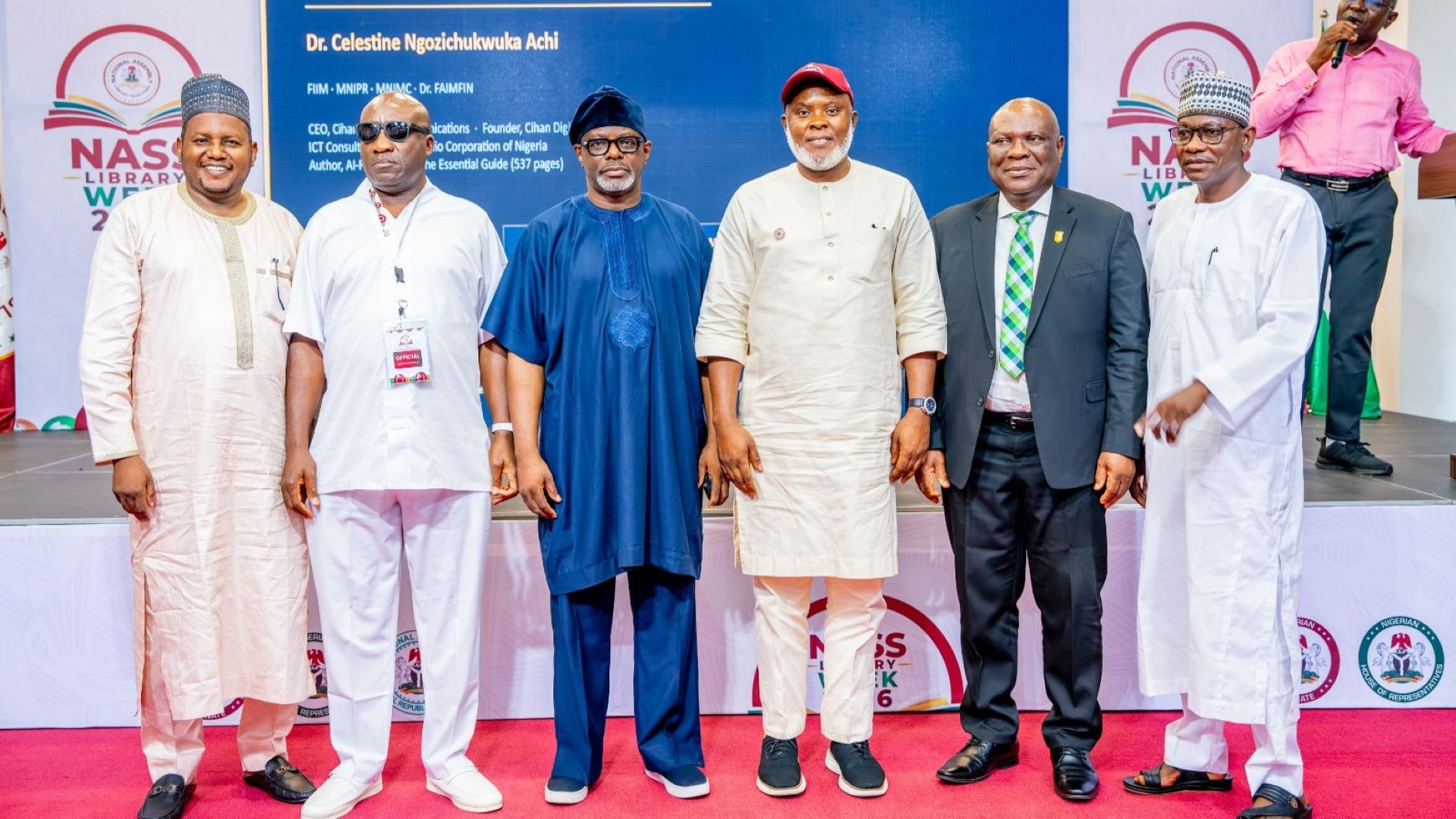
The National Assembly Library has kicked off its annual National Assembly Library Week in Abuja.
The celebration commenced under the banner: “Parliamentary Memory: Connecting Records, Legislation and the People.”
The event that started as a routine institutional showcase designed to familiarise lawmakers, legislative aides, and parliamentary staff with the library’s extensive holdings has rapidly evolved into a national narrative about digital modernisation, democratic transparency, and public trust.
The week-long event, timed to coincide with the International Day for Universal Access to Information, will reach its climax tonight, October 1, as Nigeria celebrates its 66th Independence Anniversary with an Independence Day Anniversary Night, a symbolic convergence linking the nation’s political history with its parliamentary legacy.
At the heart of this transformation is the Executive Secretary of the National Assembly Library Trust Fund, Henry Nwawuba, who pushed to redefine the library from a static repository of yellowing paper records into a vibrant, modern knowledge center for the entire legislature.
“Without institutional memory, every generation risks beginning again. With properly preserved records, one administration can build on the work of another instead of losing valuable knowledge to time,” Nwawuba said.

To translate that vision into practice, he unveiled an aggressive digital initiative aimed at overhauling the legislature’s digital infrastructure. Key projects currently underway include: Deepening the systematic digitisation of historical and contemporary legislative documents, including Order Papers, Votes and Proceedings, committee reports, gazetted laws, and oversight manuals.
Developing a dedicated mobile application to give lawmakers, researchers, and citizens real-time access to authoritative parliamentary materials on smart devices. Creating a live tracking system that allows users to monitor the journey of legislation from first reading to executive assent. Translating Nigerian legislation into major native languages, including Hausa, Yoruba, and Igbo, to demystify the legal process for everyday citizens.
Finally, rolling out infographics, podcasts, and video explainers designed to simplify complex legislative jargon and procedural rules.
Speaking at the opening ceremony, Clerk to the National Assembly, Kamoru Ogunlana, sounded a sharp warning regarding fake or outdated legislative documents passed off as official text. He stressed that accessibility must not come at the expense of authenticity, urging technical teams to ensure all digital records possess complete traceability and verified provenance.
Echoing these concerns, Senator Osita Ngwu, representing Senate President Senator Godswill Akpabio, urged lawmakers to make the renovated library their first line of defense against misinformation when drafting policies and analyzing bills.
The high-profile opening ceremony brought together a broad coalition of lawmakers, diplomats, academic scholars, and civil society partners, including representatives from UNESCO, the National Library of Nigeria, the Librarians Registration Council of Nigeria, the Nigerian Library Association, and the National Institute for Legislative and Democratic Studies (NILDS).
House Leader representing Speaker Abbas Tajudeen, Prof. Julius Ihonvbere, noted that history judges parliament not merely by the volume of bills passed, but by how well it safeguards its deliberative record for future generations.
Echoing this sentiment, Njoku Macdonald Obinna, Publisher of 4th Estate Reporters, remarked that the initiative represents a significant step forward in modern parliamentary practice. By bringing legal texts directly to smartphones and making them understandable in native languages, the National Assembly is dismantling long-standing barriers between the state and its citizens

