 Follow Us on Google News
 Follow Us on Google Discover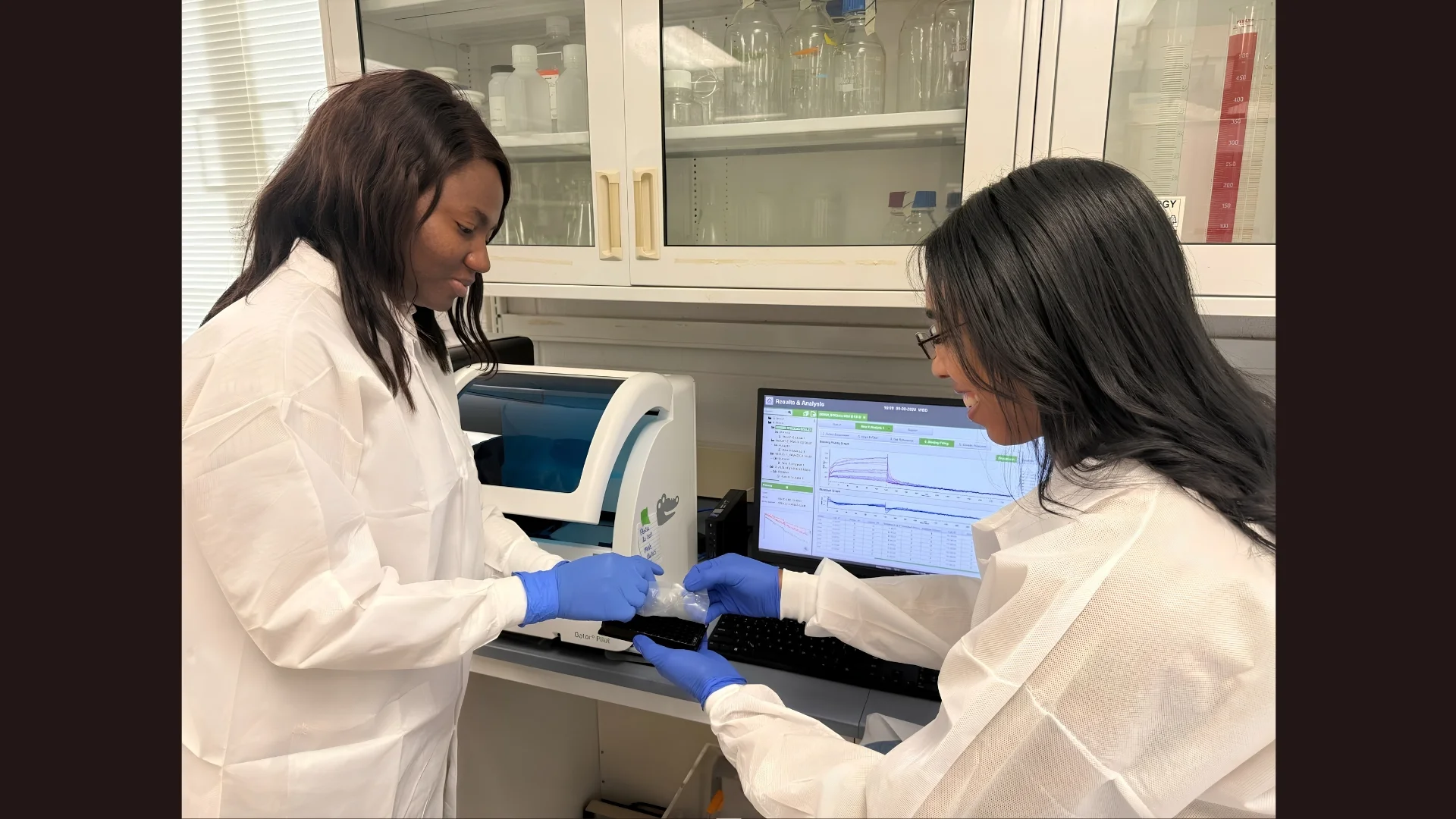
At a time when Nigeria continues to depend heavily on imported medical products, diagnostic materials and sophisticated laboratory technologies, the work of Nigerian scientists acquiring advanced biotechnology expertise abroad may hold important lessons for the country’s future.
One such scientist is Dr Judith Osakpamwan Enemudo, whose research journey has taken her from mushroom and fungal biotechnology into the increasingly important fields of molecular biology, recombinant protein technology and cellular signalling.
For Nigeria, the significance of that transition goes beyond one scientist’s career advancement. It points to the kind of multidisciplinary scientific expertise the country will need if it hopes to strengthen local biomedical research, improve diagnostic capacity and participate more actively in the development of biotechnology products.
Enemudo, who holds a PhD in Sustainable Agriculture and Environmental Science, began her research career studying mushrooms. Her work covered mushroom cultivation, strain evaluation, breeding, substrate optimisation and biological performance. Today, however, her laboratory work in the United States is taking her deep inside the molecular machinery of the cell.
She currently works on a research project sponsored by the United States National Institutes of Health (NIH), investigating how hydrogen peroxide-dependent oxidation affects extracellular signal-regulated kinase 2, commonly known as ERK2.
ERK2 is involved in cellular signalling, the complex communication system through which cells respond to their environment and regulate important biological processes. Changes in redox regulation and ERK2-mediated signalling have been associated with diseases including cancer, diabetes, cardiovascular disease and several neurological disorders.
Understanding such molecular processes is therefore an important part of the broader scientific effort to understand how diseases develop and how biological pathways might eventually be investigated for therapeutic or diagnostic purposes.
“My research journey has continued to evolve,” Enemudo said. “I began with fungal biology and mushroom biotechnology, where I studied organisms at the cultivation and biological-performance levels. My subsequent laboratory work has allowed me to move into molecular biology and recombinant protein technology.”
Her role involves studying molecular interactions using a library of more than 85 unique D-sites and producing monomeric streptavidin-D-site fusion proteins through an engineered bacterial expression system.
The work requires recombinant protein expression, protein purification, SDS-PAGE, Western blotting and biochemical characterisation. The wider project also uses advanced methods including kinase activity assays, surface plasmon resonance, biolayer interferometry and fluorescence-polarisation binding assays.
These may sound like highly specialised laboratory procedures far removed from the everyday concerns of Nigerians. Their potential relevance, however, becomes clearer when viewed against Nigeria’s dependence on imported biotechnology products and laboratory materials.
Recombinant protein technology is fundamental to modern biotechnology.
Recombinant proteins have applications in therapeutic development, vaccines, diagnostic reagents, research tools, enzymes and other biological products. They also allow researchers to investigate disease mechanisms, biochemical pathways and interactions between biological molecules.
For Nigeria, developing more scientists with practical expertise in such technologies could gradually strengthen the country’s ability to undertake advanced biomedical research rather than relying almost entirely on technologies and biological materials developed elsewhere.
The potential benefits extend beyond medicine.
Nigeria faces major challenges in healthcare, agriculture, environmental management and scientific research. Enemudo’s unusual combination of fungal biotechnology and molecular biotechnology demonstrates how expertise can cut across these sectors.
Her earlier work with mushrooms, for example, provided experience in organisms, strain variation, cultivation conditions and environmental factors. Her current research examines biology at the level of proteins, molecular interactions and cellular signalling.
“My earlier research taught me to understand biological systems through organisms, cultivation conditions, strain variation and environmental factors,” she explained. “My current work is allowing me to examine biological processes at a much smaller scale, through proteins, molecular interactions and cellular signalling.”
This interdisciplinary approach is particularly relevant to Nigeria, where limited research resources make it increasingly important to develop scientists capable of applying knowledge across traditional disciplinary boundaries.
Healthcare could be one of the major beneficiaries.
Nigeria has a large population and significant disease burden, yet much of the sophisticated infrastructure, reagents and technologies required for advanced biomedical research comes from outside the country. Building domestic expertise in recombinant protein technology will not immediately eliminate this dependence, but it can provide part of the human-capacity foundation required for locally driven innovation.
Scientists trained in recombinant protein production and molecular biology can contribute to research involving diagnostic reagents, vaccines, therapeutic proteins and laboratory testing. Greater local competence could also enable Nigerian universities and research institutions to participate more effectively in international biotechnology collaborations and pursue research questions particularly relevant to Nigerian populations.
Enemudo believes this capacity building is critical.
“Building scientific capacity is very important for Nigeria,” she said. “We need more researchers who are trained not only in traditional biological sciences but also in modern molecular and biotechnology approaches. Developing these skills can create opportunities for local research, innovation and biotechnology development.”
Her experience also highlights another issue confronting Nigerian science: the need to connect training with practical laboratory capability.
Modern biotechnology requires more than theoretical knowledge. Researchers must know how to produce, purify and characterise biological molecules, optimise experimental conditions and troubleshoot when experiments fail.
Enemudo says working with engineered proteins has taught her precisely that. Changes in temperature, induction conditions, expression time and expression systems can determine whether a protein is successfully produced and remains soluble.
Such practical expertise becomes particularly valuable when transferred through teaching, research collaboration and the training of younger scientists.
Nigeria already has universities and research institutes producing talented graduates in biochemistry, microbiology, biotechnology and related disciplines. Expanding access to modern molecular techniques could help transform that scientific workforce into a stronger biotechnology ecosystem capable of addressing local problems.
For Enemudo, however, molecular biotechnology does not mean abandoning her roots in fungal science. Instead, she sees the two areas as complementary.
“My experience in fungal biotechnology remains an important part of my scientific foundation,” she said. “Molecular biotechnology has added another dimension to that foundation.”
Her journey from studying mushrooms to investigating recombinant proteins and cellular signalling also reflects the rapidly changing nature of modern science.
For Nigeria, perhaps the larger message is that the country’s biotechnology ambitions will depend not only on buildings and equipment but also on scientists who understand how to use emerging technologies and translate laboratory knowledge into practical applications.
Enemudo puts that objective simply:
“I believe science should ultimately contribute to solving problems. Whether we are studying fungi, proteins, molecular pathways or biological products, the goal should be to generate knowledge that can be translated into useful applications.”

