 Follow Us on Google News
 Follow Us on Google Discover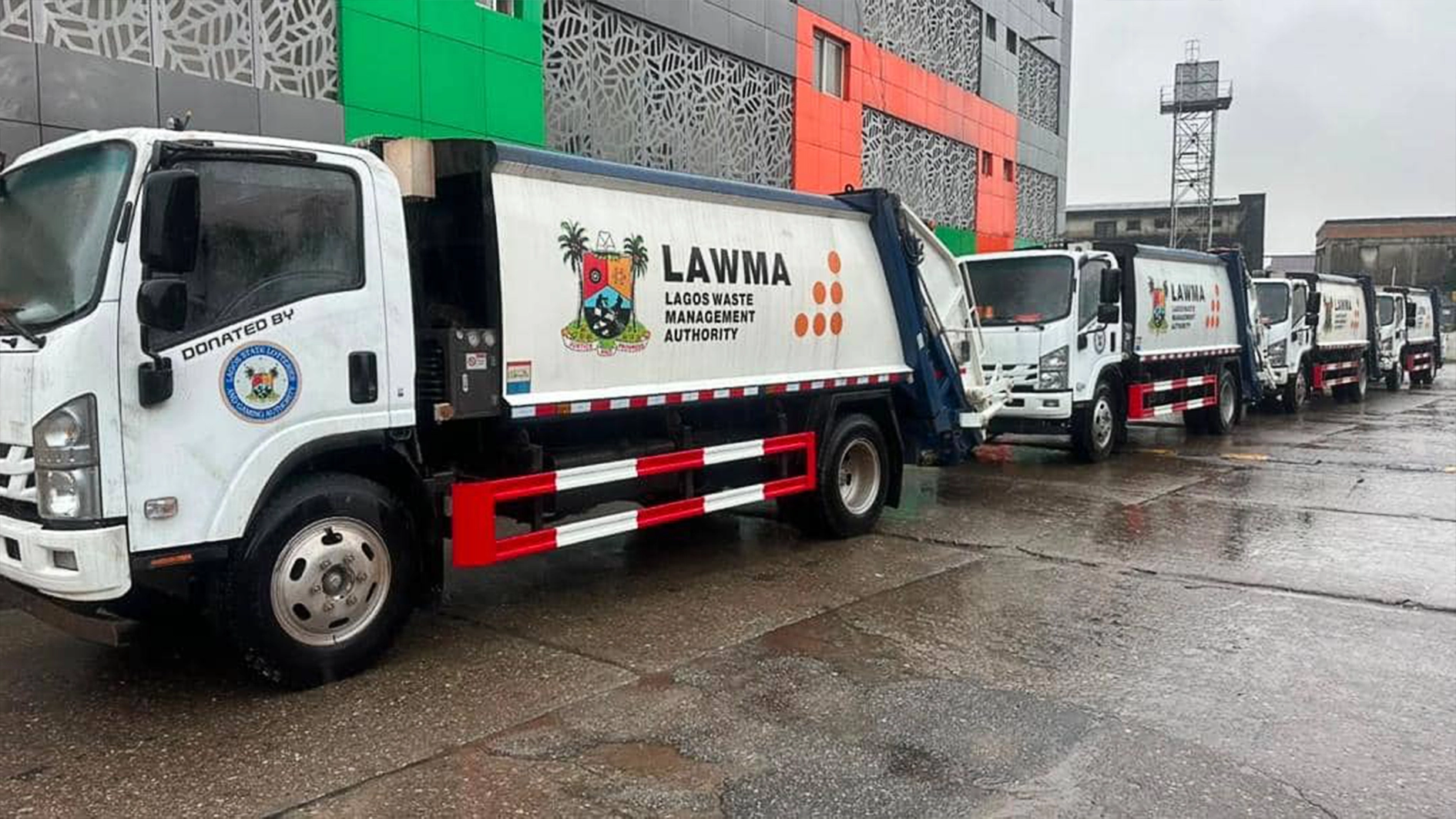
Mukaila Sanusi, PhD, Director, Public Affairs LAWMA
From transfer loading stations to material recovery facilities and waste-to-energy projects, Lagos is restructuring its waste-management architecture to keep pace with the demands of a rapidly growing metropolis.
Every morning, long before most of Lagos fully wakes up, another city is already at work.
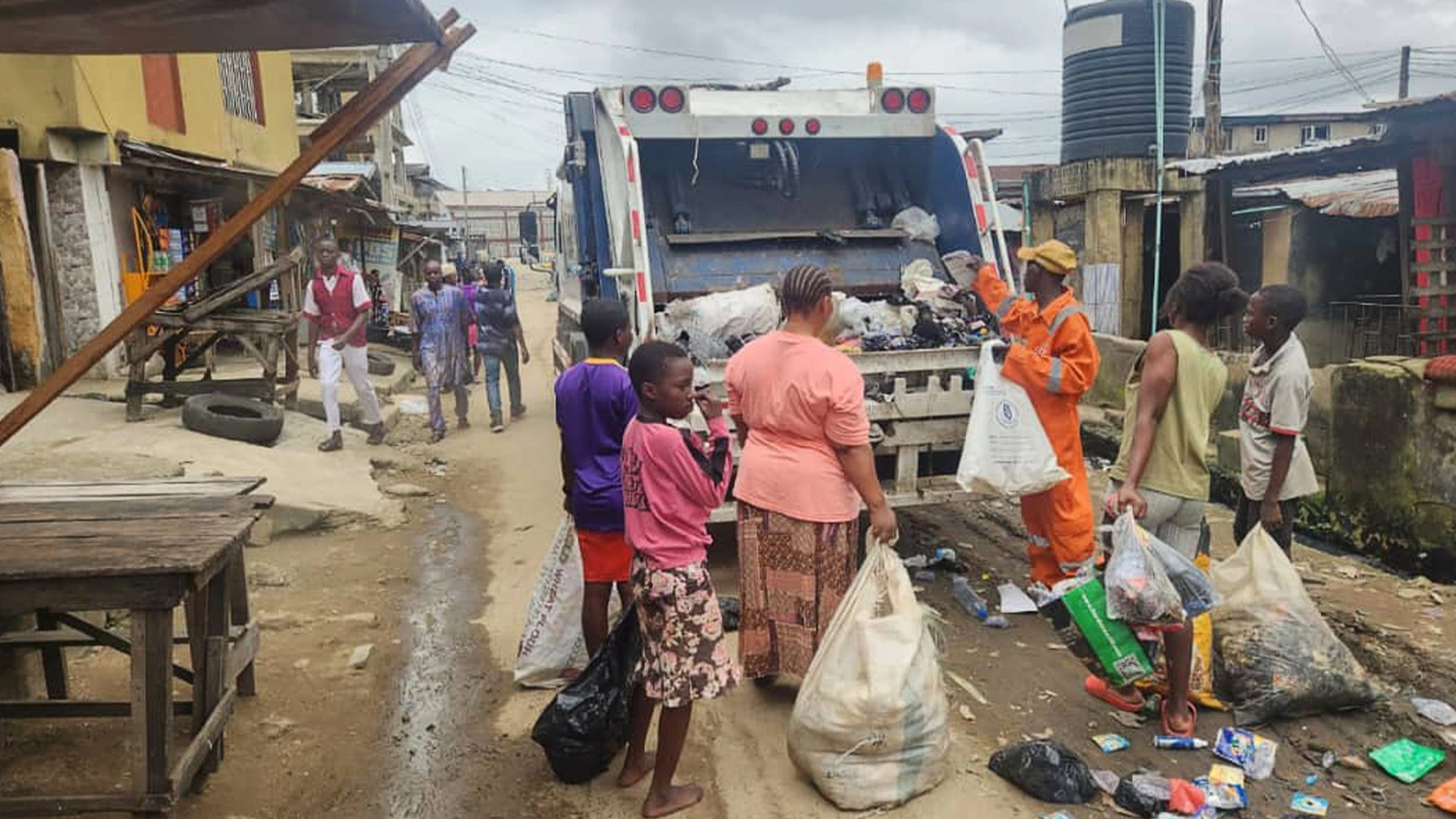
Waste trucks move through residential streets. Street sweepers clear roads and highways. Markets open for business, generating tonnes of organic and packaging waste. Households and businesses put out refuse for collection, while waste workers, operators and drivers begin the painstaking process of moving discarded materials from neighbourhoods to collection points, transfer stations and disposal facilities.
It is an enormous, largely invisible operation—yet one on which the daily functioning of Lagos depends.
With an estimated 13,000 to 14,000 tonnes of waste generated across the state every day, even a minor disruption at one point in the system can have consequences across the wider network.
A delayed truck can result in a missed collection. Congestion at a disposal facility can keep vehicles waiting for hours. Longer turnaround times reduce the number of trips a truck can make, while accumulated refuse places additional pressure on neighbourhoods, markets and roads.
It is against this backdrop that the Lagos State Government is restructuring the Lagos Waste Management Authority (LAWMA), with Governor Babajide Sanwo-Olu directing the agency to place greater emphasis on field operations, collection efficiency and the movement of waste.
During an inspection of the Olusosun dumpsite in Ojota, Sanwo-Olu said the agency needed to deploy more personnel “on the streets and on the road”, rather than concentrating manpower in offices.
“It’s Lagos State Waste Management. Waste is outside on the street; it is not in their offices,” he said.
The governor described the immediate operational challenge as requiring what he called a “small state of emergency”. But the changes now being pursued extend beyond an emergency clean-up exercise.
They point to an attempt to reorganise the entire waste-management chain—from the point at which waste is generated and collected to its transfer, sorting, recovery, treatment and final disposal.
Taking Pressure Off Olusosun
Few facilities illustrate the pressure on Lagos’ waste infrastructure more clearly than Olusosun.
The facility receives hundreds of waste trucks daily. When access roads become difficult, tipping points become congested or disposal operations slow down, the impact is quickly transmitted across the collection network.
A truck that spends too much time waiting at a disposal facility is a truck that is unavailable to collect waste elsewhere.
The state government’s response is therefore built around two parallel objectives: improving the capacity and accessibility of existing disposal facilities while developing alternative receiving and transfer points to distribute the load.
Sanwo-Olu said improvements at Olusosun would increase the facility’s tipping capacity, while additional waste-receiving facilities are being activated at Solous III in Alimosho, Ewu-Elepe in Ikorodu, Okeosho in Epe and Erikiiti in Badagry.
The objective is to reduce the distances travelled by collection trucks and prevent any single facility from carrying a disproportionate share of the state’s waste burden.
At Solous III, road-stabilisation works are being undertaken to improve access and enable the facility to receive waste more efficiently.
At Olusosun, Road E has also become part of the rehabilitation effort. Preliminary stabilisation work has been undertaken by Zoomlion Nigeria Limited, a LAWMA waste-to-wealth partner, to improve access and facilitate smoother movement within the facility.
LAWMA Managing Director/Chief Executive Officer, Dr Muyiwa Gbadegesin, has linked the interventions to the broader objective of improving truck turnaround time and operational efficiency.
That focus is significant because waste management is, at its core, a logistics operation.
The faster a collection truck completes the cycle from a neighbourhood to a disposal or transfer point and returns, the greater the volume of waste it can move within a working day
Why Transfer Stations Matter
A major component of the reform is the renewed emphasis on Transfer Loading Stations.
The principle is straightforward.
A small collection truck should not spend a substantial part of its working day travelling long distances or waiting at a landfill. It should collect waste within its assigned area, deliver it to a transfer facility and return to the community.
At the transfer station, the waste can be consolidated into larger vehicles for onward transportation to recovery, treatment or disposal facilities.
This creates a more efficient division of labour.
LAWMA’s reform programme includes the construction and development of transfer facilities along key corridors, including Olusosun, Solous III, Agbowa and Erekiti.
The proposed transfer-loading infrastructure is expected to handle thousands of tonnes of waste daily and connect local collection operations with larger recovery and disposal facilities.
For Lagos, the potential benefit is not simply shorter queues at disposal sites. It could mean shorter collection cycles, better utilisation of trucks, lower fuel and operating costs, and greater predictability for residents waiting for their waste to be collected.
The reform therefore treats transfer infrastructure as an integral part of the collection system rather than as an isolated disposal project.
More Trucks, But Better Use of Trucks
For residents, the most visible evidence of a functioning waste-management system remains the arrival of the collection truck.
The government has therefore placed considerable emphasis on expanding the fleet.
The reform programme includes the procurement of new compactor trucks, with 150 compactors ordered—36 for LAWMA and 114 for the 20 local government areas and 37 Local Council Development Areas.
Ten additional compactors donated by the Lagos State Lottery and Gaming Board have also been deployed.
More landfill compactors, excavators and bulldozers are also being considered as part of efforts to strengthen operations at disposal facilities.
But fleet expansion is not intended to operate in isolation.
More trucks do not automatically translate into better waste collection if vehicles spend excessive time waiting for access to disposal facilities, operate inefficient routes or serve areas without proper coordination.
The reform therefore combines fleet expansion with route reviews, facility development, operator monitoring and measures to improve turnaround times.
The underlying question is not simply how many trucks Lagos owns or deploys.
It is how many effective collection cycles the system can complete each day.
Reassessing the PSP Network
Another major component of the reform is the review of the Private Sector Participation (PSP) system.
PSP operators remain an important link between households and the formal waste-management system. They collect domestic waste from assigned areas and move it into the wider disposal and recovery chain.
But the demands of a city as large and densely populated as Lagos mean that operator performance cannot be treated as static.
Sanwo-Olu has called for a review of the PSP structure to determine which operators have the capacity to provide reliable service.
“We just don’t want to have 800 PSPs when it is actually only 400 that is effective,” he said.
The review is expected to examine operational capacity, including trucks, routes, coverage and service performance.
For residents, the significance of the exercise should ultimately be measured not by the number of operators on a register, but by whether waste is collected consistently.
A service area served by an operator without adequate equipment is likely to experience recurring collection gaps, regardless of the operator’s formal status.
The reform consequently envisages a more accountable relationship between LAWMA, PSP operators and residents.
Where an operator changes, the transition should not leave communities uncertain about who is responsible for their waste.
Residents need to know which operator serves their area, when collection is scheduled and where complaints should be directed.
Moving From Clean-Up to System Management
One of the most important changes in the reform programme is the attempt to move beyond periodic clean-up exercises.
Monthly sanitation exercises and emergency interventions can address visible waste accumulation, but they do not, by themselves, resolve the reasons refuse keeps returning to the same locations.
A sustainable system must address the collection route, frequency, operator performance, disposal access and behaviours that produced the problem.
That is why the reform programme places emphasis on enumeration, billing, customer service, digital accountability and complaint resolution.
The objective is to make waste collection more traceable.
If a resident reports a missed collection, the complaint should not disappear into the system. It should be possible to identify the location, the responsible operator, the date of the missed service and the action required.
The practical indicators of progress are therefore straightforward:
Are collections becoming more regular?
Are backlogs getting shorter?
Are trucks spending less time waiting?
Are complaints being resolved more quickly?
Are recurring illegal dumping points declining?
These are the measures by which residents are likely to judge the reform.
The Waste Beyond the Waste
But the emerging LAWMA strategy is also changing the question Lagos asks about waste.
For years, the dominant concern was where to take refuse after collection.
Increasingly, attention is turning to what can be recovered before waste reaches its final disposal point.
Plastic bottles, metals, paper, glass and organic materials are not necessarily without value simply because they have been discarded.
When separated and processed appropriately, some can become raw materials for new production, while organic waste can be converted into compost, biogas or other forms of energy.
This is the logic behind Lagos’ growing emphasis on the circular economy.
Material Recovery Facilities are being developed around the state, including the Agbowa and Erekiti corridors, with the objective of creating a system in which waste is sorted and recoverable materials are diverted from final disposal.
The approach changes the economics of waste management.
Instead of paying only to move and dispose of waste, the system can potentially generate value from materials recovered from the waste stream.
But that transition will depend on infrastructure, investment, reliable markets for recovered materials and, critically, segregation at source.
Turning Organic Waste Into Energy
The organic fraction of Lagos’ waste presents another opportunity.
Markets generate large quantities of food and fruit waste every day. Left mixed with other refuse, such material becomes another burden for collection and disposal.
Separated at source, however, organic waste can become feedstock for biological treatment.
LAWMA’s anaerobic-digestion pilot at the Ikosi Fruit Market provides an example of the direction being explored.
The pilot, launched in February 2026, has a design capacity of 0.5 tonnes of organic waste per day. It processed 29.136 tonnes of organic material between October and December 2025, providing operational experience for possible expansion of organic-waste recovery.
The principle is simple: food and fruit waste should not automatically be treated as worthless refuse.
With appropriate separation and treatment, it can become a resource.
That is also the thinking behind wider waste-to-energy plans.
However, waste-to-energy cannot be treated as a substitute for an effective collection system. It requires reliable waste flows, appropriate feedstock, treatment infrastructure, responsible handling of residues and a dependable operating model.
In other words, energy recovery works best when it is integrated into the wider waste-management chain.
From Refuse to Economic Activity
The economic case for reform is becoming increasingly important.
The thousands of tonnes of waste generated every day contain materials that can support recycling, manufacturing, logistics, energy production and other businesses.
A stronger recovery industry could create employment while reducing the volume of material requiring final disposal.
But achieving that outcome will require more than building recycling facilities.
It will require investment, access to finance, stable policies, stronger producer-responsibility mechanisms, reliable markets for recycled materials and greater integration of informal waste pickers and collectors into the formal value chain.
For government, the challenge is to provide an enabling framework.
For private operators, it is to invest in equipment and efficient operations.
For manufacturers and businesses, it is to take greater responsibility for the waste associated with their products and activities.
For residents, it begins with something as basic as separating and properly storing waste.
The Resident Remains Central
No waste-management reform can succeed if waste continues to be dumped indiscriminately.
Sanwo-Olu has repeatedly appealed to residents to pay for authorised waste collection and stop disposing of refuse on roads, highways and drainage channels.
“The fact that the PSP has not turned up in your house within twenty-four hours doesn’t mean that you have the right to now go and dump the refuse on the highway, on the main road,” he said.
The argument reflects a reality that is sometimes lost in debates over waste management: government can provide trucks, transfer stations, disposal facilities and enforcement, but it cannot physically control every bag of refuse generated by millions of residents.
Residents therefore remain part of the system.
LAWMA’s operational responsibility includes ensuring that collection arrangements function, monitoring operators and responding to complaints. Residents, in turn, need to use accredited operators, package waste appropriately and report missed collections rather than resorting to illegal dumping.
When reporting a problem, residents can provide the exact location, the PSP operator, where known, the last collection date and a description of the problem. Requesting a case reference and follow-up date can also make complaints easier to track.
Enforcement and Accountability
Enforcement remains another component of the state’s approach.
The Lagos State Environmental Sanitation Corps (LAGESC) is responsible for environmental enforcement, while other government enforcement structures may also be involved in addressing environmental offences.
But enforcement alone cannot substitute for service delivery.
A resident who cannot identify the responsible collection operator, does not know the collection schedule or repeatedly experiences missed collections may become frustrated with the system.
The reform therefore has to balance enforcement with information and customer service.
People need to know what is expected of them, what service they are entitled to receive and where to seek help when that service fails.
That is particularly important as the PSP review proceeds.
If an operator is changed, affected residents should receive information about who will take over, when the new collection schedule begins and how existing billing or service complaints will be handled.
A change of contractor should not become a gap in service.
Digital Accountability
Technology is increasingly being introduced into this equation.
LAWMA’s customer-facing systems provide channels for billing, payment and reporting waste-collection problems. The wider reform programme also contemplates stronger digital monitoring of operations.
But technology needs to be deployed carefully.
A GPS location, for example, can establish that a vehicle was at a particular place, but it does not necessarily prove that a complete collection service was delivered.
A more reliable verification system would combine location data with time records, service events, facility records and, where appropriate, customer confirmation.
The objective should be accountability rather than technology for its own sake.
Building a Connected System
Taken together, the reforms point towards a different conception of waste management in Lagos.
Collection cannot be separated from transfer.
Transfer cannot be separated from recovery.
Recovery cannot be separated from disposal.
And none of these can function sustainably without residents, businesses and operators playing their respective roles.
The reform therefore seeks to connect the entire chain.
In the short term, the priority is to stabilise collection and address operational bottlenecks.
In the medium term, infrastructure, fleet, operators and digital monitoring need to function as an integrated system.
In the longer term, the ambition is to create a waste economy in which a greater proportion of discarded materials are recovered, recycled, treated or converted into useful resources.
The physical infrastructure is important, but so is institutional discipline.
LAWMA must know which areas are being served, which operators are performing and where the gaps are.
PSP operators must have adequate equipment and meet their service obligations.
Residents must know how and where to dispose of waste.
Businesses and markets must take greater responsibility for the waste they generate.
And government must continue to invest in the infrastructure required to support the entire chain.
What Success Should Look Like
Ultimately, Lagosians are unlikely to measure the restructuring by the number of meetings held, trucks ordered or facilities announced.
They will measure it by what they see outside their homes and businesses.
Is waste collected when it is supposed to be?
Are overflowing collection points becoming less common?
Do trucks spend less time in queues?
Are complaints answered?
Are illegal dumping points disappearing?
Are recyclable materials being recovered?
Are markets separating organic waste?
Are disposal facilities under less pressure?
These are tangible indicators of whether the reform is translating into better service.
The restructuring of LAWMA is therefore both an administrative exercise and an operational challenge.
It seeks to place greater emphasis on the people and equipment required in the field while simultaneously building infrastructure capable of reducing pressure on the existing system.
It also attempts to reposition waste as more than a problem to be removed.
Plastic can become material.
Organic waste can become energy.
Recovered materials can support businesses.
And a better-organised collection system can reduce the environmental burden created by indiscriminate dumping.
For a city as large and fast-moving as Lagos, the stakes are considerable.
Waste generation will continue to rise as population, commerce and consumption increase. The answer cannot simply be to find more places to put the waste.
The longer-term task is to build a system that can collect waste reliably, move it efficiently, recover what has value and responsibly dispose of what remains.
That is the larger test facing LAWMA’s reform.
The immediate measure may be a cleaner street. The bigger measure is whether Lagos can build a waste-management system capable of keeping pace with the city itself.
The governor’s instruction to put more LAWMA personnel where the waste is captures the immediate challenge. But the broader reform goes beyond moving people from offices to streets.
It is about connecting people, trucks, transfer stations, disposal facilities, recycling centres, technology, private operators and residents into a single, functioning system.
For Lagos, the real test will be whether that system becomes dependable enough that residents notice its success not because of extraordinary clean-up operations, but because waste collection simply works.
That is the point at which waste management ceases to be an emergency response and becomes an essential urban service.

