 Follow Us on Google News
 Follow Us on Google Discover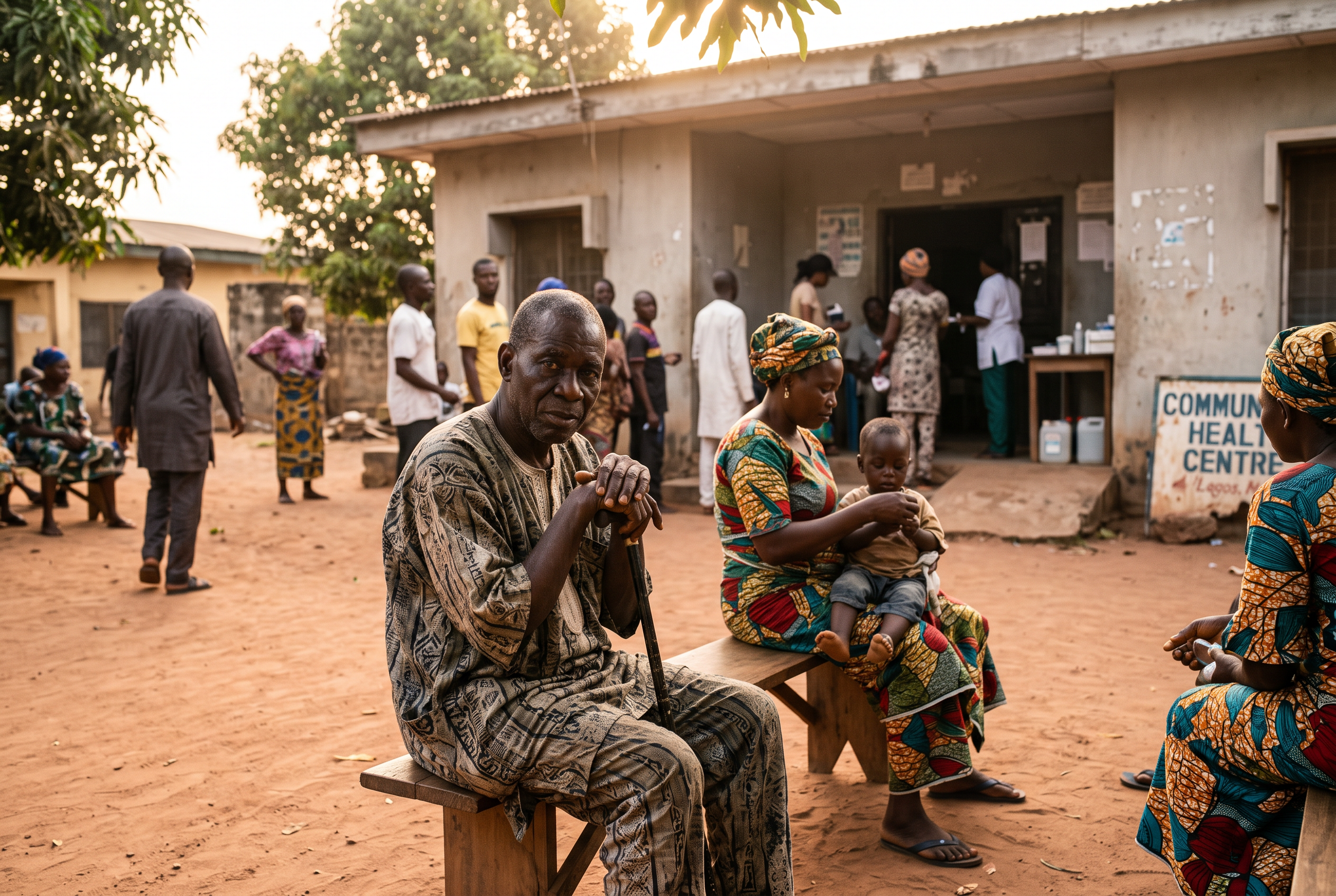
Welcome, and thank you for sitting down with me on this one. It is a heavy subject, but I promise to keep it human. What follows is the conclusion of months of research and a good many years of experience reporting on health and population figures across this country. The question I am asked most often, at burials, in barber shops and in my inbox, is this: why is the average life expectancy so low in Nigeria? On the continental table built from United Nations estimates we sit at the very bottom, and I want to show you exactly how that average is put together.
Because the word that matters most in that question is not “low”. It is “average”.
Some months ago, at a naming ceremony in Ibadan, an uncle of mine pulled me aside with a plate of jollof in one hand and his phone in the other. He had just turned 58. He had read that Nigerians live to 55. “So am I on extra time?” he asked, only half joking. I laughed, then I realised he was waiting for an answer.
He is not on extra time. Neither are you. But to see why, we have to open the bonnet of the statistic and look at the engine, and that is what I have spent the better part of this year doing: reading the United Nations life tables line by line, comparing them with what our own agencies publish, and sitting with nurses, community health workers and one very patient demographer who corrected my arithmetic twice.
Here is the short version before we go deep. The current United Nations estimate for a baby born in Nigeria in 2026 is 55.0 years, against a world figure of 73.8. That is a gap of 18.8 years. It is the lowest national figure on the planet, and almost all of it is explained by who dies young, not by how long the rest of us last.
Let us start with the men, since that is where most readers begin.
What Is the Average Lifespan of a Nigerian Man, and Why Does It Sit So Low?
The average lifespan of a Nigerian man, measured at birth, is about 54.6 years on the United Nations projection for 2026. For Nigerian women it is 55.3.
Our own agencies put it slightly higher. The National Bureau of Statistics, drawing on National Population Commission estimates, records 55.1 years for men and 57.2 for women in 2022 in its statistical report on women and men, up from 53.2 and 55.3 in 2015. So the two sources agree closely on men and disagree by about two years on women.
Why the disagreement? Because nobody is counting. Nigeria registers only a fraction of its deaths, so every figure you will ever read is a model built on household surveys. The Bureau and the United Nations are looking at much the same surveys through different lenses. I treat the true number as “somewhere around 55” and refuse to argue over decimals.
Now for the part that surprised me.
Nigerian men are not the shortest-lived men in Africa. That unhappy position belongs to Chad, where the male figure is 53.7. South Sudan, at 55.0 for men, is barely ahead of us. Nigeria finishes last overall for a different reason entirely, and it is one that should make every husband, father and brother in this country uncomfortable: our women are missing the advantage women enjoy almost everywhere else.
Across the world, women outlive men by 5.2 years. In Nigeria the lead is 0.7 of a year, roughly eight months. Of 194 countries in the United Nations list, only Togo has a narrower gap. Put another way, a Nigerian man lives 16.6 years less than the average man worldwide, while a Nigerian woman lives 21.1 years less than the average woman. The country’s ranking is being decided in the labour ward.
One contributor argued on these pages some time ago that a Nigerian woman faces a lifetime risk of roughly 1 in 22 of dying from pregnancy or childbirth, against 1 in 4,900 in wealthy countries. The exact ratio moves with each revision. The scale does not.
So what does 54.6 actually mean for a living, breathing Nigerian man?
Less than you fear. The figure describes a newborn boy facing this year’s death rates at every age for the rest of his life, including the very dangerous first five years. Once he is past them, the sum changes sharply. On the United Nations life table for 2023, a Nigerian boy who reaches his fifteenth birthday can expect a further 48.2 years, which takes him to about 63. A man who reaches 65 can expect roughly another 12, which takes him to 77.
My uncle, at 58, is not on extra time. He is statistically on course for his late seventies.
Think of it rather like the average score in a WAEC class where a ninth of the pupils were marked absent and recorded as zero. The class average looks dreadful. The pupils who actually sat the paper did perfectly respectably.
That does not let adult men off the hook, mind you. Roughly 38 per cent of Nigerian adults are living with hypertension according to the Federal Ministry of Health and Social Welfare, and most do not know it. Road crashes, okada accidents without helmets, insecurity in parts of the north and the middle belt, and hazardous work in quarries and artisanal refineries all fall hardest on men in their prime. Those deaths shave the adult figure. They are simply not the main reason the national average is where it is.
What Is the Number One Cause of Death in Nigeria Behind the Low Average?
If you want one name, here it is: neonatal disorders. That is the clinical label for babies who die in their first 28 days from prematurity, birth asphyxia and infection.
On the most recent Global Burden of Disease estimates from the Institute for Health Metrics and Evaluation, which cover 2021, neonatal disorders account for close to 14 per cent of all deaths in Nigeria at every age. Malaria is a whisker behind at close to 13 per cent. Lower respiratory infections, mostly childhood pneumonia, come next.
I should be straight with you. In earlier editions of the same study malaria sat on top, and I have written before that the two trade places depending on the year modelled. Treat them as joint leaders if you like. What matters is what they have in common.
Both kill the very young.
Among children under five, the picture is starker still. Neonatal disorders cause about 32 per cent of deaths, malaria about 16 per cent, pneumonia about 13 per cent and diarrhoeal disease about 12 per cent. Add those four together and you have nearly three quarters of every child death in the country, from conditions that a midwife, a mosquito net, an antibiotic and a sachet of rehydration salts can mostly prevent.
This is the engine of the low average. A man who dies at 78 barely moves the national figure. A baby who dies at three weeks removes more than seven decades from it in one stroke.
The government’s own survey confirms the scale. When the 2023 to 2024 Nigeria Demographic and Health Survey was unveiled in Abuja, the ministry’s own launch statement reported under-five mortality at 110 deaths per 1,000 live births, down from 132 in 2018. That is progress, and it deserves saying. But 110 per 1,000 still means about one Nigerian child in nine does not see a fifth birthday. Worse, deaths in the first month have not improved at all: 41 per 1,000, against 39 five years earlier. The Minister of State for Health noted that 40 to 45 per cent of under-five deaths now happen in those first 28 days.
Read that again slowly. We are getting better at keeping toddlers alive and no better at keeping newborns alive.
Malaria, meanwhile, remains a peculiarly Nigerian burden. This country carries close to 30 per cent of the global total, a point made in a Guardian column on a five-year health financing agreement with Washington, under which the United States committed about 2.1 billion dollars in grants while Nigeria pledged at least 6 per cent of executed federal and state budgets to health. Whether that pledge survives the budget office is another matter.
Which brings me to money, because causes of death are also causes of neglect.
The 2026 federal budget proposal set aside ₦2.48 trillion for health out of ₦58.47 trillion, about 4.2 per cent. African governments promised 15 per cent in this very capital in 2001. I did a small sum on the back of a receipt: ₦2.48 trillion shared among roughly 242 million Nigerians comes to a little over ₦10,000 per person for the whole year. Around ₦850 a month. That will not buy a course of malaria treatment at most chemists in Surulere.
Where the money does reach the front line, the amounts are modest. According to the agency’s progress update on ward clinics, the National Primary Health Care Development Agency had revitalised 1,295 primary health centres by August 2025 against a four-year target of 17,600, and had disbursed ₦50.8 billion to 8,309 centres between 2023 and the middle of 2025. By my arithmetic that works out to about ₦6.1 million per clinic over two and a half years, or roughly ₦200,000 a month to run a facility expected to deliver babies around the clock.
I visited one such centre in Ogun State earlier this year. Two community health workers, one working delivery couch, a solar fridge for vaccines that the officer in charge showed me with real pride, and a borehole that had been “coming next quarter” since before the last election. The staff were excellent. The arithmetic was not.
Why Is the Average Life Expectancy So Low in Nigeria? The Direct Answer
You have been patient, so here is the answer in one place.
The average life expectancy is so low in Nigeria because the figure is an average of ages at death, and Nigeria loses an exceptionally large share of its people at the very start of life. About one child in nine dies before the age of five, chiefly from neonatal disorders, malaria, pneumonia and diarrhoeal disease, and each of those deaths pulls the national average down by decades. On top of that sits the heaviest maternal death toll in the world, estimated by United Nations agencies at 993 deaths per 100,000 live births in 2023 and roughly 75,000 women a year, which is why Nigerian women outlive Nigerian men by only eight months instead of the usual five years. Behind both stand the closely related causes: a primary health care network in which only a small fraction of ward clinics have been brought up to standard, federal health funding of about 4.2 per cent of the budget against the 15 per cent Abuja Declaration target, households paying for most care out of pocket, a shortage of skilled birth attendants, wide gaps between north and south, and a growing adult burden of untreated hypertension, diabetes and road injury. Take the child and maternal deaths out of the calculation and Nigeria’s figure would sit in the low sixties, alongside its neighbours. Leave them in and it sits at 55.
Notice what that answer does not say. It does not say Nigerians are frail, or that adults here drop dead in their fifties as a matter of course.
It says the average is being dragged down from one end.
I tested this with a rough sum of my own, and I offer it as an illustration, not as published data. If 11 per cent of a population dies at around age one and the average of everyone together is 55, then the remaining 89 per cent must be averaging close to 62. The United Nations life table lands in nearly the same place by a far more careful route: about 63 and a half for a Nigerian who has reached fifteen.
So the average is honest. It is just answering a different question from the one most people think they are asking. People hear “how long do Nigerians live?” The statistic is answering “how many years, on average, does a Nigerian birth produce?”
Those are not the same thing at all.
There is a caution to add, in fairness. In October last year, this newspaper’s metro desk carried the story of Nigeria ranking lowest in the world at 54.9 years, and a medical expert quoted in it questioned whether the United Nations numbers understate the truth, given how poor our record keeping is. He may be right. But the correction, if it comes, is likely to be a year or two, not ten. And the only way to prove the pessimists wrong is to register births and deaths properly, which is itself a health intervention.
Which African Country Has the Lowest Life Expectancy, and Where Does Nigeria Stand?
Nigeria does. On current United Nations figures, the African country with the lowest life expectancy is our own, at 55.0 years, with Chad immediately above at 55.6.
I know. It is not the answer anyone here wants, and when I first saw it I assumed it was a typing error. We are Africa’s most populous nation and one of its largest economies. We export doctors to three continents. And yet a baby born in Niger Republic, a far poorer country, can expect 61.9 years, nearly seven more than a baby born in Kano or Calabar. A baby born across the border in Benin can expect 61.3. In Ghana, 66.1.
Every one of the ten lowest national figures in the world is African, which tells you this is partly a regional story of malaria, weak clinics and young populations. But Nigeria sits 9.4 years below even the African average of 64.4, which tells you it is also a specifically Nigerian story.
Here is how the bottom of the table looks, with two neighbours and the continental leader added for scale.
Lowest African Life Expectancy Figures Compared With Nigeria’s Neighbours, 2026
| Country | Both sexes (years) | Men (years) | Women (years) | Women’s lead over men | Distance from world average of 73.8 |
|---|---|---|---|---|---|
| Nigeria | 55.0 | 54.6 | 55.3 | 0.7 | 18.8 below |
| Chad | 55.6 | 53.7 | 57.6 | 3.9 | 18.2 below |
| South Sudan | 58.0 | 55.0 | 61.0 | 6.0 | 15.8 below |
| Central African Republic | 58.2 | 56.0 | 60.1 | 4.1 | 15.6 below |
| Lesotho | 58.6 | 55.8 | 61.3 | 5.5 | 15.2 below |
| Somalia | 59.3 | 56.8 | 61.9 | 5.1 | 14.5 below |
| Niger | 61.9 | 60.9 | 62.9 | 2.0 | 11.9 below |
| Ghana | 66.1 | 63.7 | 68.6 | 4.9 | 7.7 below |
| Tunisia | 77.1 | 74.6 | 79.7 | 5.1 | 3.3 above |
Two things stand out. Nigeria’s men are not at the bottom of the men’s column, Chad’s are, so it is the women’s column that puts Nigeria last; and every other country in the bottom six has either lived through war or prolonged armed instability or, in Lesotho’s case, carries one of the world’s heaviest HIV burdens, while Nigeria is none of those things at national scale.
That second point is the one I cannot shake. South Sudan has been through civil war. Somalia has had no settled central government for most of my adult life. The Central African Republic is routinely described as a failed state. All three now post higher figures than a country with a stock exchange, a film industry and a space agency.
A word on how to read tables like this one, because presentation matters more than people think. If you are a teacher, a student or a fellow journalist turning these numbers into a chart, keep the design plain and the labels generous. Start the vertical axis at zero so a three-year gap does not look like a cliff. Print the source and the year beside the title, not in a footnote nobody reads. Put men and women in separate bars, in two calm colours that a colour-blind reader can tell apart, and resist the all-red map of Africa that makes the whole continent look like a warning sign. Above all, place the figure at age 15 next to the figure at birth. That single design choice does more to stop panic than a thousand words from me.
One more caution on the national figure: it hides two countries. Child mortality in parts of the North West and North East runs at several times the rate recorded in the South West. A baby born in Lagos and a baby born in rural Kebbi are living under different life tables that happen to share a flag.
What Country Has the Lowest Life Expectancy Ever Recorded, and What Does It Teach Nigeria?
Rwanda, in 1994. The United Nations series puts life expectancy at birth there at about 12.2 years in the year of the genocide: 11.4 for men, 13.3 for women.
Twelve years.
The year before, the figure was 42.9. The year after, 41.5. Cambodia under the Khmer Rouge produced the only comparable collapse in the modern record, with the United Nations series showing about 12 years in 1975 and one academic reconstruction of the 1975 to 1978 period suggesting as little as 8.1 years for men and 16.7 for women.
Nobody in Rwanda was actually living to twelve. The number is what the formula produces when a huge share of a population is killed inside a single calendar year, and it is the clearest demonstration I know of what this statistic really is: a photograph of one year’s deaths, not a prophecy.
And that is the lesson for us.
Because look at what Rwanda did next. By 2026 its figure stands at 68.5 years, more than 13 years above Nigeria’s, having added over 20 years since 2000 alone. It did so without oil. It did it with community health workers in every village, near-universal health insurance paid through small household premiums, and a government that treats vaccination coverage as a matter of national pride.
Nigeria’s 55 is not a catastrophe figure. It is, in a way, more stubborn than one. A catastrophe ends. Ours is the quiet accumulation of ordinary preventable deaths, year after year, with no single event to mourn and therefore no single moment at which the country decides enough is enough.
A statistic that can fall thirty years in twelve months can also rise. That is the encouraging half of Rwanda’s story, and it is the half I would like our policymakers to study.
Seven Practical Steps to Beat the Average in Your Own Household
Enough diagnosis. An average is only millions of households added together, so here is what moves the number in yours. The prices are what I found asking around pharmacies and markets in Lagos and Ibadan this year, so treat them as a guide and expect them to vary.
- Recalculate from your own age, not from birth. If you are past 15, your expected age is about 63 and a half on the national table; if you are already 65, it is about 77. Plan your pension, your business succession and your health checks on those figures.
- Have your blood pressure taken twice a year from the age of 30. Most pharmacies will do it for between ₦500 and ₦2,000, and a reading at or above 140 over 90 on two separate days is your cue to see a doctor. A home monitor costs roughly ₦25,000 to ₦45,000 and is the best gift you can give a parent over 50.
- Put every child and every pregnant woman under an insecticide-treated net every night, tucked in on all four sides. A net costs roughly ₦3,500 to ₦7,000 where it is not handed out free, and it should be replaced after about three years or 20 washes.
- Plan every birth as if it were a journey. Aim for at least eight antenatal contacts, choose a facility with a skilled attendant on night duty, and keep ₦20,000 to ₦50,000 aside for emergency transport, because the delay that kills is very often the one between the house and the hospital.
- Guard the first 28 days. Keep the baby warm and skin to skin, breastfeed within the first hour, keep the cord clean and dry, and go straight to a clinic for fever, fast breathing or refusal to feed.
- Finish the immunisation card and keep rehydration salts in the house. Routine vaccines are free at government health centres, a sachet of oral rehydration salts costs under ₦500 and is mixed into one litre of clean water, and zinc tablets taken for 10 to 14 days shorten a bout of diarrhoea.
- Buy health cover before you need it, and wear the helmet. Basic plans under the national scheme and several state schemes start from around ₦15,000 a person per year, and a decent helmet for the okada rider in your family costs ₦8,000 to ₦20,000, which is cheaper than one night in an orthopaedic ward.
None of these needs a specialist, a visa or a miracle. I find that either comforting or infuriating, depending on the day.
Final Thoughts on Why the Average Life Expectancy Is So Low in Nigeria
If you remember one thing from all of this, let it be that the average is low because of where the deaths fall, not because of how long Nigerians are built to last.
A country whose adults truly died at 55 would need cardiac units and cancer centres at ruinous cost. A country that loses one child in nine before the age of five, and more mothers than any other nation, needs something far cheaper and far more boring: midwives, nets, antibiotics, clean water, vaccines kept cold, and a ward clinic that is actually open at two in the morning. That is the hopeful reading of a grim number. The remedy is known, it is affordable, and countries poorer than ours have already applied it.
So start at home this month. Work out your own figure from your current age. Get the blood pressure reading done. Count the nets against the number of beds. If there is a pregnancy in the family, write the birth plan down and fund it. And the next time an aspirant comes to your ward asking for votes, ask how many skilled birth attendants the health centre has on the night shift, and do not accept a story about roads instead.
Then call an older relative and tell them what I told my uncle. He was delighted. He has since informed everyone at the family meeting that he intends to collect his full allocation.
- Work from your own age: a Nigerian who has reached 15 can expect to live to about 63, and one who has reached 65 to about 77.
- Spend first on the cheap things that carry the heaviest toll, which are skilled care at birth, treated nets, vaccines and rehydration salts.
- Check your blood pressure twice a year from 30 and join a health insurance scheme before illness forces the decision.
Related Articles
The same childhood conditions that pull our lifespan figure down also show up in how tall we grow, and I traced that link through stunting and early nutrition when I looked at what the average height of Nigerian men really tells us. And since survival in this country tracks household income more closely than most of us care to admit, with wealthier families buying their way to private wards and insurance, you may find it useful to read my breakdown of what percentage of Nigeria is upper class alongside this one.
Key Takeaways
- Nigeria’s life expectancy at birth is about 55.0 years on United Nations figures for 2026, the lowest of any country and 18.8 years below the world average of 73.8.
- The average is pulled down mainly by deaths before age five and deaths in childbirth, which is why Nigerian women outlive men by only about eight months.
- The figure is a snapshot, not a sentence: Rwanda went from about 12 years in 1994 to 68.5 today, and the measures that did it are cheap and well understood.
Frequently Asked Questions About Why the Average Life Expectancy Is So Low in Nigeria
Why is the average life expectancy so low in Nigeria?
The average is low mainly because about one Nigerian child in nine dies before the age of five, and every one of those deaths removes decades from the national calculation. Very high maternal deaths, untreated adult conditions such as hypertension and a thinly funded primary care system then hold the figure near 55 years.
What is the average lifespan of a Nigerian man?
United Nations estimates for 2026 put it at about 54.6 years at birth, while the latest national figure published by the National Bureau of Statistics is 55.1 years for 2022. A Nigerian man who has already reached 15 can expect to live to roughly 63, and one who reaches 65 can expect to see about 77.
What is the number one cause of death in Nigeria?
Neonatal disorders, meaning deaths in the first 28 days from prematurity, birth asphyxia and infection, narrowly lead the most recent Global Burden of Disease estimates at close to 14 per cent of all deaths. Malaria follows at close to 13 per cent, and the two have swapped places in earlier editions of the study.
Which African country has the lowest life expectancy?
Nigeria currently has the lowest figure in Africa and in the world at about 55.0 years, with Chad just above it at 55.6. South Sudan, the Central African Republic, Lesotho and Somalia complete the bottom six, all below 60 years.
What country has the lowest life expectancy ever?
Rwanda in 1994 holds the lowest figure in the modern United Nations record, at about 12.2 years during the genocide. Cambodia in 1975 under the Khmer Rouge is the only comparable case, also at around 12 years.
Does the average mean most Nigerians die at 55?
No, because the figure is an average that includes a very large number of deaths in infancy and early childhood. Nigerians who survive to adulthood typically live into their sixties and seventies, which is what the life table shows once you measure from age 15 or 65.
Why do Nigerian women live only slightly longer than Nigerian men?
Women outlive men by about 5.2 years worldwide, but in Nigeria the lead is only 0.7 of a year because so many women die in pregnancy and childbirth. United Nations agencies estimate 993 maternal deaths per 100,000 live births in 2023, the highest national ratio in the world.
How does Nigeria compare with Ghana and Niger?
A baby born in Ghana can expect about 66.1 years and a baby born in Niger about 61.9, against 55.0 in Nigeria. Both neighbours lose fewer children and mothers relative to their populations, which matters far more to the average than national income does.
How much does the Federal Government spend on health?
The 2026 budget proposal allocated ₦2.48 trillion to health out of ₦58.47 trillion, which is about 4.2 per cent. African governments, Nigeria included, pledged 15 per cent under the Abuja Declaration of 2001.
How reliable are Nigeria’s life expectancy figures?
They are estimates modelled from household surveys, because Nigeria registers only a fraction of its deaths. That is why the United Nations and the National Bureau of Statistics differ by up to two years, although both place the country in the mid fifties.
Is life expectancy in Nigeria improving?
Yes, slowly, with official figures for men rising from 53.2 years in 2015 to 55.1 in 2022 and under-five mortality falling from 132 to 110 deaths per 1,000 live births between the last two national surveys. Newborn deaths have not improved over the same period, which is the main brake on faster progress.
What can one household do to add years?
Use skilled care for every birth, keep children under treated nets, complete their immunisations and keep rehydration salts at home. Adults should check their blood pressure twice a year from the age of 30 and enrol in a health insurance scheme.

