 Follow Us on Google News
 Follow Us on Google Discover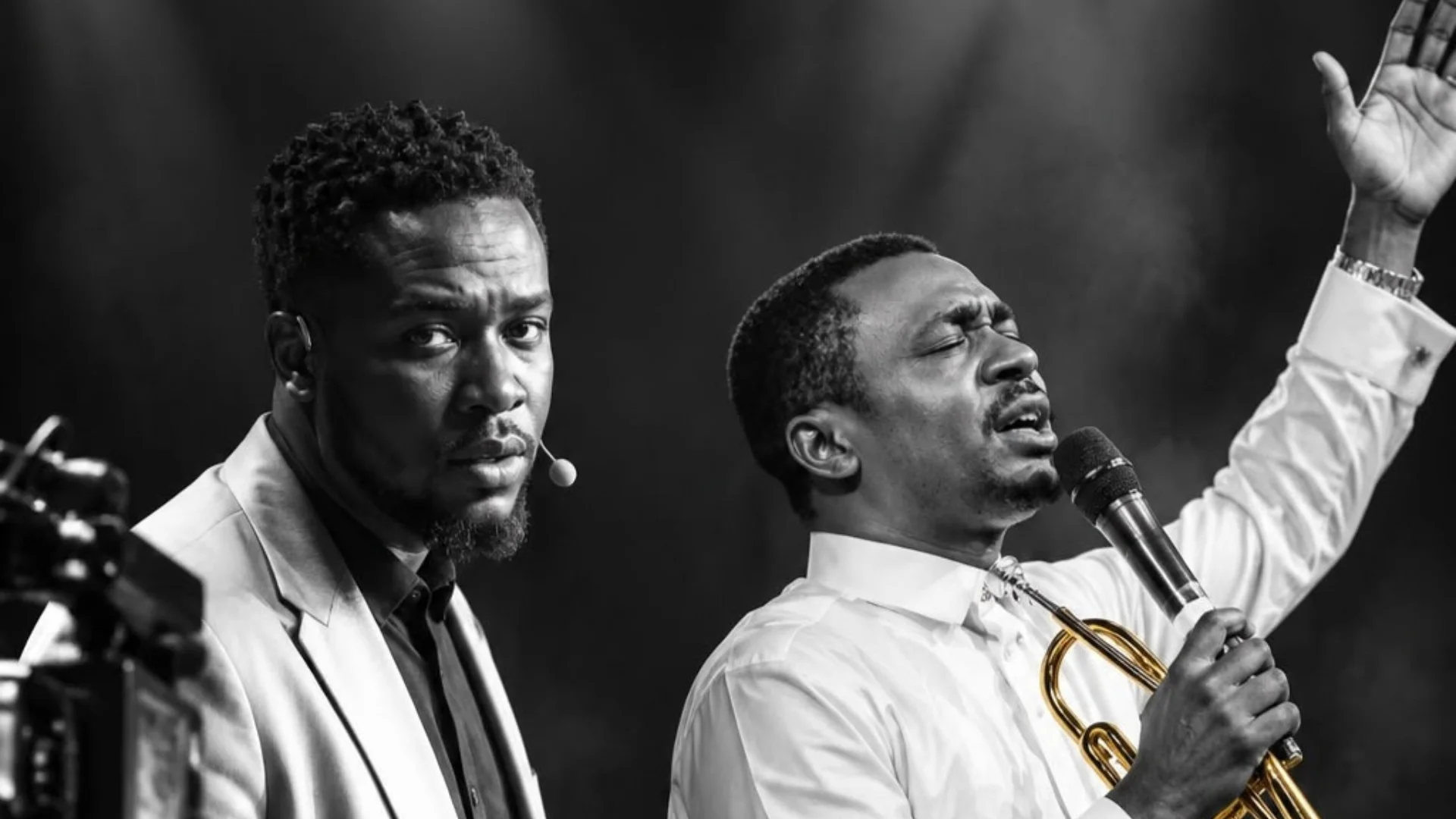
When gospel singer Nathaniel Bassey appeared during The Sound of Revival x Hallelujah Challenge in August, his participation presented an unusual production challenge.
Bassey was not physically at the event venue, but his performance had to be incorporated into the live programme in a way that allowed the audience to experience his contribution alongside activities taking place on the ground.
Behind part of the technical execution was Nigerian filmmaker and live production director Akhabue Evans, popularly known as Dir. En’Man.
Working with the Koinonia production team in the United States, En’Man was involved in integrating Bassey’s remote participation into the event’s live production.
It was an exercise in a side of filmmaking and broadcasting that audiences rarely see.
While conventional cinematography is often associated with cameras, lenses, lighting and physical sets, contemporary live production increasingly depends on technologies capable of moving high-quality video and audio between locations in real time.
For events involving participants in different countries, that can mean coordinating feeds, communications and production decisions across separate technical environments.
At The Sound of Revival, the objective was to make Bassey’s remote contribution part of the wider event rather than allow geographical distance to dominate the audience’s experience.
The production required coordination between En’Man and the team handling the event in the United States.
The result offered another example of how internet-based production technologies are changing what is possible for African filmmakers, broadcasters and event producers.
For production professionals, remote contribution itself is not new. Television broadcasters have connected correspondents, guests and studios across countries for decades.
What has changed is the range of technology now available to independent production teams and the quality of audiovisual material that can be transmitted between locations.
That development is expanding possibilities for concerts, conferences, religious gatherings and other live events.
Rather than requiring every performer, speaker or production specialist to occupy the same physical space, teams can build workflows that connect different locations.
The Sound of Revival x Hallelujah Challenge presented En’Man with an opportunity to apply that approach to a live gospel event.
His involvement also reflects the increasingly technical nature of contemporary filmmaking and event production, where understanding connectivity, live transmission and production workflows can be as important as operating a camera.
For Nigerian production professionals, such capabilities also provide opportunities to participate in projects beyond the country’s borders without every aspect of a production having to move physically between locations.
The technical challenge, however, extends beyond establishing a connection.
Technology becomes useful to an audience only when it serves what is happening on screen.
In a live event, poorly timed transitions, inconsistent sound or visual differences between feeds can distract viewers from the performance itself.
That places greater responsibility on production teams to coordinate the technical and creative sides of an event.
For En’Man, whose work spans filmmaking and live production, the Sound of Revival project demonstrated how technology can be incorporated into the storytelling process rather than treated merely as production infrastructure.
It also came before the maiden Media Experience & Advancement (MEXA) convention in Lagos, where En’Man subsequently shared aspects of production knowledge with filmmakers, cinematographers, musicians and content creators.
The three-day programme incorporated practical demonstrations, including a music video production exercise that involved participants in different stages of the filmmaking process.
Taken together, the projects point towards an area of African creative production that is becoming increasingly important: the ability to combine traditional filmmaking skills with emerging production technologies.
The significance of that development extends beyond acquiring newer cameras or equipment.
For filmmakers and production teams, the larger challenge is understanding how technology can solve creative problems, connect people in different locations and expand the scale of projects they are capable of delivering.
The Sound of Revival provided one such test.
Nathaniel Bassey may have been physically removed from the event, but the production challenge was to ensure that distance did not prevent him from becoming part of the experience.
For En’Man and the teams involved, achieving that required filmmaking to operate beyond the boundaries of a single location.

