 Follow Us on Google News
 Follow Us on Google Discover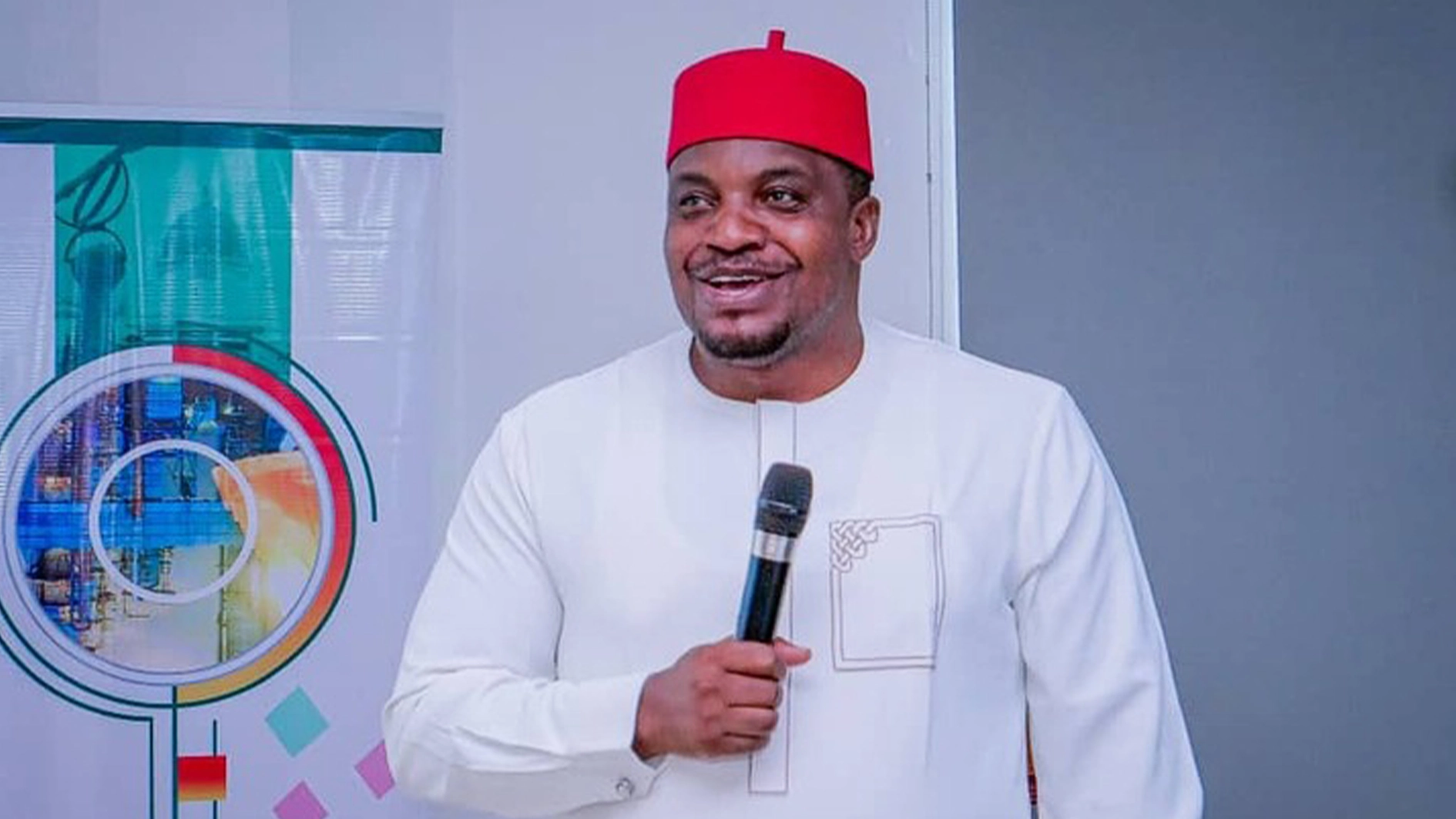
By Prosper Okoye
Nigeria’s legislative reform debate is often framed around elected lawmakers, the laws they pass and the politics that shape them. Less visible are the technical advisers, researchers and institutional specialists who work behind the scenes to help committees investigate public spending, assess legislative performance and develop ways of measuring the work of parliament.
Ambassador Chibuzo Okereke belongs to that less visible part of Nigeria’s legislative system.
An academic and legislative adviser, Okereke has spent much of his career working around the National Assembly, providing technical support to committees and lawmakers while developing research and data tools intended to make parliamentary performance more measurable.
His work spans fiscal oversight, legislative performance assessment, inter-parliamentary cooperation and public debate on parliamentary reform.
Unlike elected legislators, Okereke’s influence has come from the technical side of the institution — helping to design frameworks, analyse evidence and translate parliamentary procedures into systems that can be measured and evaluated.
That distinction is central to understanding his contribution to legislative governance in Nigeria.
From academia to parliament
Okereke’s work is underpinned by an academic background in legislative governance and public administration.
He holds a doctorate in Legislative Governance Studies and master’s degrees in Public Administration and Legislative Studies, both obtained with distinction.
He is director of the Centre for Legislative Governance Innovation and Policy at ERGAF-AFRICA and has worked as a legislative adviser to National Assembly committees and senior lawmakers. He also teaches public policy and administration.
The combination has placed him at the intersection of research and parliamentary practice.
Rather than treating legislative governance solely as an academic subject, Okereke has sought to develop tools that can be applied within the institution..
One example is his work with the House of Representatives Public Accounts Committee, where he served as a legislative adviser.
Following the money
The Public Accounts Committee occupies a central position in parliamentary oversight because of its responsibility for examining public expenditure and government accounts.
Okereke’s role on the committee was technical, involving research, evidence analysis, framework development and procedural support for investigations.
Public accounts investigations during the period generated substantial attention over the recovery of public funds, with figures reported at different stages running into tens and, later, hundreds of billions of naira..
His work on parliamentary fiscal oversight also extended beyond individual investigations.
He was involved in organising the International Conference on Public Accounts and Fiscal Theory and played a role in Nigeria’s hosting of the West African Association of Public Accounts Committees conference, bringing together parliamentary representatives from several African countries.
Such events provided an avenue for legislators and parliamentary officials to exchange experience on public accounts, fiscal oversight and institutional practice across jurisdictions.
Turning parliamentary performance into data
Perhaps the most distinctive part of Okereke’s reform work has been his attempt to measure legislative performance using data.
Nigeria’s National Assembly has long faced questions over how its productivity and effectiveness should be assessed. Bills passed and motions moved can be counted, but such figures do not necessarily explain the quality of legislative scrutiny, committee work or oversight.
Okereke’s response has been to develop performance assessment frameworks designed to make some of those activities more visible.
Among them is the National Assembly Deliberative Barometer, a digital platform intended to track parliamentary activity using legislative performance indicators. The system is designed to provide information on plenary debates, motions and other aspects of parliamentary activity.
Another is the Legislative Committee Performance Index, developed in connection with the House of Representatives’ assessment and monitoring of standing and ad hoc committees.
The underlying idea is straightforward: legislative performance should be assessed using identifiable indicators rather than relying entirely on impressions.
But measuring parliamentary performance also presents difficulties.
The choice of indicators, the quality of available data and the weight assigned to different activities can influence the outcome of any index.
A committee that holds fewer hearings, for example, may not necessarily be less effective than one that holds more. The substance of the hearings, the quality of evidence considered and what follows from them also matter.
The significance of Okereke’s approach, therefore, lies less in producing a single definitive measure of legislative effectiveness than in creating a framework through which parliamentary activity can be examined more systematically.
Beyond public accounts
His technical work has also extended to major oversight exercises outside the Public Accounts Committee.
He has been associated with parliamentary work relating to the Nigeria Railway Modernisation Project and its financing arrangements, as well as investigations involving abandoned projects of the Niger Delta Development Commission.
He has also worked on aspects of treaty-management reform, including efforts connected with the National Treaty Depository under the Federal Ministry of Justice.
In each case, his role has been primarily technical: helping to structure information, develop analytical frameworks and support committees as they undertake oversight.
That work can intersect with politically sensitive issues, even when the role itself is technical. Investigations into public spending, assessments of committee performance and changes to parliamentary rules all have consequences beyond the immediate institutional process.
Reform, young people and public debate
Okereke’s involvement in legislative reform has also extended to questions of political participation.
He was associated with advocacy around the Not Too Young To Run campaign, which sought constitutional changes to reduce age barriers to elective office in Nigeria.
He is also a co-convener of the National Legislative Conference, a platform bringing together lawmakers, policymakers, academics and development partners to discuss legislative governance and institutional reform.
His interest in the legislative process has extended to children’s rights and budgeting. Through Project Hope Alive – Day of the African Child, he has advocated greater attention to child rights in public budgeting and called for stronger institutional representation of children’s issues within the National Assembly.
His public commentary has also included criticism of aspects of the Senate’s rules, including provisions concerning seniority in the election of principal officers.
His argument has been that years spent in the legislature should not automatically be equated with procedural expertise and that effective parliamentary institutions require legislators to understand parliamentary rules and participate meaningfully in legislative debate.
Such interventions illustrate the tension inherent in his position.
A technical adviser operating within a political institution cannot entirely separate technical questions from politics. A system designed to measure committee performance can affect how chairmen and lawmakers are perceived. An investigation into public funds can have consequences for agencies and officials. Changes to parliamentary rules can alter internal power arrangements.
The limits of technical reform
The broader question surrounding Okereke’s work is whether technical reforms can survive the political and institutional conditions in which they are introduced.
Performance dashboards, assessment indices and oversight frameworks can provide better information, but information alone does not guarantee institutional change.
Parliamentarians must use the information. Committees must accept scrutiny. Data must remain available and reliable. Successive leaderships must be willing to maintain systems introduced by their predecessors.
This is particularly relevant in a legislature where political leadership and committee membership change over time.
The durability of a reform may ultimately depend less on the profile of the person who introduced it than on whether the institution adopts and sustains it.
That is where Okereke’s approach to legislative governance becomes particularly relevant. Much of his work is directed at creating systems that can continue beyond the individual adviser or committee with which they began.
Whether those systems become permanent features of parliamentary practice will depend on institutional adoption rather than individual effort.
In a country where legislative effectiveness is frequently debated but less frequently measured in a consistent way, that distinction matters.
Okereke’s career offers one example of a different route to institutional reform: working from inside the machinery of parliament, not as an elected politician, but as a technical practitioner attempting to make legislative work more measurable, evidence-based and accountable.
The lasting test will be whether the frameworks and tools developed along the way can outlive the political circumstances in which they were created.

