 Follow Us on Google News
 Follow Us on Google Discover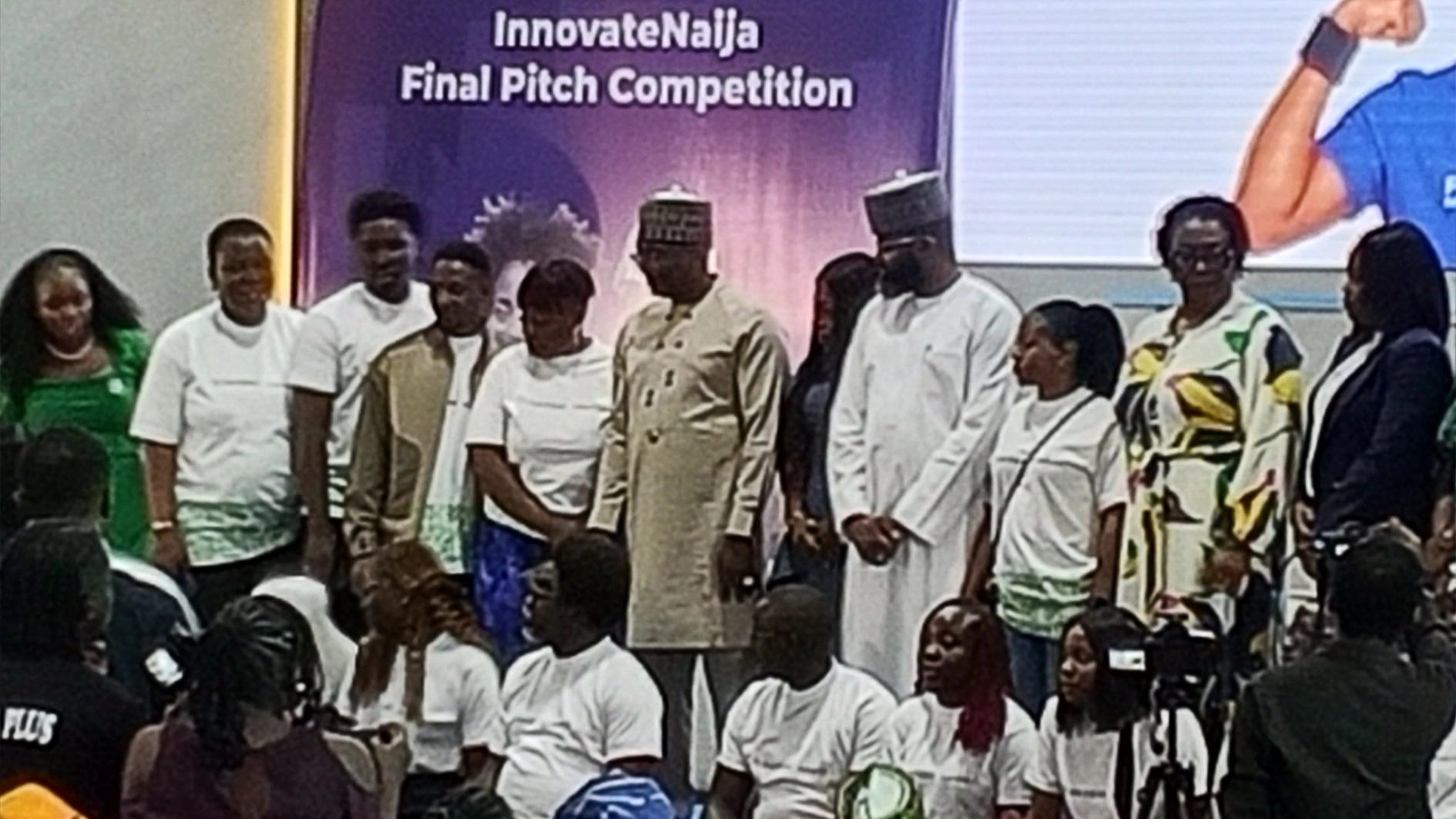
From sickle cell disease to breast cancer and the daily challenges faced by people living with physical disabilities, three young Nigerian inventors are turning some of the country’s pressing problems into locally developed technological solutions.
Oluwadamilola Adebayo, Kemisola Bolarinwa and Zang Luka are among the young innovators using engineering and hardware technology to develop practical solutions in healthcare, early disease detection and digital accessibility.
Their inventions — CellGuard, EwaDX, also described as the Smart Bra Cup Diagnostic Device, and the Computer Foot Mouse — are among the innovations showcased through InnovateNaija, a national challenge designed to identify, support and commercialise promising Nigerian inventions.
The three are among the 15 national finalists selected from innovators across the 36 states and the Federal Capital Territory, with the competition offering a ₦100 million grand prize and additional grants for the runners-up.
For Adebayo, the challenge is sickle cell disease.
His CellGuard is a specialised screening and management monitoring system designed to support the monitoring of parameters relevant to sickle cell care, potentially bringing aspects of patient monitoring closer to those who need them.
Bolarinwa, from Ekiti State, is seeking to make breast cancer screening more accessible through wearable technology. Her Smart Bra Cup Diagnostic Device is designed as a non-invasive diagnostic garment intended to aid the early detection of breast cancer.
Luka, from Plateau State, is addressing a different form of exclusion through his Computer Foot Mouse and locally manufactured USB cables.
His foot-operated computer interface is designed to allow people with upper-limb disabilities to navigate computers using their feet, potentially giving users greater independence in accessing digital tools.
The three inventions reflect a growing shift in Nigeria’s innovation ecosystem, where young engineers are moving beyond conventional software solutions to develop physical products targeted at specific problems confronting Nigerians.
For Bolarinwa, the motivation is deeply personal.
The founder of Nestway Technologies said the death of her aunt from breast cancer inspired her to deploy her engineering skills towards developing a technology that could help women detect the disease earlier.
“I lost my aunt to it. I couldn’t imagine the pain. Looking at her, groaning in pain and dying, and I couldn’t help. So I decided to use my skill set to come up with something,” she said.
Bolarinwa said EwaDX had reached the working-prototype stage and that the company was preparing to move into clinical trials before seeking regulatory approval for commercial deployment.
Because the device is a diagnostic technology, she explained that it would have to undergo clinical trials and obtain certification from the National Agency for Food and Drug Administration and Control (NAFDAC) and other relevant authorities before commercial launch.
Luka is confronting another form of exclusion — the inability of people with certain physical disabilities to operate conventional computer equipment.
The Chief Executive Officer of Zang Global said the company was also manufacturing made-in-Nigeria USB cables designed to provide durability while reducing dependence on imported alternatives.
About 40 per cent of the materials used in the company’s production are sourced locally, he said, while the remaining 60 per cent are obtained from outside the country.
Materials such as pellets used for injection moulding and packaging are sourced or produced locally, he added.
But for Luka, the major hurdle is moving from limited production to scale.
“Our product is in the market, but we have not scaled our production yet. That is one of the reasons why we are participating at Innovate Nigeria, for us to be able to scale our production and commercialise our products,” he said.
“We are not only looking at the Nigerian market; we are looking at serving the whole of Africa with our products.”
He urged the government to support local manufacturers with access to machinery, tools and production facilities, saying such intervention would enable Nigerian innovators to increase production and ultimately export locally manufactured products.
“We need investment and partnerships for us to be able to scale this product because the market is there for us. What we just need is to expand our production capacity,” Luka said.
The challenges faced by the three innovators point to a wider problem within Nigeria’s innovation ecosystem: developing an invention is only the beginning, while access to finance, equipment, testing facilities, regulatory approval and markets often determines whether a promising prototype becomes a viable business.
Director of Programmes at AfriLabs, Nanko Madu, said the InnovateNaija experience had demonstrated that Nigeria’s innovation talent was not concentrated in traditional technology centres such as Lagos and Abuja.
“One of our biggest insights from running InnovateNaija across all thirty-six states is that innovation talent is widely distributed, far beyond the Lagos-Abuja corridor,” Madu said.
She cited the Ekiti-based breast cancer innovation as evidence that Nigerians were developing solutions to pressing local problems wherever they lived.
“That shows strong ideas emerge wherever people are solving real local problems. The challenge has never been a lack of talent, it has been a lack of access and opportunity,” she added.
Madu said more than 1,200 innovators from the 36 states and the Federal Capital Territory participated in the programme, with 133 innovations selected to proceed to the next stage before state champions and national finalists emerged.
She said the objective was not simply to discover talented innovators but to create a pipeline through which promising engineering solutions could receive the infrastructure and technical support needed to reach the market.
For NASENI, that transition from invention to commercial production is central to its innovation agenda.
Speaking at the InnovateNaija pitching event, Executive Vice Chairman/Chief Executive Officer of NASENI, Mr. Khalil Suleiman Halilu, said Nigeria needed stronger bridges between ideas and opportunity, prototypes and production, and innovators and industry.
“At NASENI, we believe Nigeria does not lack talent, creativity or problems worth solving. What we need are stronger bridges between ideas and opportunity, prototypes and production, innovators and industry,” Halilu said.
According to the NASENI EVC/CEO, the agency’s approach is anchored on three principles — Creation, Collaboration and Commercialisation.
He said creation involved developing technologies that respond to real Nigerian needs, collaboration required bringing government, researchers, innovators, investors, universities and industry together, while commercialisation ensured promising technologies did not remain on laboratory shelves or as prototypes.
“Our objective is not simply to celebrate Nigerian inventors; it is to help create the conditions in which Nigerian inventions can become Nigerian enterprises and, ultimately, Nigerian industries,” Halilu said.
He urged the finalists to demonstrate not only what they had built but also the market potential, technology and support required to take their innovations to scale.
Halilu said Nigeria must increasingly move from being a consumer of imported technology to a country that creates, manufactures and exports its own technologies.
“That is the Nigeria NASENI is working to build — a Nigeria where ideas can become inventions, inventions can become products, and products can become industries that create jobs, solve problems and strengthen our economy,” he said.
The InnovateNaija initiative was launched by NASENI and AfriLabs to identify, fund and fast-track homegrown innovations in science, engineering and manufacturing. Its original structure provides winners with access not only to prize funding but also to NASENI’s technical and manufacturing infrastructure.
For Adebayo, Bolarinwa and Luka, however, the ultimate measure of success will not be the applause that accompanies their inventions at an innovation showcase.
It will be whether CellGuard can help improve sickle cell care, whether EwaDX can contribute to earlier detection of breast cancer, and whether Luka’s adaptive technology can give people with disabilities greater independence.
Their stories underscore a broader possibility: that some of Nigeria’s most difficult problems can also become starting points for a new generation of homegrown inventions — provided the ideas receive the investment, infrastructure and institutional support needed to move from the workshop to the people who need them.

