 Follow Us on Google News
 Follow Us on Google Discover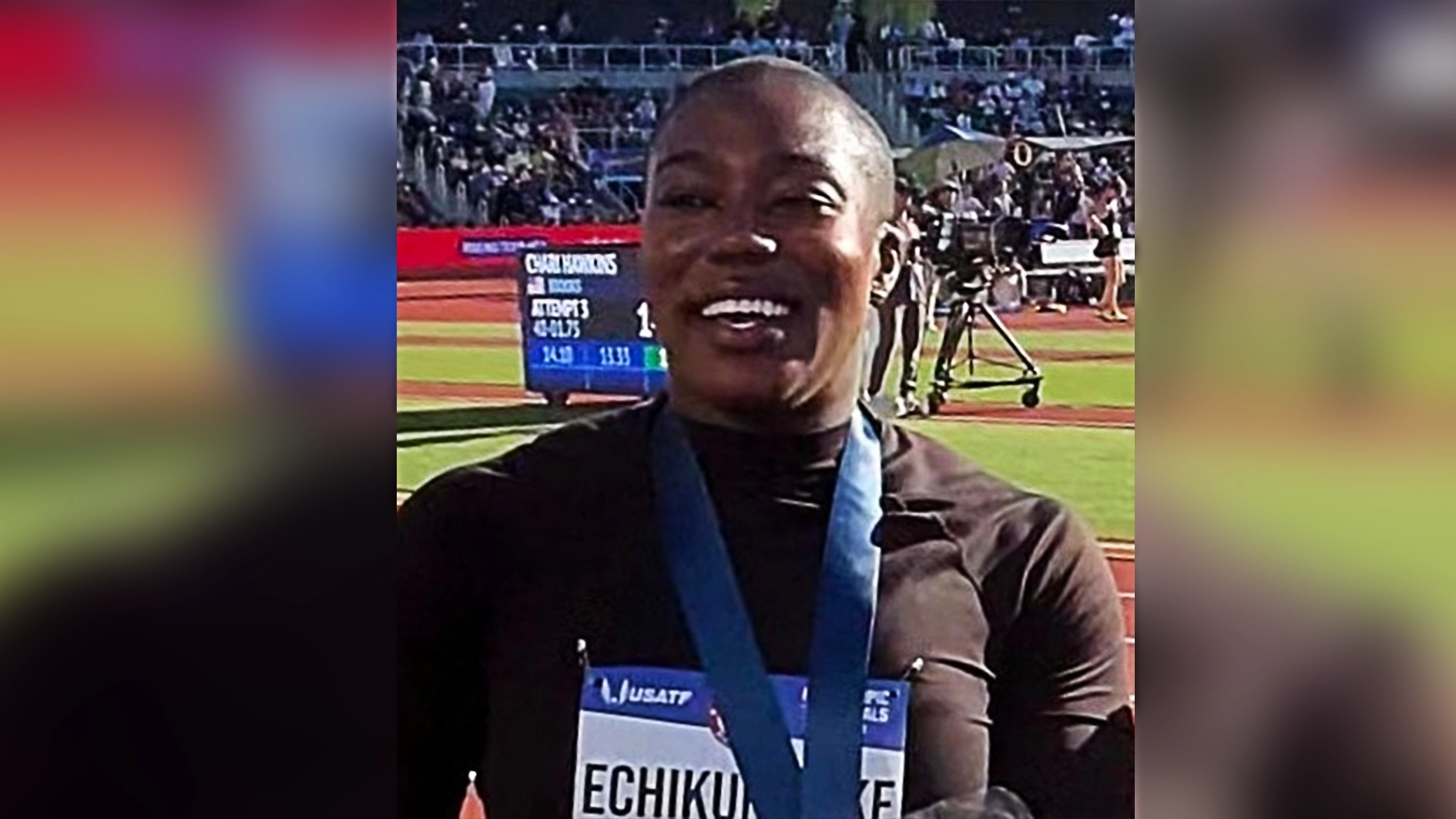
Over the years, systemic administrative lapses have forced top Nigerian athletes and sports teams to miss major international competitions despite earning their spots through rigorous qualification. GOWON AKPODONOR reports that authorities must devise new strategies to check national self-sabotage and stars tripping over their own shoelaces.
Prior to the Tokyo 2020 Olympic Games, Annette Nneka Echikunwoke, who had just switched allegiance from the United States to Nigeria, looked forward to winning a medal for her new country in the hammer throw.
Her optimism stemmed from being among the best athletes listed for the Games.
Born to Nigerian parents in the United States, Echikunwoke saw the Olympics as an avenue to begin integrating into Nigerian society, which she believed was where she truly belonged. But her dreams were shattered on the eve of the Games when she was disqualified, alongside nine other Nigerians, because the Athletics Federation of Nigeria (AFN) failed to conduct the required number of mandatory out-of-competition dope tests on the athletes.
The hammer thrower who lives in Ohio, United States, was so disappointed that she immediately reversed her decision to switch from the United States to Nigeria. Four years after the Tokyo disappointment, Echikunwoke realised her dream of becoming an Olympic medalist when she won a silver medal in her event for the United States.
At the same Olympics, Nigeria failed to win a medal, but came out of the Games with another scandal as 100-metre runner, Favour Ofili, was erroneously omitted from the list Team Nigeria submitted for the event.

Like Echikunwoke before her, Ofili chose to dump Nigeria for Turkey, which she is hoping to represent at the Los Angeles 2028 Olympics.
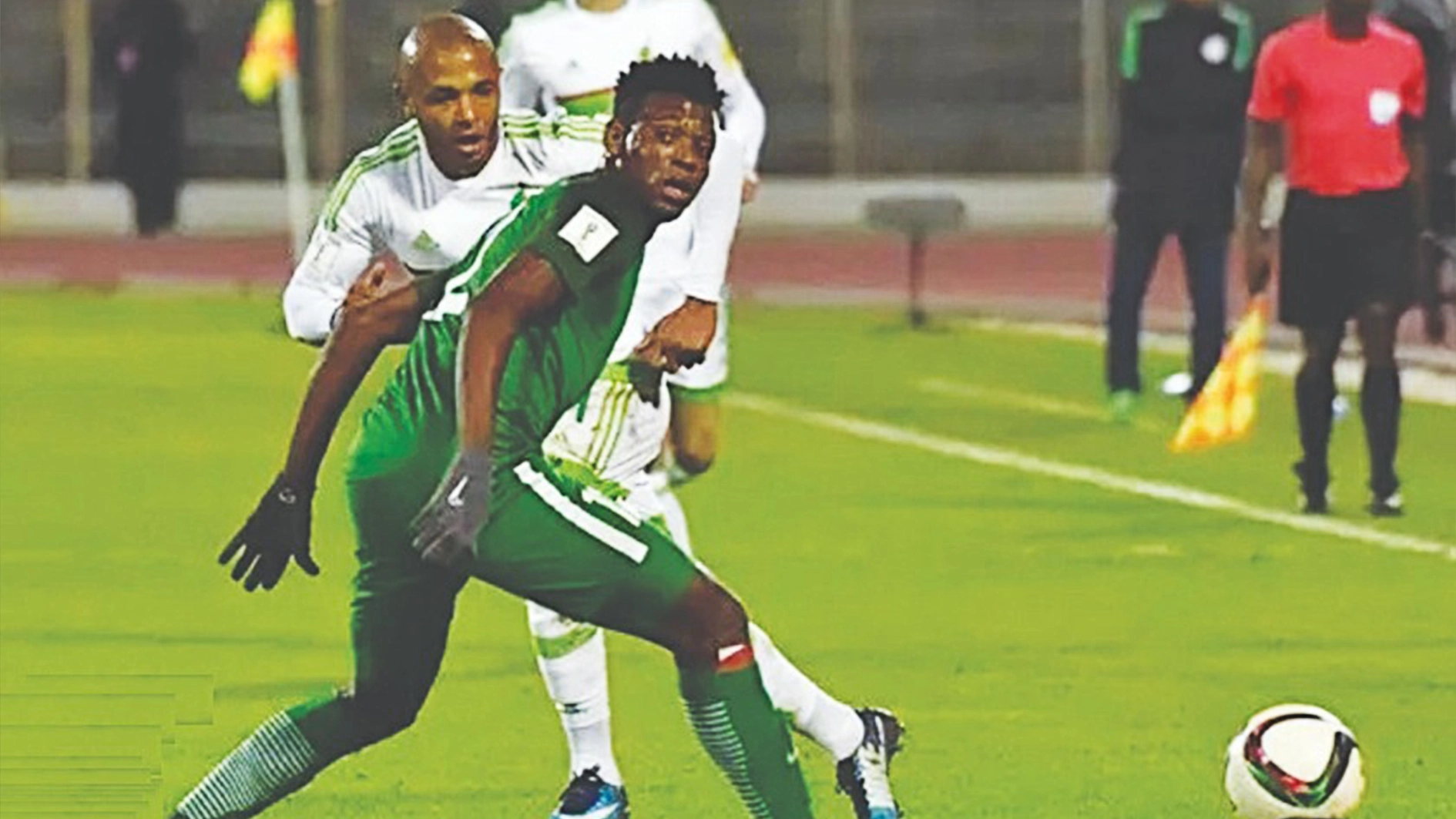
While Nigeria suffered severe consequences for its officials’ negligence in the Echikunwoke and Ofili cases, the country was luckier in 2018, when the Super Eagles narrowly escaped being disqualified from the FIFA World Cup hosted by Russia after fielding an ineligible Shehu Abdullahi in the final qualifying game against Algeria.
It turned out that the Nigeria Football Federation (NFF) failed to inform the coach, Gernot Rohr, that Abdullahi already had three yellow cards from previous games and was therefore ineligible to play the game against Algeria. Nigeria’s saviour was that the Super Eagles still had more points than Cameroon and Algeria, even when three points were deducted from the country’s tally by FIFA.
Over the years, Nigerian athletes have endured the harrowing experience of missing major international championships after spending years training for them.
Apart from official negligence, some athletes have suffered from the effects of appointing incompetent and ill-trained officials to handle critical aspects of the country’s sports, including disqualification from events after excelling at the competition.
On August 9, this year, Nigeria’s U-20 mixed 4x100m relay team was disqualified from the Junior World Championships final in Oregon, United States of America, after one of the athletes wore what was described as “a non-compliant shoe”.
The Nigerian quartet of Tejiri Godwin, Chigozie Rosemary, Perfect Faye and Oluebube Ezechukwu ran a fantastic race and crossed the finish line to the admiration of the crowd. But while the athletes were celebrating what could have been a remarkable fourth position, which could have sent them into the final, their celebration was short-lived when the post-race disqualification was announced.
The team was disqualified under World Athletics Rule TR7.1 (TR5.2) for non-compliance with the shoe rules, as one of them wore a shoe that had been banned by World Athletics. Nigerians were horrified that the officials did not know the rules on footwear approved for such races.
The dust raised by the international embarrassment in Oregon, U.S., was yet to settle when another incident cropped up in September at the 2026 World Athletics Ultimate Championships, in Budapest, Hungary.
Team Nigeria missed the chance to line up for the mixed 4x100m relay because three members of the team, Miracle Ezechukwu, Favour Ashe and Rosemary Nwankwo did not make the trip to Hungary due to visa complications arising from delays at the Hungarian Embassy in Abuja. This was after the team had battled to qualify for the race as one of the best six teams at the World Relays in May.
At the ongoing FIFA U-20 Women’s World Cup in Poland, Nigeria’s Falconets, who were knocked out of the championship at the quarterfinals by Colombia, was forced to participate in the competition without team captain, Joy Igbokwe and defender Faridat Abdulwahab, who were ruled out after failing to secure their entry visas.
The trend is not new. As far back as 1985, former England star John Fashanu joined the then Green Eagles in the build-up to World Cup qualifiers against Tunisia. He actually played in some friendly matches within Africa, against Côte d’Ivoire and Togo. But when the time for the real action against Tunisia in Lagos came, Fashanu was found ineligible to play because some officials of the then NFA had forgotten to procure a Nigerian international passport for him. The Green Eagles managed to beat the visiting Tunisians 1-0 in Lagos but lost 1-2 in Tunis, waving goodbye to the Mexico ‘86 World Cup.
In 1991, the Super Eagles were forced to cut their tracksuits into makeshift shorts because an official of the then NFA forgot the team jerseys at their training camp in Ota, Ogun State. It was a 1992 Africa Cup of Nations qualifier against Burkina Faso, at the National Stadium in Lagos, and with just five minutes before kick-off, team officials realised the actual kits had been left behind at the camp in Ota, Ogun State. To prevent a walkover on home soil, scissors were brought into the dressing room, and the players cut their tracksuit trousers into knee-length shorts.
Five years later, Nigeria’s U-17 boys’ football team, the Golden Eaglets, was disqualified in their World Cup qualifier against the Benin Republic in Ibadan because an official of the NFA forgot the players’ passports in Lagos.
These negligence and gross incompetence displayed by officials have accounted for as much for the country’s poor standing in the comity of sporting nations as has the athletes’ failure to meet the winning standards.
Although some stakeholders would rather blame the visa denials on the host country’s delay in issuing timely visa-support letters for Nigerian competitors to meet some of the sovereignty and hardline policies enforced by some Western and European embassies, there are those who say that since the dates for such competitions are known months, and sometimes, years before the events, if the affected associations had put their documents together on time, such denials would either be curtailed or avoided entirely.
Former Nigerian hurdler, now based in the Republic of Ireland, Moses Oyiki, who witnessed the events at the World Athletics Ultimate Challenge in Budapest, said that the country is suffering the effects of handing top jobs to unqualified personnel.
He said: “I was in Budapest to cheer our athletes to victory, only to discover that the 4x100m mixed relay team could not make the trip from Nigeria due to visa complications.
“I felt so disappointed about it, and I expressed my reservations about it when I met with some officials of Team Nigeria. Missing out on such big championships could have some negative impacts on the athletes. Apart from the loss of a historic opportunity to compete with their peers on the global stage, such visa denials impose psychological strain on athletes who have expended so much energy qualifying for the event. The athletes also missed a golden opportunity to make some cool cash for themselves, which could help them to improve on their training ahead of the Los Angeles 2028 Olympics, even before government grants will come.”
“There is an urgent need to address such an ugly situation as we prepare for the 2027 World Championships and the Los Angeles 2028 Olympics.”
The Head Coach of Delta Athletics, Emilly Osakwe, said: “Denying an athlete or team the visa to compete at major events, particularly at the world level, has a way of destroying their career gradually.
“They feel dejected and discouraged because all their time and efforts in training have become a waste.
They also suffer loss in potential earnings from the prize-rich competition. For instance, at the just-concluded World Ultimate Championships in Budapest, the athletes on our mixed relay team were already targeting the $150,000 prize money, but they could not travel due to visa issues. It was a sad experience.”
To curb administrative lapses that sometimes impact negatively on the country’s chances of success at international championships, a former African number one tennis player, Dr Sadiq Abdullahi, said that the National Sports Commission should look at the recommendations of some of the committees set up by previous administrations after some of the highly damaging incidents.
“To avoid a recurrence of negative behaviours, the NSC should craft new guidelines that national sports federations should adhere to and set up a Compliance Unit that will work with National Sports Federations.”
On the poor state of the technical departments in many federations, Dr Abdullahi canvassed that professional development training for coaches and officials should be mandatory before travelling out of the country.

