 Follow Us on Google News
 Follow Us on Google Discover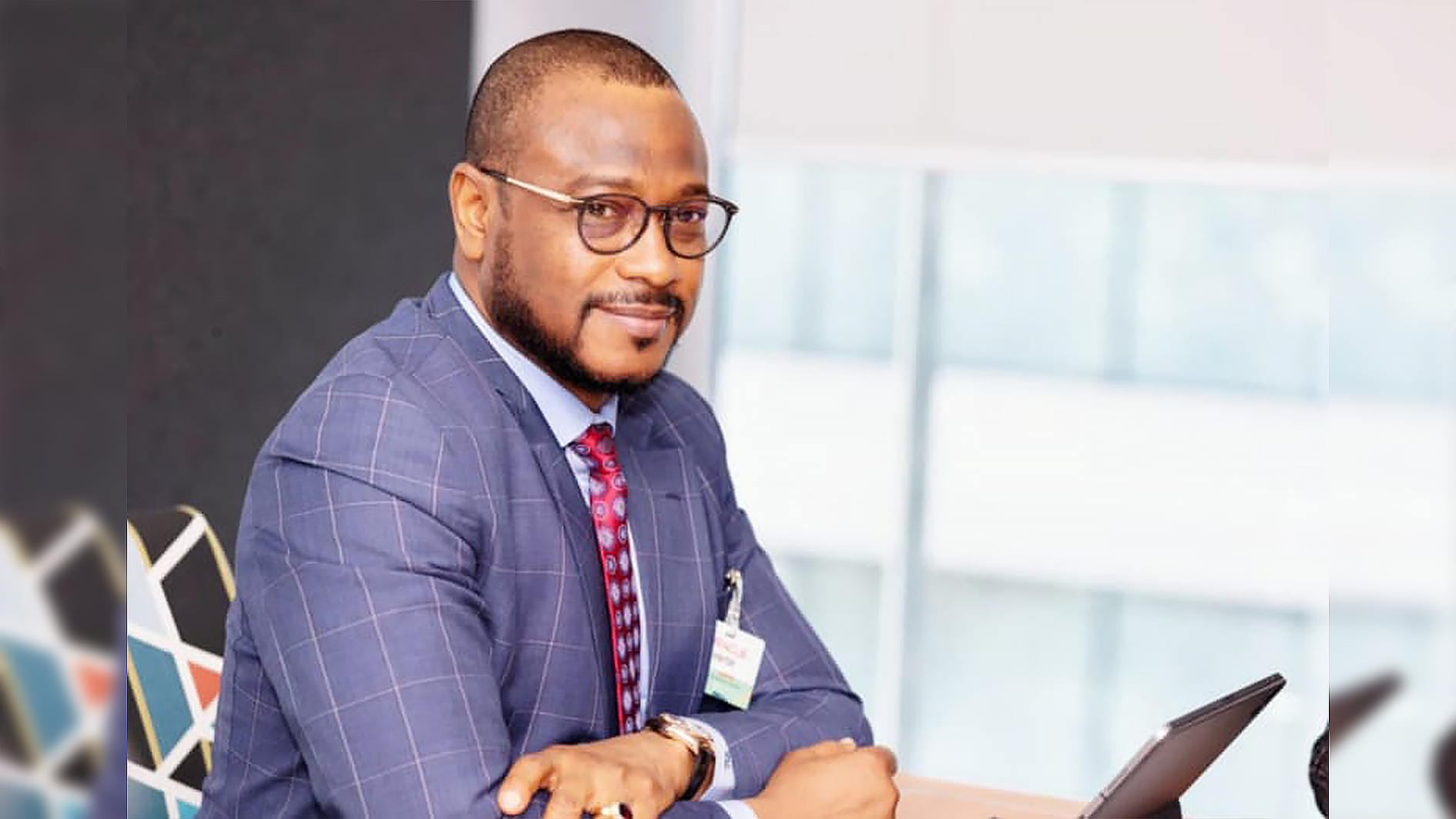
As Zamfara State marks 30 years since its creation from the old Sokoto State, Governor Dauda Lawal spoke with media executives on the state’s journey, its development challenges, insecurity, education, agriculture, solid minerals, state police and the controversy surrounding ransom negotiations with bandits. The media interview, which brought together senior journalists from various media organisations, also examined perceptions of Zamfara following the introduction of Sharia law, efforts to attract investment, and the administration’s six-point “Rescue Mission” agenda. The Guardian was there.
Zamfara was created 30 years ago from the old Sokoto State. With the ongoing constitutional amendment process and renewed agitations for the creation of more states, how would you assess the impact of Zamfara’s creation on the people?
Zamfara was created out of the former Sokoto State, and from what we have seen, the creation has had a positive impact in terms of bringing development closer to the people.
Before the creation of Zamfara State, the area was not as developed as it is today. There have also been advantages in terms of employment creation and other opportunities.
However, we also need to look at the reality today. State creation cannot continue to be approached in the same way it was in the past without considering the financial challenges involved.
Many of the states created in the past are finding it difficult to function effectively because of finances. So, I think we need to think through the issue before we begin to agitate for more states.

For me, for now, we should concentrate on making the states we already have viable and functional. If we are comfortable with that, then we can begin to think about creating additional states.
You inherited a state that had faced serious challenges in infrastructure, agriculture and other sectors. What have you done to change the situation?
From the outset, Zamfara had serious challenges. When we came on board, we asked ourselves: Is this how a state should be?
We looked at infrastructure and agriculture, including areas where we have comparative advantages, and realised that these were challenges that needed to be addressed. So, we began making conscious efforts to confront the reality and put things in place.
If you have gone around Gusau within the last one or two days, you can see the kind of development taking place. It is an ongoing process because there are still many things that need to be done.
That is where we are now in our vision for a better Zamfara State.
About 26 years ago, Zamfara attracted international attention following the introduction of Sharia law.
The perception that emerged was that Zamfara was a fundamentalist Islamic state and a no-go area for non-Muslims. Has your administration been able to change that narrative?
Absolutely. When you mention Zamfara, the first thing that comes to the minds of many people, not just in Nigeria, is Sharia.
I believe there was a reason why the administration at the time decided to implement Sharia. But I think the process of implementing it and communicating it to the people was wrong. If you are going to introduce something like Sharia in a state like Zamfara, you need to properly explain the process and engage the media so that people understand why you are doing it.
That was not done properly, and it created a perception that people still have today. People think Zamfara is a no-go area. They believe there are no Christians, no churches and that everybody has to dress in a particular way. But you can see the reality yourself. Yesterday was Sunday, and you went to church. That tells you that the perception and narrative from day one were wrong. We are trying to change that perception.
If you talk about Zamfara, people immediately associate it with Sharia and insecurity. But Zamfara is a diverse state. We have people from the Southwest. If you go to Sawangari, it is predominantly occupied by Yoruba people. If you go to Chiduada, it is predominantly Igbo. So, we are trying to change the mindset and perception about Zamfara.
The state should not be defined by insecurity or Sharia. It should be defined by its comparative advantages.
You have spoken about changing the narrative and attracting investment. What are the areas you believe can drive Zamfara’s economic development?
Investment is possible when there is a clear understanding that something good will come out of it. That is the message we are trying to send to the world: there are opportunities in Zamfara State.
We are putting the right things in place and creating a conducive environment for investment. People are beginning to understand that Zamfara is not only about insecurity and Sharia. We are also changing the perception of Zamfara from being known only as a farming state to a state with both agriculture and solid minerals.
Even before I contested to become governor, I had tried to understand the key things that Zamfara had and what could be done differently.
That informed what we called the Rescue Mission. We have six major areas: security, education, healthcare, agriculture, infrastructure and human development. I am happy to say that in each of those areas, we have made between 60 and 70 per cent progress.
Security remains one of the biggest challenges facing Zamfara. There have been reports of hundreds of kidnappings and attacks. Is the security situation improving, and are you getting the necessary support from the Federal Government?
If you compare the data from 2023, before I came on board, with what is happening today, the data is very clear that insecurity has reduced significantly.
Zamfara is one of the critical areas where we have serious security challenges because of the activities of terrorists and criminal groups.
One of our major challenges has been response time. There are areas where, when an attack happens, it is difficult for conventional security agencies to get there quickly.
Take the road from Shinkafi to Zurmi, for example. It is a troublesome area. We believe that constructing the road will improve response time and enable security personnel to get there much faster.
Access is critical to security.
There may still be pockets of attacks, particularly in ungoverned areas. During the rainy season, getting to some of those locations becomes extremely difficult.
That is why we are also encouraging the use of technology, including drones, to monitor what is happening and determine the response required.
You are a strong advocate of state police. Why do you believe it will help solve the security problem?
I am a very strong supporter of state police, and I will tell you why. If you are dealing with rural communities, you need people from those communities who understand the terrain and the people.
Another issue is command and control. In many cases, when there is an attack, and you engage conventional security agencies, there are several processes involved before permission is obtained from headquarters to act. That affects response time.
State governments are already financing security operations involving the police and military in their states. So, if we have local security personnel who understand the terrain and are under the control of the state, they can serve as the first point of response.
I strongly believe state police will go a long way in addressing security challenges, not only in Zamfara but across Nigeria.
You have consistently opposed negotiations with bandits. How do you reconcile that position with families who simply want their kidnapped relatives returned alive?
My position has always been that we should not negotiate with bandits.
The reason is simple. Kidnapping and ransom have become a business. When you pay ransom, you are empowering the bandits. Where do you think they get the money to acquire sophisticated weapons? They get it from the money they collect.
There was a case involving some people close to me where a ransom of N300 million was demanded per person. I said I was not going to pay a dime.
I said that because I would rather use that money for something else than to encourage the system. If you pay N300 million today to rescue somebody and tomorrow something happens to that person, can you stop God from taking his life? That was the point I made.
Leadership sometimes requires hard decisions. Fortunately, the people involved were eventually released, and the final demand was for recharge cards from a family member.
If you look at the history of negotiations that took place under previous administrations, what positive results did they produce? These people are not organised in the conventional sense. If you negotiate with somebody, you may also be elevating that person and giving him recognition.
During your campaign, you promised to end insecurity in Zamfara within two years. Yet insecurity remains in some parts of the state. When will that promise become reality?
If you compare the data from 2023 to what we have today, the difference is clear. Security was one of my major campaign promises, and I am happy with what we have achieved, although there is still a lot to do.
When we came in, we had to ask what the best approach was under the circumstances. That informed the decision to establish the Community Protection Guard, CPG.
The CPG is our local security outfit, working in collaboration with conventional security agencies. We worked with the DSS to vet the recruits and selected credible young people from the communities.
We realised that we could not be everywhere across the 14 local government areas. So, we identified people within the communities who understood the terrain and the people and recruited them.
The first batch had about 3,000 recruits who underwent rigorous three-month training by the military and police. We also went through the legislative process to ensure they were legally authorised to carry arms.
They were later posted back to their communities, where we provided logistics, motorcycles, vehicles, kits and ammunition. This has helped reduce attacks in some communities.
What is being done to reintegrate victims of insecurity and those who genuinely repent from banditry?
Victims have gone through trauma, so they need psychological support, counselling and guidance. We also look at what businesses they were doing before the crisis and provide incentives to help them return to those businesses.
We have also started rebuilding communities. In one community near Kotorokoshi, for example, we took people back to their village, provided security, and gave them government support.
Most of these people are farmers. They are not asking for too much. Sometimes N500,000 can make a significant difference in someone’s life. We are also working to attract industries into the state so that employment opportunities can increase.
As for repentant bandits, there has to be a process. They must go through counselling and guidance, and we must establish that they are genuinely repentant. We also have to inform the community that these people have genuinely repented so that they can be accepted.
We can then provide skills and starter packs to keep them occupied. But I have made it clear that anybody who wants to enter the process must first lay down his arms. I cannot accept somebody who says he has repented while keeping weapons in his custody.
Education has historically been one of Zamfara’s weakest areas. What are you doing to change that?
Education was the first major challenge I identified when I took over. Zamfara was ranked around 35th or 36th among the states in educational performance. That is a fact. That was why we declared a state of emergency in education.
Education is the bedrock of society. Without education, people may be unable to distinguish right from wrong or develop the kind of rational thinking required to contribute effectively to society. We therefore decided to address both infrastructure and teachers.
You can build schools, but if you do not have the right teachers, what is the point?
We have renovated more than 850 schools, covering primary and secondary schools. We have before-and-after records of these schools and can make them available for verification.
We have also focused on teacher recruitment, training and retraining. We have employed hundreds of teachers. Development partners, including programmes supporting girls’ education, have also assisted us substantially.
We intend to move Zamfara from where it was to among the top three states in Nigeria in education. We will get there by the grace of God.
Before your administration, more than 800,000 children were reportedly out of school, while students in the state went for years without receiving their examination certificates. How did you address that?
We paid the outstanding fees and collected the certificates that had accumulated over the years. Once students have their certificates, they can apply for admission and continue their education. Without certificates, many of them remained idle.
We are seeing a significant increase in school enrolment. There was a time I received enrolment figures from a university in Gusau and questioned whether the figures were correct because they were so high. I invited the scholarship secretary and the vice-chancellor, and they explained the figures.
The increase was due to students who had previously been unable to continue their education now having their certificates. That is how you reduce the number of idle young people.
How are you addressing the challenge of girls’ education, particularly in communities where some parents remain reluctant to send their daughters to school?
One of the reasons some parents do not send their daughters to school is because they do not believe girls should be educated. We are trying to address that through engagement and persuasion.
We are also experimenting with combining Western and Islamic education. We have schools in the three senatorial districts where we are testing the model. We have one in Gusau, one in Gummi and another in Kaura Namoda.
We have also engaged Islamic scholars because they are influential in the communities. Some people initially felt that Western education was going to take their children away from Islamic education.
We explained that this was not the objective. We want to combine the two so that children can receive Western education while retaining their Islamic education.
On girls’ education, I believe that when you educate a girl, you are educating the entire community. For example, when a woman needs medical treatment, there are situations where she may prefer to be attended to by another woman. If we do not educate girls and encourage them to study medicine, how do we produce enough female doctors?
So, there is a lot of re-engineering and persuasion involved. We are also providing incentives. There are programmes under which girls who attend school receive financial support.
When people begin to see the benefits and trust the programme, they are more willing to send their children to school.
Today, particularly in urban areas, you can see more girls in schools. The key thing is trust. Once people trust what the government is doing, they will respond.
You mentioned infrastructure and teachers’ mindset earlier. One of the major barriers to girl-child education in Zamfara has been the belief among some parents that girls should not receive a Western education. How have you addressed that?
The first thing we did was to introduce a trial of a combination of Western and Islamic education. We have what we call the integrated or blended approach. Zamfara has three senatorial districts, so we established one school in Gusau for the Central Zone, one in Gummi for the Western Zone and another in Kaura Namoda for the other zone.
The idea was to blend the two forms of education. It was important because this is a serious and sensitive issue. We had to engage Islamic scholars because we did not want people to feel that we were taking away their religious education or trying to Westernise everything.
Our position was simple: let us blend the two. The children can continue to receive Islamic education while also acquiring a Western education. That approach gave us some leverage and helped us to address the concerns of parents and religious leaders.
How did you tackle the cultural perception that educating girls is unnecessary?
Coming from a Sharia state, there has always been the perception that girls should not go to school. We said no, that is not right. You need to educate the girl because when you educate a woman, you are educating the entire community.
Take healthcare, for example.
If a woman goes to a hospital, there are situations where she would prefer to be attended to by another woman. If we do not encourage girls to go to school and study medicine or other health-related professions, where will we get the female doctors and other professionals we need?
So, we had to do a lot of re-engineering and persuasion. We had to explain to parents why their daughters needed to go to school and the benefits to their families and the wider community.
Poverty is another factor. How have you encouraged poor families to send their daughters to school?
Poverty is a major issue, and we cannot ignore it. So, how do you incentivise parents? We said, okay, girls should have free education, but it should not stop at free education.
Under one of the programmes, girls who attend school receive an incentive. I believe it is about $50 per child. The purpose is to encourage parents and demonstrate that we are serious about girl-child education.
People began to realise that we meant well. They started responding positively. Today, if you go to most schools, particularly in the urban areas, you will find that we have more girls in school than boys in some cases.
It has taken a lot of persuasion and effort to convince people, but the good thing is that everything is about trust. People are beginning to trust our words. One thing I don’t do is make false promises.
When you came into office, there was a perception that Zamfara was largely a welfare state, with resources distributed to political leaders and individuals. You came in with an agenda to redirect the state towards development, particularly health and education. There has been resistance from some political leaders. Looking back, do you regret taking that path?
We have no regrets about what we are doing and how the state is transforming. We are building a functional state.
One of the most difficult challenges I faced, especially during my first year, was changing the mindset of people who were used to a system that built on welfare at the expense of development.
My intention was very clear: we are here to make meaningful and positive changes for the people of Zamfara State. I want history to judge me as somebody who transformed the state, not somebody who simply came to distribute money.
As a leader, you must make decisions. Some decisions may be painful, but once you are convinced that what you are doing is in the right direction, you have to stand by it.
When people started talking about 2027, my position was simple. I said, ‘I am here now as governor. Is there any guarantee that I will survive until tomorrow? Is there any guarantee that I will get to 2027?’
I said let me use the opportunity God has given me to transform the state. When 2027 comes, that will be another chapter. When we get there, we will determine what happens. That is exactly what we have done.
People have seen the difference and are beginning to key into the development agenda.
I am happy to say that we have been able to show the world that Zamfara, despite the challenge of insecurity and other problems, is ready to compete with any state in Nigeria in education, infrastructure, healthcare, agriculture and solid minerals.
One of the concerns about some of these interventions is sustainability. How do you ensure that programmes such as incentives for girls’ education and other development initiatives survive beyond your administration?
The answer is very simple. When you are talking about transformation, you don’t build it around an individual. You build a system. That is exactly what we are doing. We are building a system whereby whoever comes after Dauda as governor will have to key into the processes we have established.
It is interesting to know that since the creation of Zamfara State, there has never been a development plan for the state. I am happy to say that last year we launched a 10-year development plan for Zamfara. It was developed with the support of KPMG and the United Nations Development Programme (UNDP).
We are building a system. When you have a system, you don’t need to worry too much about what happens tomorrow because whoever comes after you will have to work within that framework.
But when everything is built around individuals, people come and go. People die and knowledge is lost. When there is a system in place, you can go to sleep because the system continues to work.
You mentioned the importance of building systems. Revenue is one area where your administration appears to have made significant changes. What was the situation when you assumed office?
When we took over, the internally generated revenue of Zamfara State was about N90 million a month. And about 80 per cent of that N90 million was from Pay-As-You-Earn, PAYE.
You can imagine how a state can function on that kind of revenue. So, I had to take some drastic measures to review the entire revenue collection process.
We brought in consultants and reviewed the system. Based on the changes we introduced, Zamfara is now able to generate about N5.5 billion monthly.
…where is the money coming from?
It is coming from different sources. It includes collections from areas that were supposed to generate revenue, motorbike licensing and other taxes and levies.
The important thing is that people are now willing to pay taxes because they can see what the government is doing.
Today, when you go around and speak to people, they will tell you that they are willing to pay because they can see the difference. We now have access to areas where government officials could not previously go.
For example, transporters are earning from the system. On average, after all the expenses and other deductions, some of them make between N12,000 and N15,000 monthly in net earnings. We are also changing the transportation system and improving the process of revenue collection.
You also mentioned the geographical information system and land administration. What has changed there?
We introduced a geographical information system because we had problems with land and occupancy records.
What we did was to develop a clear master plan and ensure that people could obtain proper documentation.
As more people come into the system, we are able to properly document land, permits, changes of purpose and other transactions.
Has the N5.5 billion monthly revenue included income from mining and solid minerals?
No, we have not really gone into that yet.
You cannot sell what you don’t have. Mining was not given that much attention when we started because the problems confronting us were enormous. We had to decide what to address first.
Education is key to everything we are doing. Agriculture is also important because Zamfara is predominantly an agrarian economy. Healthcare is another priority.
We had to stabilise these areas first. Now that we have made conscious efforts to understand what we have and where we are going, we can begin to look at other critical areas.
You cannot manage what you do not know. Before now, there was no formal way of knowing exactly what Zamfara had in terms of critical mineral resources. Now we are beginning to address that.
When we came to Gusau, you took us on a nostalgic journey into what the city used to be. You spoke about your father, the textile industry and the presence of multinational companies. What happened to that vibrant economy, and what are you doing to revive it?
Let me take you back to the old days. When Gusau was still a local government, it was one of the major commercial centres in northern Nigeria.
As you mentioned, we had the textile industry. We had about 27 functioning ginneries. We also had an oil mill that was being supplied with cottonseed from the ginneries.
We had multinational companies — SCOA, GB Olivant and many others — operating here because Zamfara was an agrarian economy.
We had people from North Africa, Algeria, Lebanon and other parts of the world coming here. There were also many Chinese because of the textile industry. The textile business was a partnership involving Nigerian and Chinese interests.
Gusau was a cosmopolitan city. In those days, I used to leave Zaria to come to Zamfara to enjoy the weekend. We could drive late at night, spend the weekend and return to Zaria on Sunday. That was how vibrant the economy was.
We also had major oil dealers coming here. Someone in Lagos could have his allocation in Zamfara and would have to come here to collect it before transporting it elsewhere.
Agriculture was also thriving. Zamfara was a major producer of cotton and other agricultural products. The railway played an important role in transporting agricultural products.
But what happened to that economy?
With the creation of states, things began to go down. Politics became a major source of money, and people were encouraged to move away from traditional business activities because politics appeared to provide an easier way of making money.
Even farmers began to move away from agriculture. Yet Zamfara was producing a large volume of food crops and cash crops. Cotton was one of the major cash crops, while beans and other food products were transported from areas such as Kaura Namoda.
The railway was a major route for agricultural products. I remember my brothers attended King’s College, Lagos. In those days, we could put them on the train at night and they would arrive in Lagos the following morning.
That was how vibrant the economy was.
What are you doing to reverse that trend and make agriculture attractive again?
That is why we are now moving from subsistence farming to mechanised farming. If you go to our Ministry of Agriculture, you will see the kind of implements we have acquired. We have tractors, excavators and other equipment. Fertiliser is also very important.
Even before I became governor, I had built a facility in Gusau along the road with a capacity of 120 metric tonnes per hour. It is fully mechanised.
Mechanisation is the way forward. You cannot continue with subsistence farming and expect to achieve the level of production we need.
How is the government supporting farmers?
We are providing them with equipment as part of our agricultural transformation programme. The government is buying the implements and organising farmers into cooperatives.
If farmers need tractors or other equipment, they can go through their cooperatives, access the equipment, use it on their farms and return it. We are trying to operate more like the private sector because what we have realised is that when everything is linked directly to the government, it becomes difficult to sustain.
We need to move away from policies where people simply wait for the government. We want people to become productive. This year’s farming season has shown the difference. Almost all the farms around Gusau are being cultivated.
You can see that there is hardly any piece of land that is not being used.
We are also introducing new farming methods where the yield is much higher than what we used to achieve through traditional methods. That is the direction we are taking.
How do you intend to ensure that Zamfara State and its local communities benefit significantly from the mining activities taking place in the state, rather than allowing outsiders to take most of the benefits?
I can see now that the system is not perfect, but we are trying to fine-tune the process. I am sure that, with time, we will make it better so that everybody can benefit.
I believe there are lessons we can learn from the Niger Delta, particularly in protecting the interests of local communities in mining areas. We can plan because we have seen some of the efforts being made to correct the wrongs in the Niger Delta.
One of the things we are doing is ensuring that the people who live in the mining communities have a sense of belonging. Ownership is key to the success of any programme, and this is exactly what we are trying to achieve in the mining sector.
There is also the issue of artisanal miners. Initially, we were thinking of removing everybody and allowing only sophisticated mining operations. But, on second thought, I said we were battling insecurity, and there are thousands of artisanal miners who depend on mining for their livelihood.
If you remove them without providing an alternative, what happens to them? How do you expect them to survive? So, we decided that it was better to engage them and bring them into the system.
We are registering artisanal miners and creating a database of who they are, where they operate and what they do. That process is ongoing.
We are also ensuring that major companies coming into Zamfara to invest in the mining sector incorporate artisanal miners in one way or another. That way, they do not feel abandoned or excluded from the process. We are also introducing and incentivising the use of new technology. We tell them, for instance, that with the new technology, this is the quantity you can get and this is how the benefit can be shared. It is about making them part and parcel of the process.
How significant is the informal gold market in Zamfara?
One interesting thing I discovered is the scale of informal gold transactions in Zamfara. There are daily transactions running into about one million dollars that are not recorded.
We have what we call the Polo Market. If you go there now, you will see the way gold is being traded.
The scale is unbelievable. But these transactions are largely informal and outside the formal system.
So, we are putting measures in place to engage these people, just as we are forming cooperatives in agriculture. We are doing the same thing with the artisanal miners. We want to know who they are and bring them into the formal process. We now have data on our miners, including artisanal miners, across the state.
You mentioned ownership and inclusion. How important are these in your mining policy?
Ownership is key to the success of any programme. People must have a sense of belonging. If you are introducing a programme and the people who are supposed to benefit from it feel excluded, you may create another problem.
That is why we want the artisanal miners to understand that they are part of the process. We know who is where and what they are doing, and we are trying to organise them within a formal framework. What happened in Niger State, for instance, shows that some of these things can be avoided if you engage the people properly and give them a sense of belonging.
Moving back to agriculture, post-harvest losses remain one of the major challenges confronting farmers. What is your administration doing to address this?
Post-harvest losses are a major challenge. You can invest in mechanisation and increase production, but if the produce is lost after harvesting, then you have not solved the problem.
This is why we are looking at the entire process, from production to post-harvest.
The people who introduced the commodity and marketing boards had reasons for doing so. There was a system that addressed the agricultural value chain, from cultivation to marketing and post-harvest.
When we came into government, different policies had led to the abandonment of some of those structures. We now have to go back and look at the reasons those marketing and commodity boards were established in the first place.
Our objective is to ensure that farmers do not produce and then lose their products because there is no market or proper storage system. We are looking at the entire process, from production to post-harvest, and ensuring that there is somebody to buy the produce.
Let us talk about transportation. How has your administration addressed transportation, particularly for workers, students and farmers?
Transport infrastructure is key. It is something we have been paying attention to in Zamfara. For conventional transportation, we have put about 100 brand-new buses on the interstate routes at subsidised rates. They operate from different bases.
We also have interstate buses where about 60 per cent of the cost is subsidised. Students and workers can access the service through transport cards. If you move around the state capital, you will see bus stops powered by solar energy. Students use the buses through their cards, so they do not have to pay cash every time they board.
There are also monthly cards for staff and others who use the buses regularly. The service is
subsidised, and all they need to do is use their cards when they board.
What about the transportation of agricultural produce?
We also have big trucks dedicated to transporting agricultural produce.
I
f you go to the Ministry of Agriculture, you will see the trucks we bought brand-new, as well as some of the ones we inherited and refurbished.
They are used to transport agricultural produce at subsidised rates. The idea is to reduce the cost of moving farm produce from the point of production to the market. When you address these little issues, they have an impact on the final cost of food.
That is one of the reasons why, in terms of food inflation, Zamfara has been able to record a relatively low rate. We are addressing the costs involved in production and transportation.
Your administration has also invested heavily in solar energy. How much has the adoption of renewable energy helped to reduce electricity costs?
The world is transforming towards renewable energy, and that is important.
I am happy that this part of the country has abundant sunshine, which makes it easier for us to invest in renewable energy. We realised the advantage and decided to get into that process.
Out of the more than 800 schools that we have refurbished and rebuilt, every school that we have rebuilt is now powered by solar energy.
We are also using solar power in hospitals, at the airport and in other government facilities. This has significantly reduced the cost of electricity.
One of the major problems we faced when we came into government was that Zamfara had been disconnected from the national grid because of unpaid electricity bills. I had to settle a debt of about N1.6 billion to enable the electricity distribution company to restore power to government offices across Zamfara State, including the Government House.
So, renewable energy provides an opportunity to reduce our dependence on the national grid and lower the cost of electricity for government facilities.
We came through the airport and saw the facilities there, including the control tower and solar installations. What can you say about the investment in the airport?
We have invested in the airport because we believe it is important infrastructure for the state.
We have provided modern facilities, including the control tower and solar-powered infrastructure. The objective is to ensure that the airport meets the standard required to serve Zamfara and supports the state’s economic activities. We are also conscious of the cost to the government. We want infrastructure to be useful, sustainable and capable of supporting development in the state.

