 Follow Us on Google News
 Follow Us on Google Discover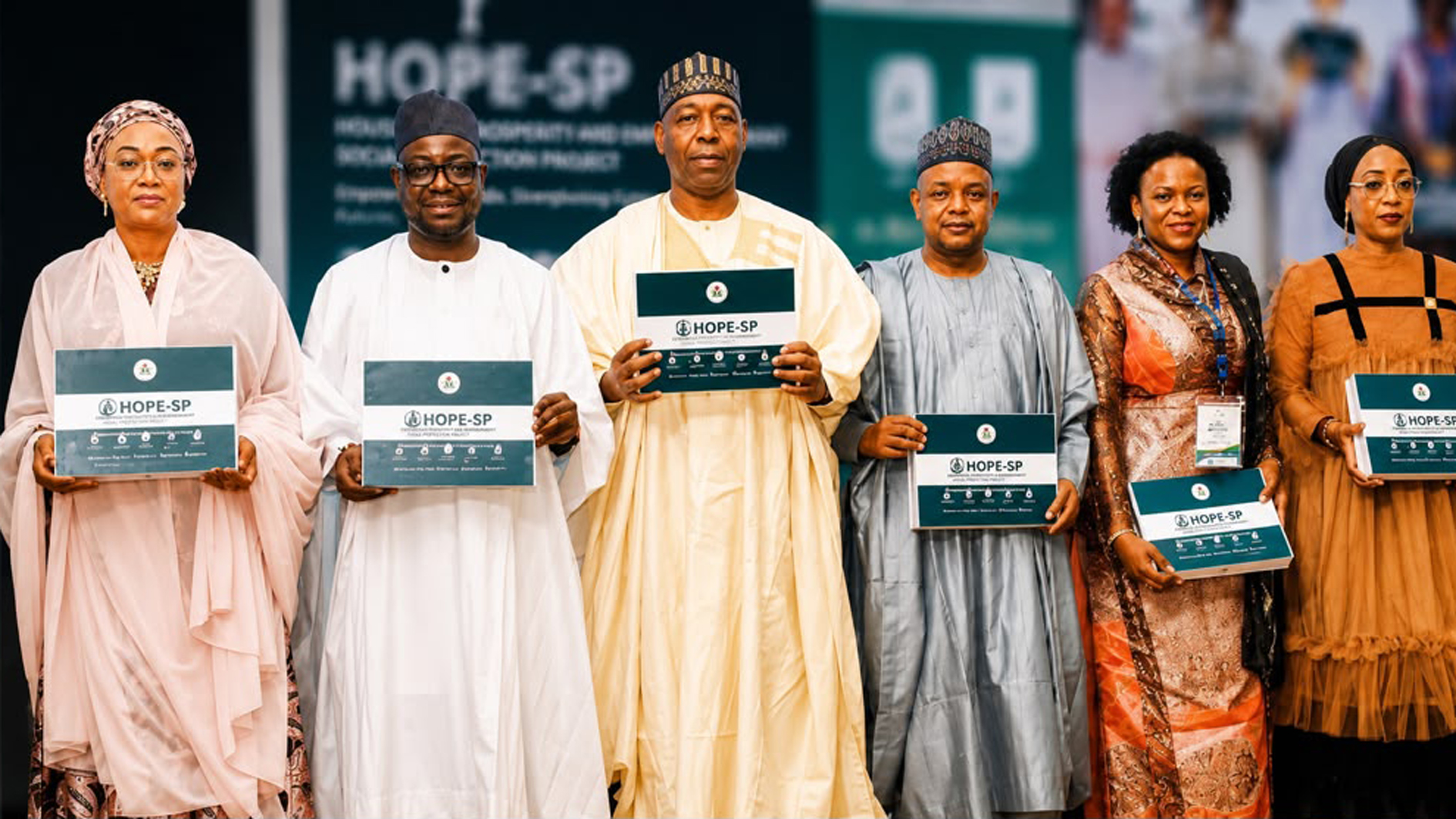
The unveiling of new economic empowerment initiatives by the Federal Government in response to the plight of the growing population of vulnerable citizens across the country suggests a commitment to tackling the worsening hardship. According to the First Lady, Senator Oluremi Tinubu, who delivered the keynote address at the launch of the programme on August 27, 2026, the new initiatives, headlined by the $1 billion Household Prosperity and Empowerment Social Protection Project (HOPE-SP), are “designed to provide immediate stabilization assistance while placing the households on a pathway to recovery, empowerment, and self-reliance.” The Federal Government should prioritise institutionalised interventions aimed at delivering sustainable economic emancipation for households.
The focus should go beyond the emergency stimulus, which, over time, has only offered temporary relief without bridging the gaps of impoverishment or reducing economic disparity among vulnerable households. While the $1bn earmarked for the programme is expected to bring about significant relief to millions of households, if properly channelled, there are genuine concerns regarding the timing of the scheme and the government’s determination to faithfully deliver on implementation.
The challenge is not merely reaching millions of households but ensuring that those who are genuinely vulnerable benefit without any form of discrimination or alienation caused by favouritism and corrupt practices. The government should be genuinely concerned that Nigerians appear not to be excited by the unveiling of the new schemes, which include the “One-Humanitarian-One Poverty Response System (OHOPRS)” and the “Emergency Cash Transfer Programme”, with sketchy implementation strategies.
Unfortunately, the cash transfer component of the recently announced poverty alleviation initiative has heightened renewed scepticism in the wake of fresh allegations by the Auditor-General of the Federation that the Federal Government could not provide sufficient evidence to justify that the N33.75bn in cash transfers meant for more than 3.29 million vulnerable households reached the targeted beneficiaries. Therefore, implementing the new initiatives places a compelling duty on the Tinubu administration to address the trust deficit ahead of the forthcoming general elections.
In the recent past, Nigerians have witnessed many such hitherto promising poverty alleviation schemes going down the drain due to a lack of political will to sustain implementation. Moreover, unveiling another poverty alleviation scheme on the eve of contentious general elections tends to create the impression that the intervention is driven more by political exigencies than by a desire to strategically bridge the gap of poverty on a long-term basis.
Notwithstanding, it is good enough that the government recognises that a large population of citizens currently faces threats of extreme poverty primarily due to policies that are arguably inevitable. Therefore, recognising that the interventions are “important steps towards improving the lives of vulnerable individuals, families and communities across the country,” it is hoped that the implementation will offer significant relief beyond mere palliatives by charting the long-anticipated pathways for poverty reduction.

Some legitimate questions remain unanswered regarding the implementation of poverty alleviation schemes such as the Subsidy Reinvestment and Empowerment Programme (SURE-P), Conditional Cash Transfer (CCT)/Household Uplifting Programme, and the Government Enterprise and Empowerment Programme (GEEP) under which the TraderMoni, MarketMoni and FarmerMoni programmes were implemented. Nigerians are sceptical about the government’s sincerity regarding the implementation of yet another $1 billion poverty alleviation intervention precisely because of the enormous resources committed to similar initiatives in the past without commensurate impact on the populace.
Therefore, given the trust deficit arising from the inadequacies that accompanied the mishandling of previous programmes, the government needs to clearly communicate its determination to make a difference through the implementation of HOPE-SP and other components of the new packages to mitigate widespread scepticism and restore public confidence.
More concerning is the lack of assurance that implementing the recently unveiled schemes will be free from the habitual political encumbrances and systemic dysfunctions that plagued previous initiatives. Indeed, the implementation appears fraught with a propensity for mismanagement in the absence of a comprehensive social intervention register to ensure that genuinely vulnerable households are targeted.
To ensure that the initiatives deliver on the objectives, it is imperative that funds to be committed to the implementation are appropriated for the purposes of accountability and transparency.Finally, while emergency response aimed at alleviating poverty should be encouraged, if the resources are properly channelled, such intervention should not be deployed as a weapon for political endorsement. It would be a great disservice to the country if the implementation of the recently unveiled schemes turned out to be a repeat of the past ugly experiences.

