 Follow Us on Google News
 Follow Us on Google Discover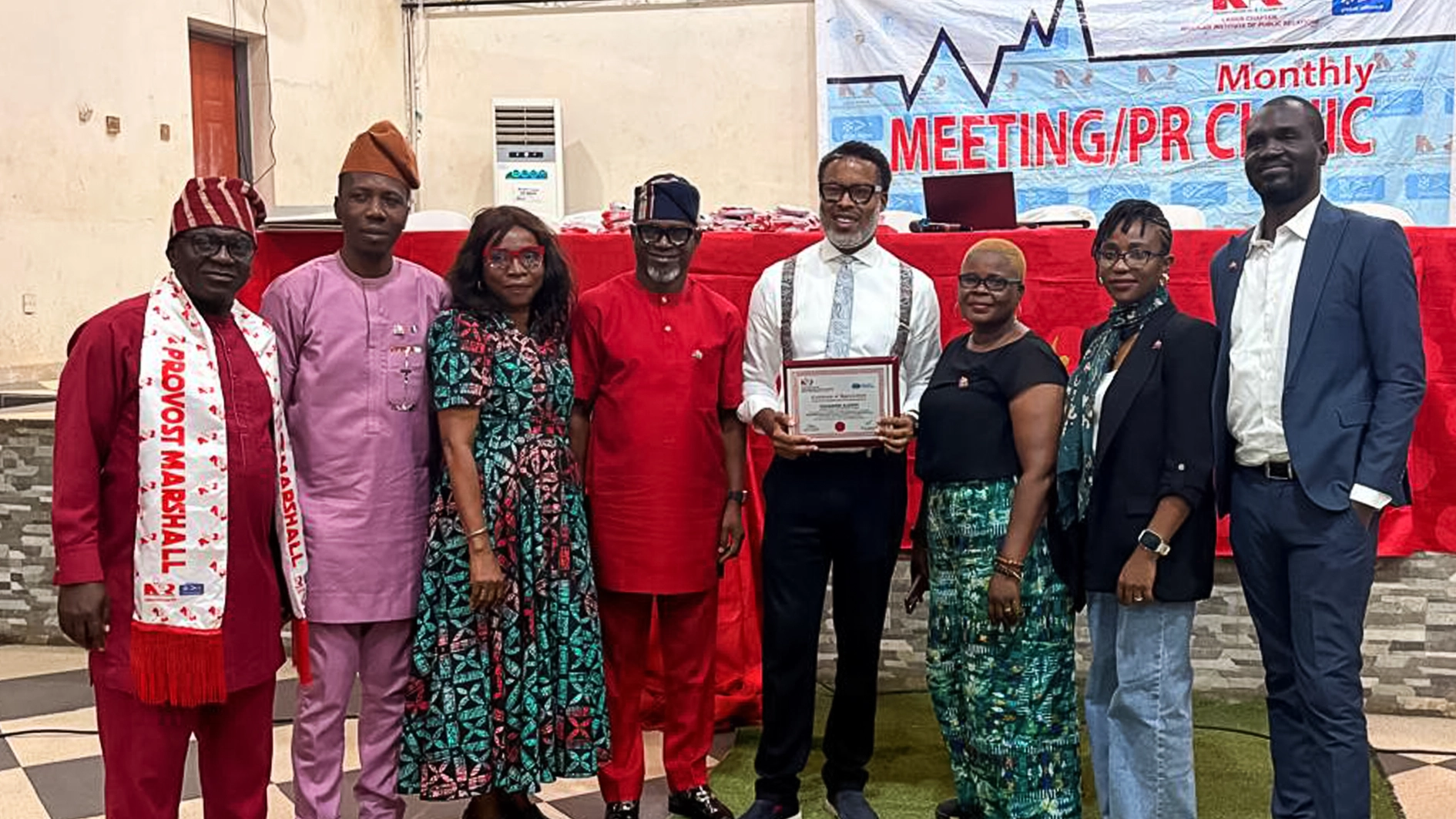
The National President of the Nigerian Institute of Public Relations (NIPR), Dr. Ike Neliaku, and media personality Sulaiman Aledeh have called on communication and media professionals to deploy the media strategically to rebuild, protect and enhance Nigeria’s reputation, stressing that the country’s reputational capital remains a collective responsibility.
They made the call today at the monthly meeting and PR Clinic of the NIPR Lagos Chapter, held at LTV 8, Lagos, with the theme, “Rebuilding Nigeria’s Reputational Currency with Media as a Tool.” Neliaku, who joined the programme virtually, said Nigeria needed a deliberate and coordinated approach to managing its image rather than allowing negative narratives, stereotypes and misinformation to define the country.
Addressing practitioners on the role of the media in shaping national reputation, Neliaku said reputation was not the sole responsibility of government, noting that the actions and inactions of citizens, organisations and institutions all contribute to how Nigeria is perceived locally and internationally.
“Reputation is not only about government. It is owned by the people, built by the people, and told through their actions and inactions. So, it is a collective responsibility,” he said.
Neliaku explained that the NIPR established the Nigeria Reputation Management Group (NRMG) to provide a coordinated framework for protecting and enhancing the reputation of individuals, organisations and the country.
According to him, the group’s mission was to “protect, enhance and defend the reputation of individuals, organisations and Nigeria through proactive strategies, expert counsel and innovative solutions.”

He identified media monitoring and reputation intelligence, youth mobilisation and training, strategic messaging, brand storytelling, national talking points, mentoring and the management of reputational threats among the key areas of focus of the initiative.
Neliaku also urged media and public relations professionals to challenge negative stereotypes and the “single story” often associated with Nigeria, arguing that the country’s strengths in creativity, innovation, entrepreneurship, resilience, hospitality and cultural richness deserved greater visibility.
“Why don’t we project and promote those positive ones as other nations are doing? They all have their problems. The only thing is that they manage their problems differently from how we manage our own challenges,” he said.
He urged communication professionals to tell authentic Nigerian stories from their communities, organisations and individual experiences, rather than presenting a one-dimensional picture of the country.
“Nigeria is a world-class country when it comes to creativity and innovation. We have done so much with our creative economy. Our innovation and resilience have really shown that we have something that we can offer to the world,” he said.
Aledeh, who spoke from the perspective of the media and journalism, said rebuilding Nigeria’s reputation required more than public relations campaigns or attempts to manage negative publicity.
He argued that media, PR and reputation were inseparable and that professionals had a responsibility to identify problems, establish the facts and contribute to finding solutions.
He challenged journalists and PR practitioners to have the courage to tell the truth, even when it may be uncomfortable for employers, clients or political principals. According to him, constructive journalism should not be mistaken for protecting institutions from scrutiny, but should involve accurately identifying problems while also examining efforts being made to resolve them.
Using a recent Economist publication on Nigeria as an example, Aledeh questioned whether the country and its communication professionals had responded adequately to a narrative that portrayed Nigerians as dissatisfied with their president but unable to change their political circumstances.
He noted that such narratives could become more powerful when institutions failed to respond promptly or engage with the evidence.
For Aledeh, the media’s role in rebuilding Nigeria’s reputational currency begins with a fundamental discipline ensuring that the headline matches the evidence. He cautioned journalists against sensationalism driven by clicks and monetisation, particularly in an environment where digital publishing has made attention a major commodity.
He urged practitioners to interrogate sweeping claims, establish whether available evidence supports a narrative and, where necessary, challenge inaccurate or exaggerated portrayals.
“Does the headline match the evidence?” he asked, stressing that journalists must be prepared to scrutinise even narratives produced by highly respected international publications rather than accepting them uncritically.
Aledeh further argued that constructive journalism was not about concealing Nigeria’s problems or producing propaganda. Rather, it should expose challenges truthfully while giving attention to the efforts, innovations and people working to solve them.
He said communication professionals should be able to tell their principals when something was wrong and provide honest counsel instead of simply producing messages designed to make institutions or individuals “look good.”
He also warned against the growing influence of untrained digital content creators and sensationalist platforms that prioritise clicks over public interest, noting that the commercial pressure to attract attention could encourage headlines and stories that distort the substance of an issue.
Neliaku further linked the discussion to the forthcoming World Public Relations Forum (WPRF), which he said would provide Nigeria with an opportunity to engage the international communications community and showcase the country beyond prevailing negative narratives.
According to him, the forum is expected to bring together about 3,000 delegates from more than 156 countries, alongside policymakers, communication professionals, business leaders and representatives of international organisations.
He said the event would also create a platform for dialogue between public relations professionals and the policymakers and institutions that use communication solutions in government, business and other sectors.
He challenged practitioners to become “the vanguard of a new Nigerian story” and “the architects of national pride,” saying rebuilding Nigeria’s reputation required deliberate action from citizens and professionals across sectors.

