 Follow Us on Google News
 Follow Us on Google Discover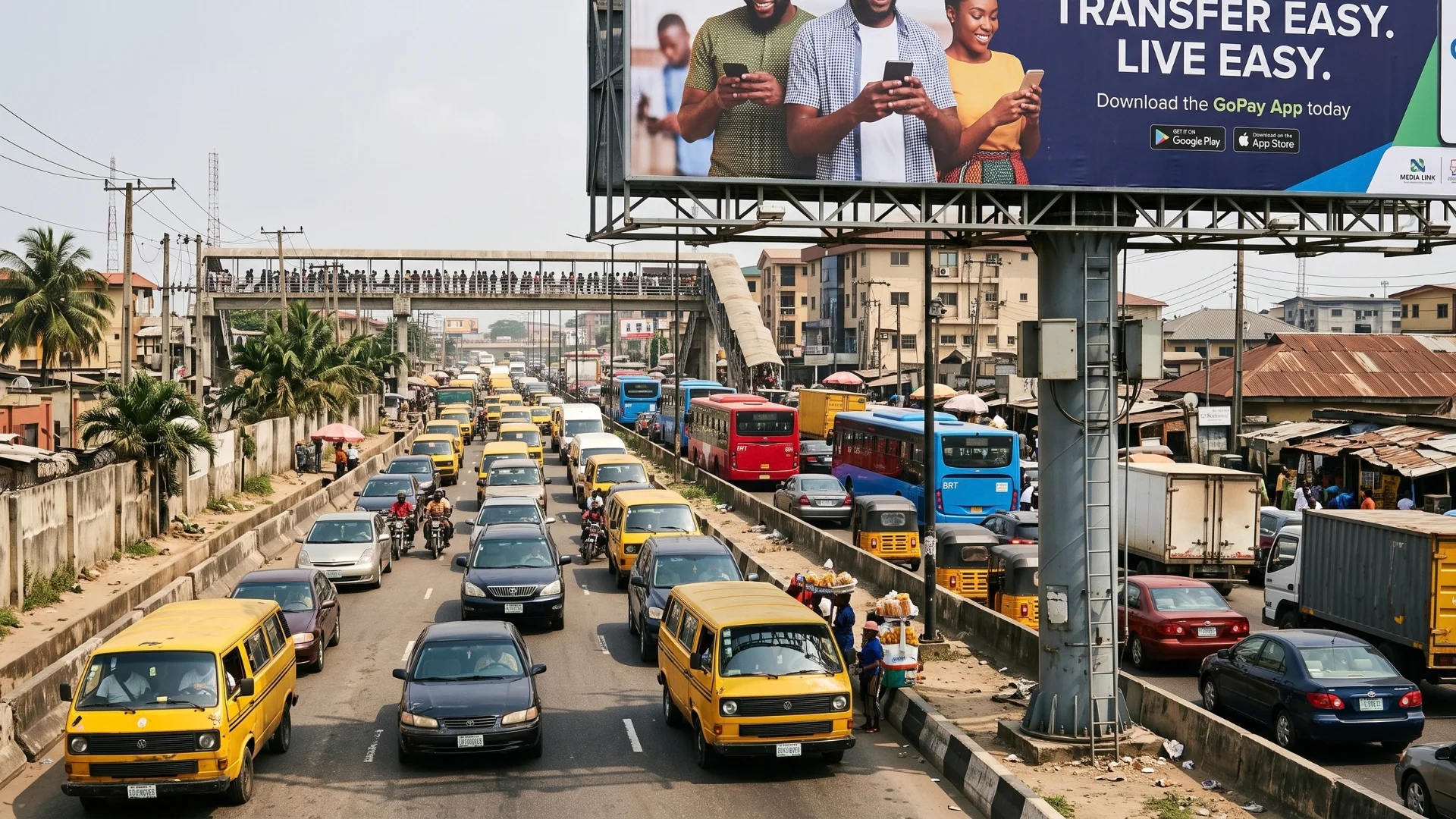
The process of identifying suitable billboard locations for advertising campaigns in Nigeria is increasingly moving online, as businesses seek easier ways to discover outdoor advertising spaces across major cities.
Traditionally, securing billboard placements has involved contacting outdoor advertising companies, negotiating with operators and assessing available locations individually.
For businesses unfamiliar with the outdoor advertising market, particularly those expanding into new cities, the process can be complicated by differences in billboard formats, location availability, pricing and regulatory requirements.
Oxbillboards, a Nigerian outdoor advertising company, is seeking to address some of these challenges by providing advertisers with a way to identify billboard opportunities across different locations and coordinate campaign execution.
The company offers access to outdoor advertising inventory in Lagos, Abuja, Port Harcourt, Ibadan and other Nigerian markets, with a focus on helping businesses select locations suited to their marketing objectives.
Its approach reflects a wider shift in how organisations discover commercial services, as online searches increasingly influence purchasing decisions even in industries where the final product remains physical.

Unlike digital advertising, which allows businesses to target audiences using online behaviour, demographics and other platform data, traditional outdoor advertising depends heavily on physical location.
A billboard’s potential value is influenced by several factors, including road traffic, visibility, surrounding commercial activity, display size and the characteristics of people moving through the area.
In Lagos, for example, advertisers may consider locations along the Lekki-Epe Expressway, Victoria Island, Ikoyi, Ikeja and other parts of the Mainland, depending on their intended audience.
The Lekki-Epe corridor serves expanding residential and commercial communities, while Victoria Island remains an important business district.
Ikoyi provides access to residential and commercial environments associated with the city’s higher-income market, while Ikeja and major Mainland transport corridors offer opportunities to reach commuters and businesses across different sectors.
However, selecting the busiest road does not necessarily guarantee that a campaign will reach its intended audience effectively.
Advertisers must also consider whether a billboard is positioned in a location relevant to their customers, how easily its message can be seen and whether the available display format suits the campaign.
These considerations are particularly important for companies allocating substantial budgets to brand awareness and market expansion.
Oxbillboards has positioned its services around helping businesses identify outdoor advertising opportunities without having to approach multiple operators individually.
According to the company, advertisers can explore available locations and formats before proceeding with campaign planning and placement arrangements.
The service covers conventional static billboards, unipoles, digital displays and other large-format outdoor advertising structures.
The company says its model is intended to simplify the process for businesses seeking visibility in particular neighbourhoods, commercial districts or major transport corridors.
For a company launching a product in Lagos, for instance, billboard selection may begin with identifying areas where potential customers live, work or travel.
A business targeting corporate professionals may consider locations around major commercial districts, while a consumer brand seeking broader visibility may explore commuter routes and high-traffic areas.
Oxbillboards says it helps advertisers assess these options and coordinate the steps involved in bringing outdoor campaigns to market.
The company’s approach also reflects the growing importance of digital discovery in the advertising industry.
Businesses seeking outdoor advertising services increasingly have the option of researching billboard locations, formats and potential suppliers online before contacting a service provider.
This creates opportunities for outdoor advertising companies to make their inventory and services easier to discover through websites and search engines.
For marketing managers, online research can provide an initial understanding of available options before discussions about pricing, availability and campaign execution begin.
However, online visibility alone does not establish that a particular billboard is available or suitable for an advertiser’s needs.
Availability, ownership or operating rights, regulatory approvals, display specifications and commercial terms still require confirmation before a placement is secured.
Oxbillboards says its online presence is designed to provide a starting point for advertisers looking to understand outdoor advertising opportunities across different Nigerian cities.
Billboard advertising is not a single-format medium.
Traditional static billboards generally display one advertisement for an agreed period, while digital outdoor displays can accommodate multiple advertisements using scheduled rotations.
Large-format structures, including unipoles, may offer visibility across wider road corridors, depending on their location and orientation.
Each format presents different considerations for advertisers.
A static billboard may be suitable for sustained brand visibility in a particular location, while a digital display can allow advertisers to use changing creative materials or different messages during a campaign.
The appropriate choice depends on the campaign’s objectives, budget, duration and intended audience.
Advertisers also need to evaluate the quality of individual sites rather than relying solely on the general reputation of a neighbourhood.
Factors such as obstruction, viewing distance, illumination and traffic direction can affect how prominently an advertisement is displayed.
Despite the growing role of digital tools in identifying outdoor advertising opportunities, billboard placement remains subject to physical and regulatory requirements.
Outdoor advertising operators and advertisers must consider applicable state and local regulations, including approvals governing the installation and use of advertising structures.
In Lagos, for example, outdoor advertising activities fall within a regulatory framework overseen by the Lagos State Signage and Advertisement Agency.
Requirements may differ across jurisdictions, making regulatory compliance an important part of campaign planning.
Advertisers should therefore establish whether a proposed location has the necessary approvals and whether the operator has the right to offer the advertising space.
These checks are particularly relevant when dealing with large-format structures or campaigns intended to run across several states.
For Oxbillboards, the opportunity lies in connecting advertisers searching for suitable locations with the physical advertising inventory available across Nigerian cities.
The company says its services are intended to reduce the complexity of finding billboard spaces and coordinating outdoor campaigns.
Its model may be particularly relevant to businesses entering unfamiliar markets or planning campaigns across multiple locations.
However, the effectiveness of such services ultimately depends on the accuracy of inventory information, the quality of available sites, pricing transparency and successful campaign delivery.
The broader development illustrates how digital discovery is influencing an industry traditionally built around physical assets and business relationships.
Billboards will continue to occupy roadsides, commercial districts and major transport corridors, but the process of identifying and selecting those locations is increasingly influenced by online research.
For advertisers, the important question remains whether a particular placement can reach the intended audience at a reasonable cost.
As companies such as Oxbillboards develop services around location discovery and campaign coordination, the ability to connect online research with reliable outdoor advertising inventory is becoming an important consideration in Nigeria’s advertising market.

