 Follow Us on Google News
 Follow Us on Google Discover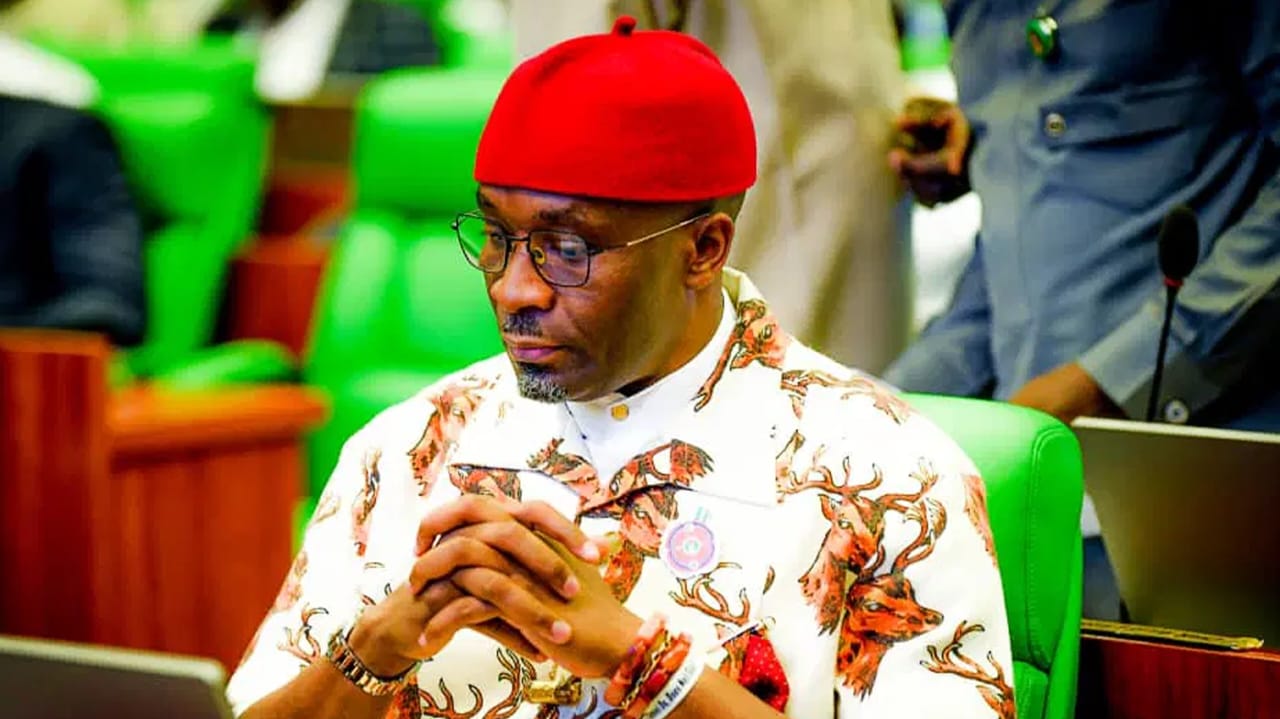
Deputy Speaker of the House of Representatives, Benjamin Kalu, has called for stronger global legislative action to tackle climate-related disasters and build resilient communities.
Kalu made the call on Thursday during a debate on urgent parliamentary action against climate disasters at the 153rd Assembly of the Inter-Parliamentary Union(IPU) in Arusha, Tanzania.
He urged lawmakers across countries to move beyond climate pledges and focus on practical measures capable of attracting investment and delivering results.
According to him, parliaments must create laws that can turn climate commitments into bankable projects in critical sectors such as clean energy, transport, agriculture and resilient infrastructure.
Kalu proposed two major areas of action. The first is the creation of an investor-ready pipeline of priority climate projects. The second is a project-preparation platform to move such projects from conception to financing and implementation.
“Legislation must not remain a statement of intent. It must become an instrument of delivery,” Kalu declared.

The Deputy Speaker noted that climate change was already affecting livelihoods and economies through irregular rainfall, declining agricultural yields, coastal erosion, rising water levels and urban flooding.
The scale of the economic threat is global. The United Nations estimates that disasters now cause more than $2.3 trillion in economic losses each year when direct losses, wider economic disruptions and ecosystem damage are considered. Reported direct losses alone average more than $110 billion annually.
The World Meteorological Organization(WMO) has also reported that weather, climate and water-related disasters caused nearly 12,000 disasters between 1970 and 2021, resulting in about $4.3 trillion in economic losses.
Developing countries suffered more than 90 per cent of the reported deaths.
Against this backdrop, Kalu stressed that Nigeria’s climate response should not be treated only as an environmental issue. He described it as an economic and livelihood concern requiring urgent legislative attention.
He also drew attention to the difficulty many developing countries face in accessing affordable and reliable climate finance. He argued that delays in financing were slowing projects designed to strengthen communities against climate shocks.
Kalu said Nigeria was ready to work with investors to co-finance viable projects that promote climate resilience and support the country’s transition to a greener economy.
He recalled Nigeria’s commitment to achieving net-zero emissions by 2060 under its Energy Transition Plan, following the country’s pledge at the 26th United Nations Climate Change Conference(COP26).
The updated plan estimates that Nigeria will require about $500 billion in capital investment above business-as-usual spending to achieve the net-zero target by 2060.
Among the priority areas, Kalu listed distributed renewable energy, solar mini-grids, battery storage, clean cooking, electricity transmission and distribution, industrial efficiency and climate-smart agriculture.
Others include irrigation, cold-chain systems, food processing, electric mobility, mass transit, low-carbon urban transport, waste-to-value initiatives, methane reduction and green manufacturing.
Kalu said adaptation measures must also receive greater attention, particularly flood control, resilient drainage systems, coastal protection, nature-based solutions and climate-resilient housing and infrastructure.
He called on parliaments to ensure the effective implementation of climate laws while strengthening oversight of public spending on climate-related programmes.
The Deputy Speaker further urged lawmakers to support credible carbon and green-finance frameworks, protect investors and ensure effective enforcement of contracts.
He also advocated transparent approval processes for green projects and stronger government, investor and community engagement.
Kalu said Nigeria’s emerging state electricity markets could provide additional opportunities for private investment in clean energy and climate-resilient infrastructure.
“Our message is simple; Nigeria’s green transition must be a just transition,” he said.
He explained that the transition must create opportunities for communities, protect livelihoods and ensure that the benefits of new investments reach ordinary citizens.
Kalu urged parliamentarians at the IPU Assembly to use their legislative powers to create an environment where climate commitments can translate into projects, jobs, investment and stronger communities.

