 Follow Us on Google News
 Follow Us on Google Discover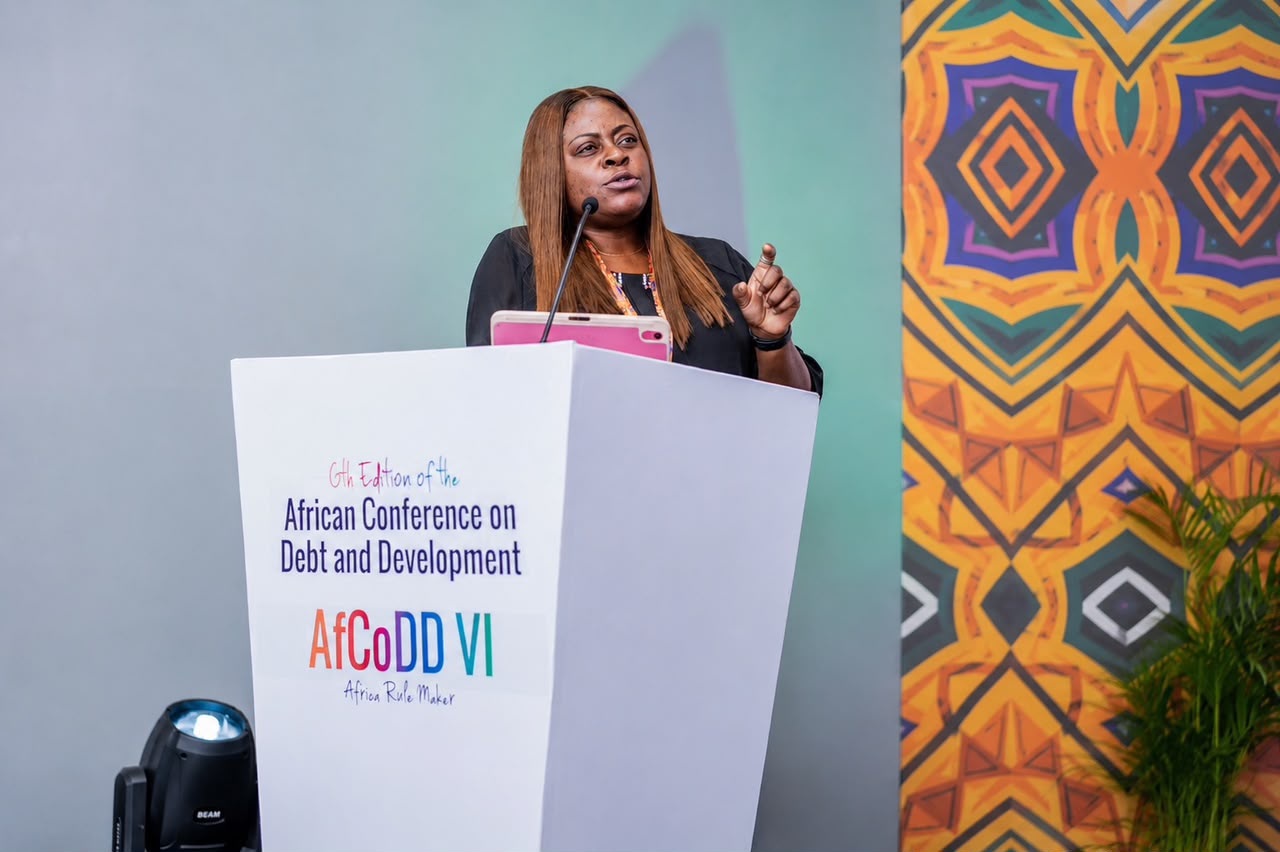
What AI Changes in Africa’s Debt Negotiations
At a session on artificial intelligence and debt justice during the African Conference on Debt and Development (AfCoDD VI) in Nairobi, one asymmetry kept surfacing in different forms: creditors typically know more about an African country’s fiscal position than the country itself can readily reconcile.
The reason is not lack of information, but because it sits fragmented between debt management offices, guarantee registers, public-private partnership contracts, and collateral arrangements that were not designed to work together, whereas the counterpart on the other side has an entire set of verified information at its disposal: market information, reports based on Article IV consultations by the IMF, and risk models.
The known outcome is reached swiftly: when entering debt negotiation, a country that is unable to convincingly portray its total liability position in terms of what has been guaranteed, what is a contingent liability, and what has been put up as collateral for future resource income, does not negotiate from a position of strength. It does so from the partial view of its obligations, facing a counterpart that has a full view of the obligations of both parties.
The opportunity AI offers
This is where artificial intelligence (AI) has a real and tangible offer, more as a reconciliation tool than as a mere abstraction. An AI tool which would combine and reconcile World Bank International Debt Statistics, Bank for International Settlements’ locational banking statistics, custodian holdings, export credit agencies declarations, and commercial credit registries with the country’s own national debt records, would do what African debt management offices find so difficult to achieve manually: present a consolidated, defensible and real-time picture of the country’s total liabilities and what terms they are made under. This is not just a productivity technique but it is the foundation of negotiating intelligence.
The paradox. A major contradiction the session explored was: if the infrastructure that produces this clarity is itself externally owned, hosted offshore, and governed by someone else’s law or a different jurisdiction, has sovereignty actually improved or has dependency simply been digitised? A dashboard which finally shows the finance ministry its actual liabilities is sovereign only to the extent of the sovereign status of the server on which it operates. And if this server belongs to a vendor whose terms of service prevents data portability, whose infrastructure operates in foreign
jurisdiction, and whose engineers and intermediaries sit outside the country’s regulatory reach, the same government that gained analytical clarity has simultaneously handed a third party with visibility over, and potentially influence over, its most sensitive fiscal data. Predictive models which show a country’s path to becoming a trading surplus provider is good for planning purposes but also very helpful for all those wishing to preclude such an outcome. The tool which sought to correct an informational asymmetry becomes a different kind of asymmetry in the hands of a different owner.

The governance question this raises. If the above paradox is real, the problem is not whether African governments should adopt the tool – because most of them will anyway, since the alternative is staying as the only party to the negotiations which lacks the analytics. The question is what contractual provisions must be put in place before the adoption to make sure that sovereignty is not claimed in policy documents but ceded de facto in terms of service. Data residency requirements, portability and export rights (so the government is not locked into one vendor’s platform), access to independent audits (so the models which are used for structuring the debt can be audited rather than blindly accepted), and clear exit provision. These are not abstract governance principles but concrete contract clauses which determine whether an AI tool enhances or merely relocates the dependence of a country.
The UNDERLYING constraint.
It would be nice if better contracts alone solved this. Unfortunately, they don’t, and one of the sharpest interventions in the session made that plain: contractual sovereignty has limits when a country lacks the underlying capacity to enforce it. You cannot meaningfully negotiate data residency or audit rights with a vendor if you have no domestic computing infrastructure to migrate to as an alternative, and Africa currently accounts for less than one percent of the world’s computational capacity.
You cannot tax the AI firms profiting from African data and African-trained models if you lack the fiscal and diplomatic leverage to demand such information from them in the first place, especially since credible threat of retaliatory tariffs looms large for all countries which try to. And you cannot create sustainable AI infrastructure if you do not solve the problems of energy and water consumption of data centres in an environment where reliable electricity is still not universal. Contractual sovereignty, therefore, is conditional on computational, energy, and tax sovereignty and currently, only a few countries in Africa have the first of the three in place, not to mention the rest.
The proposition.
None of the above makes the use of AI in debt management by African countries unreasonable. The information gap is too costly not to be filled, and the tools to fill it are already in place. It calls, however, for reframing the nature of the debate. AI in debt management should not be thought about in technological adoption terms or efficiency terms. It needs to be viewed as a bargaining power issue because that is what it is, in essence. Whether these tools would help reduce the information asymmetry between African borrowers and their creditors, or would just make it more modern, depends entirely on who owns the data, who controls the infrastructure and who has the enforceable right to break away from the vendor.
Africa has started this conversation in the past, at previous venues and with previous technologies, and too often these conversations ended up in declarations but did not translate into infrastructure. The Common African Position on Debt will be as strong as the data architecture which would support it and this architecture is yet to be built, owned and protected.
By Judith Gbagidi

