 Follow Us on Google News
 Follow Us on Google Discover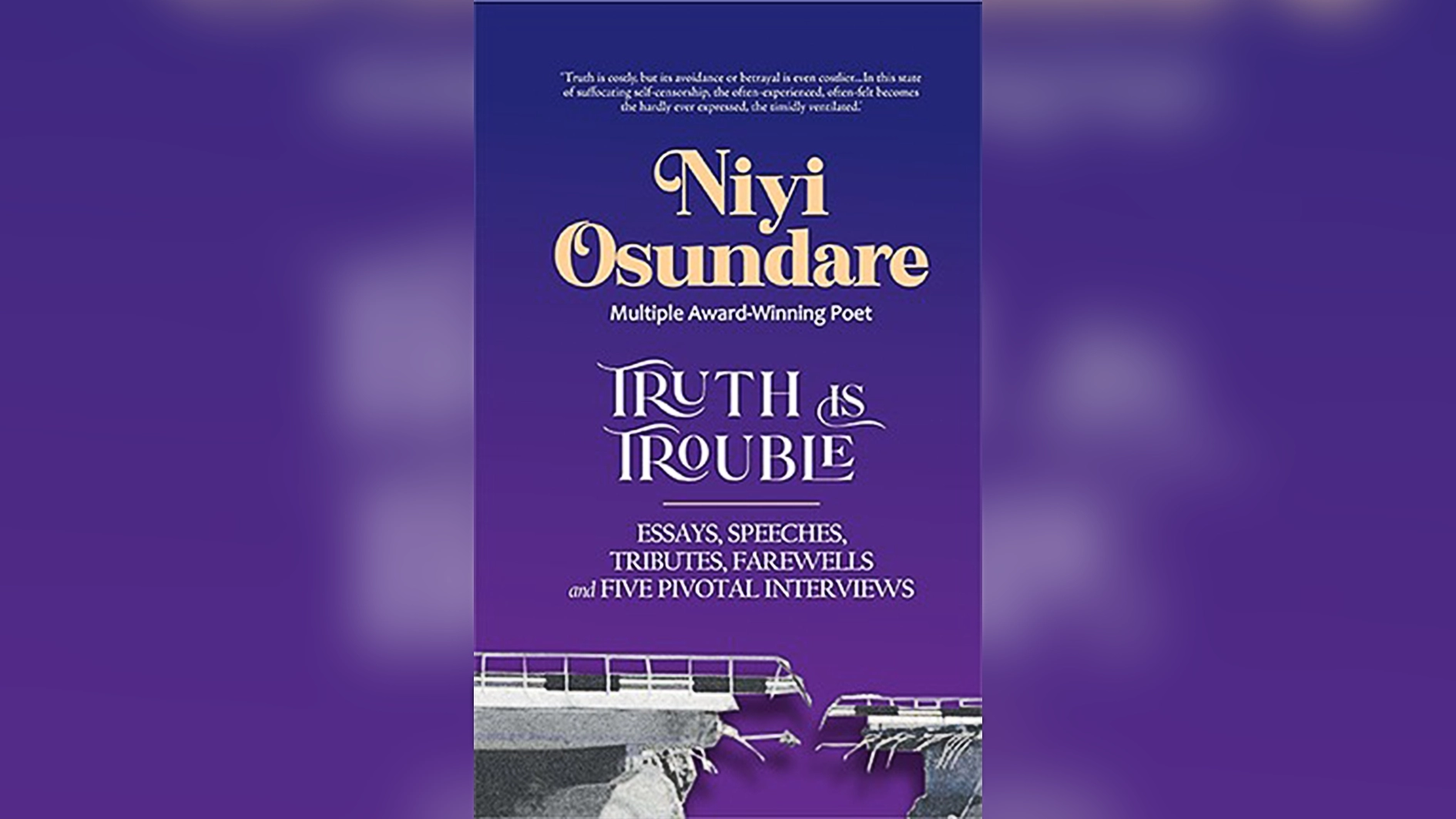
When Pontius Pilate asked Jesus Christ is what is the truth, he did not know tha t humanity was going to spend time in search of the truth. Philosophers, religious and authors have spent time searching for this concept, which philosophers have reduced to Correspondence Theory: A statement is true if it matches or corresponds directly to an independent, objective reality; Coherence Theory: A statement or belief is true if it fits logically and consistently with a broader system of other belief and Pragmatic theory, which states that a stament is true if it has practical utility, works effectively, and stands up to active inquiry.
In Truth is Trouble, Osundare says truth is conformity to reality, fact, or actuality. It describes statements, beliefs, or propositions that accurately reflect the way things actually are. Just like Biodun Jeyifo reduces truth to drama in his seminal work, Truthful Lie, Osundare interrogates the space to find the truth.
In the book, he explores the concept of truth as constituting a threat and menace to those whose ideas of the world are negative – racists, bigots, political charlatans, economic saboteurs, those, generally, who want to keep the world away from progress because it hurts them.
To him, the true word is often bitter to swallow, it’s desirable. Without Truth, the world can’t exist for one second. Fearsome and troublesome as it is, it’s the pillar on which the house of the universe rests!
Amid the conteststion for truth, the author interogates books for the answer, which he finds in the post colonial literature. The book views truth as being trouble for those who speak it.
The book is divided into five parts, Part One, entitled ‘Troublesome Truth’ dwells on the author’s concerns about contemporary Africa and the world, relationship between African literature and body politic and global setting. It interrogates, among others, the notion of “When in Rome, act like a Roman,” which has recurrently featured in Osundare’s recent public engagements.

Section Two, entitled ‘Troublesome Muses’, profiles prominent poets, writers and others whose trade in words has earned them public envy and oftentimes, malice for their truthfulness and social impact.
Listed in this hall of fame are the late Yoruba classic novelist, D. O. Fagunwa, romance writer, Amos Tutuola; literary icons – Prof. Chinua Achebe; Nobel laureate, Wole Soyinka; Aloune Diop, Mariame Ba, the Senegalese novelist and first winner of the Noma Award; and Anthonio Jacinto, the Angolan poet who was the first poet to win the Noma Awaard .
‘Troublesome Terrains’ – that is title of Part Three of the book and is devoted to Osundare’s concerns for the physical environment as it relates to human beings placed in it, climate change and the ecology of knowledge.
Here, Osundare pays homage to the ‘book’ and offered a spectacular view of ‘Mountains’, raising appreciation of the issue beyond mere physicality to the realm of empathy in another lecture he gave at the University of Toulouse, France, where, years earlier, he had been conferred with an honorary doctorate of the University
Osundare calls Part Four “an unusual section” in a book of this type, consisting, as it were, of tributes to culture icons and artists. On the other hand, he remarked that it could not entirely be dismissed as an unusual entry because of its importance and the opportunity it afforded him to kill two birds with one stone – “speak critically and analytically about the works and their authors at the same time.”
In light of this, he pays tributes to some of the literary and intellectual icons before him. The roll call includes Prof Achebe; Eldered Durosinmi -Jones (first Editor of ‘African Literature Today’; renowned literary critic, Profs Abiola Irele; Isidore Okpeho; Kofi Awonoor; Buchi Emecheta; Gabriel Okara; Garcia Marquez; Aduni Olorisa (Susan Wenger); and the historian Dr. Gabriel Akinola.
The conclusion composed of what Osundare described as five major interviews he had granted journals/media, which he now adapted into prose.
In one of the interviews, published by The Guardian in 2013; ‘Who begat African Literature?”, he condemns the idea of who is the father of African Literature.
In ‘Truth is Trouble’, Osundare historicises, analyses, intellectualises and also commonies the subject. The work examines Truth as a cultural, philosophical, and epistemological phenomenon.
A searing, intellectually rich collection of essays, speeches, tributes, and interviews, the renowned Nigerian professor, Niyi Osundare, however, asks: what happens to the song when its singer and its audience are fung to opposite, uneual sides of of a large, decoupling ocean.
As a messenger of truth, he deploys biting sarcasm and satire and weaponises justice as the tool to censure perceived social ills, corruption and injustice.
Bbreadth and depth of reference, the recurrence of favourite themes like historical amnesia, and the author’s tributes to literary and intellectual icons who have passed, bringing a different outlook on those individuals.

