 Follow Us on Google News


 Follow Us on Google Discover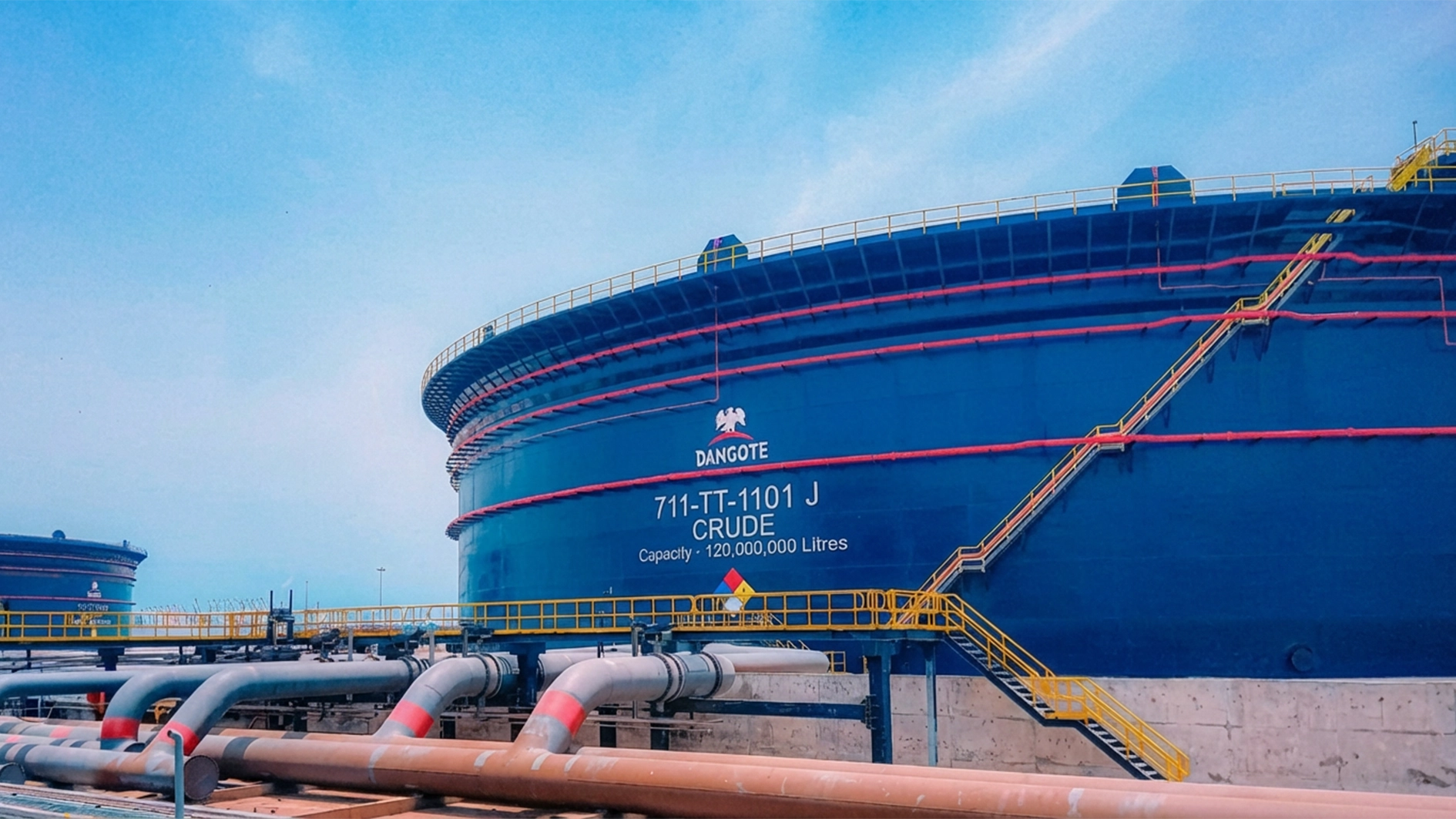
By Akin Olukiran
Whoever advised Alhaji Aliko Dangote to offer what has aptly been christened a “People’s IPO”, with a minimum subscription of just N5,250, deserves more than a passing commendation. He deserves to be studied.
For a project of the scale and strategic importance of the Dangote Refinery, lowering the threshold of participation to the equivalent of ten shares is an extraordinary stroke of corporate imagination. At N525 per share, virtually anyone with a modest income can acquire a stake. The offer has consequently generated an investment frenzy of a kind rarely witnessed in Africa, with digital investment platforms struggling to cope with the extraordinary retail interest.
And this is where the genius of the strategy lies.By deliberately opening the ownership proposition to drivers, cooks, gardeners, cleaners and, in Dangote’s own words, “our drivers, our cooks, our servants, our managers, and everybody”, the transaction goes beyond the conventional logic of an IPO. Digital brokerage and payment platforms have made it possible to reduce the traditional barriers and transaction costs that have historically excluded ordinary Nigerians from the capital market.
Of course, Dangote is a businessman. He is not doing this out of philanthropy. There is a commercial logic to the transaction. Having invested billions of dollars in building the refinery, he has borne an extraordinary concentration of financial and entrepreneurial risk. The IPO allows him not only to raise substantial capital for expansion but also to distribute a portion of both the ownership and the economic opportunity among a much wider constituency. The offer comprises 4.1 billion shares and is designed to raise approximately N2.15 trillion.
But there is another dimension to the transaction which may ultimately prove even more consequential.The Yoruba have a wonderfully concise way of describing the psychology of ownership: “Kínièyí? Tèmini; óyàtò sí, kíniyí? Tiwa ni.” There is a profound difference between saying this is mine and saying this is ours. Dangote appears to understand this Nigerian psychology rather well.

We tend to develop a remarkable intensity of concern for whatever we perceive as belonging to us. I remember my student days at the then University of Ife. Whenever there was a students’ protest, or even merely a rumour that one was brewing, the long drive into the university along Road One would suddenly become a procession of Mercedes-Benz, Volvo, Peugeot and Volkswagen cars. Concerned parents would descend from Lagos, Ibadan and God knows where else, to retrieve their children before the trouble started.
Why? Because when the issue becomes personal, indifference disappears.This is precisely what the Dangote IPO has the potential to accomplish. It changes the psychological relationship between Nigerians and the refinery. What was once perceived principally as Dangote’s refinery can increasingly be perceived as our refinery.And that distinction is not semantic. It is economic and, potentially, strategic.
Consider the amusing story reported in the international media of a Nigerian stopping a speeding Dangote truck driver and admonishing him not to be reckless with “company property”. On the surface, it is merely comic social-media content. But beneath the humour lies something rather profound: the emergence of a psychological sense of ownership. Reuters has reported the same phenomenon, noting how Nigerians have taken to social media jokingly behaving like refinery co-owners and board members.
That, in my view, is the real genius of the People’s IPO.It is not simply selling shares. It is manufacturing belonging.Release a relatively small proportion of the ownership to millions of ordinary Nigerians and you have potentially created something far more valuable than the capital raised. You have created a constituency with an economic interest in the success, stability, protection and longevity of the enterprise.
This is particularly significant in a country where the boundary between public and private interest has historically been blurred, and where strategic businesses can sometimes become embroiled in regulatory, political and commercial contestation. A widely distributed shareholder base introduces another dimension to that equation.
The refinery is no longer merely an industrial monument belonging to one extraordinarily successful Nigerian. It becomes, in a psychological sense, part of the nation’s economic patrimony.And that may be the most ingenious part of the transaction.
The offering is also occurring against the background of intense public interest in the refinery and its place in Nigeria’s energy economy. The refinery, which became operational in 2024, has reached full production capacity and is now a major supplier of refined petroleum products to Nigeria and other markets.The symbolism, therefore, should not be underestimated.
For decades, Nigerians watched their crude oil leave the country, only to return in the form of expensive refined petroleum products. Now, one of the continent’s largest industrial investments is inviting ordinary Nigerians to become shareholders in the enterprise that refines that crude.
There is something almost poetic about that reversal.And then there is the political economy of pricing.If the refinery increases the price of its products, an ordinary shareholder may still grumble at the pump. But the psychological calculus has subtly changed. Some of the profit generated by the enterprise is potentially accruing to him as a shareholder. The consumer is no longer merely a consumer; he has become, however modestly, a participant in the enterprise.
That is a profound shift. It is the difference between saying “Dangote is making money from us” and saying “Dangote’s company is making money, and I own a tiny part of it.”
Of course, an important caveat remains. Owning ten shares does not confer meaningful control over a company of this scale. Dividends are not guaranteed, share prices can fall, and investors can lose money.
The official IPO information itself makes these risks explicit.
But ownership is not only about control. Sometimes, it is about identity.The Dangote IPO may therefore turn out to be remembered for something beyond the N2.15 trillion it seeks to raise. It may demonstrate a novel principle of African corporate capitalism: that one of the most effective ways to protect a strategic private asset may be to make millions of people feel that it is theirs.
Dangote may have sold only a small fraction of the refinery.But he may have succeeded in selling something much larger:a sense of ownership.And in Nigeria, where tèmi- mine – can sometimes be a stronger motivator than tiwa- ours – that may prove to be the most valuable asset of all. May Nigeria win.
Olukiran, a social and political analyst wrote from London. He can be reached via: [email protected]

