 Follow Us on Google News


 Follow Us on Google Discover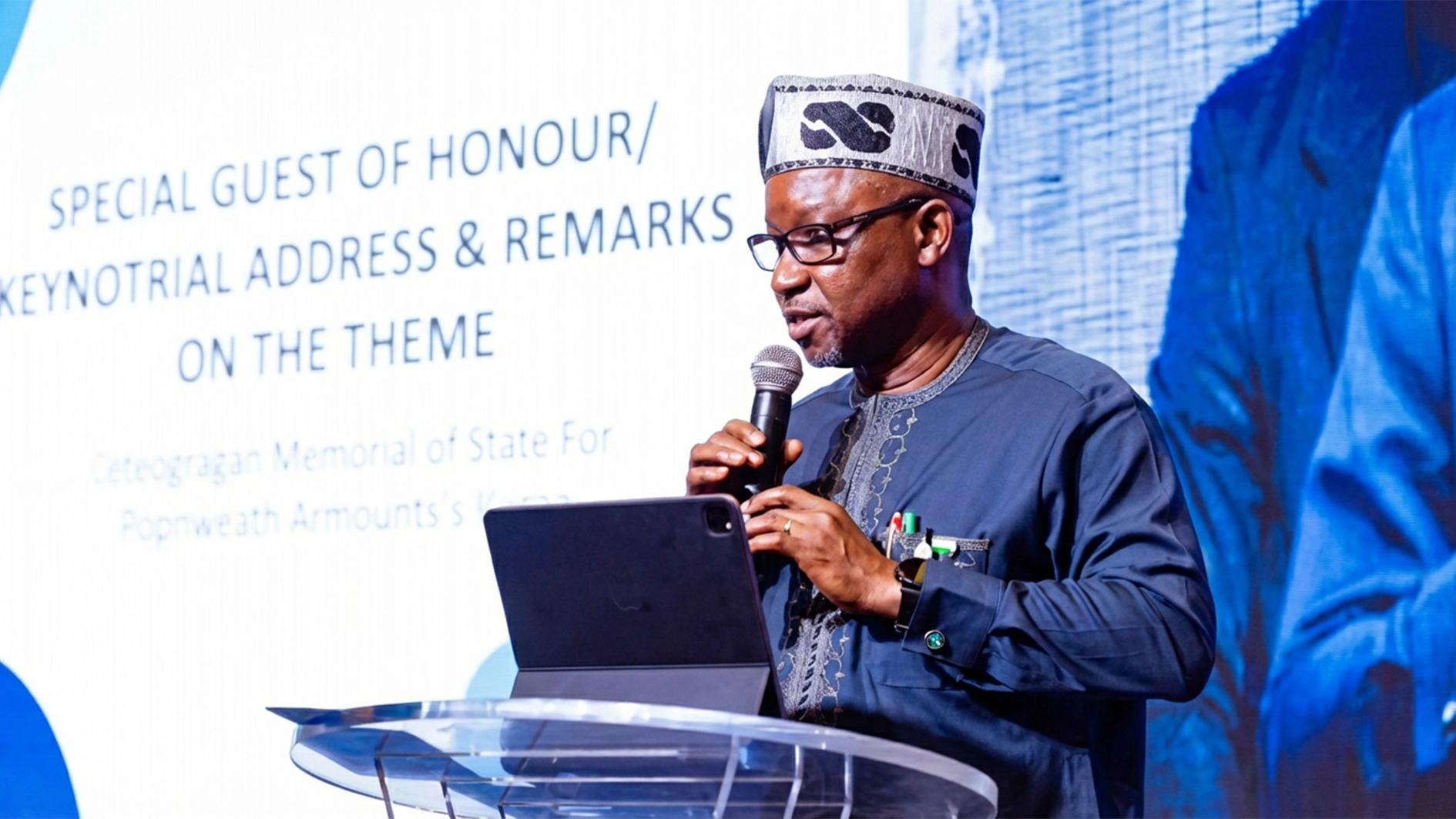
The Federal Government has identified infrastructure, capital, market access and predictable regulation as critical to unlocking the economic value of Nigeria’s estimated 215 trillion cubic feet of proven gas reserves.
The government said access to gas should go beyond licences and acreage, as investors could still be unable to develop assets due to inadequate infrastructure, financing constraints, regulatory uncertainty, limited evacuation capacity and insufficient access to markets.
The Minister of State for Petroleum Resources (Gas), Ekperikpe Ekpo, said the Federal Government’s Decade of Gas initiative was designed to move Nigeria from being rich in gas resources to being rich in gas-based economic opportunities.
Ekpo, who was represented by his Senior Technical Adviser, Abel Nsa, at the 2026 Energy Conference of the Association of Energy Correspondents of Nigeria (NAEC) in Lagos, said gas must increasingly support industrialisation, power generation, transportation, manufacturing, fertiliser production and other productive activities.
He identified the Ajaokuta-Kaduna-Kano (AKK) and OB3 gas pipelines as critical infrastructure projects being prioritised to strengthen the national gas network and connect supply with major demand centres.
“Infrastructure is the bridge between our resources and the industries, power plants, businesses and households that need them,” he said.

Ekpo said reforms under the Petroleum Industry Act 2021, alongside fiscal and regulatory measures, were intended to improve competitiveness and make gas projects more attractive to investors.
He stressed that the government could not develop the sector alone, noting that private-sector capital, technology, expertise and commercial discipline were necessary to move viable projects from conception to final investment decision and production.
He called for stronger collaboration among regulators, financial institutions, development partners and industry operators, while urging greater participation by indigenous companies, independent producers, infrastructure developers and technology providers.
Ekpo also called for Nigerian Content to move beyond participation in contracts towards ownership of capabilities, technology, capital and assets, while ensuring that host communities benefited from petroleum operations.
He said the government was seeking to expand domestic gas utilisation through gas-to-power, liquefied natural gas (LNG), liquefied petroleum gas (LPG), compressed natural gas (CNG), fertiliser, petrochemicals and other gas-based industries. Initiatives to expand LPG access and promote CNG adoption were intended to bring the benefits of gas closer to Nigerians.
Meanwhile, the Nigerian Upstream Petroleum Regulatory Commission (NUPRC) is targeting the restoration of more than 788,000 barrels per day of shut-in production across 63 operators, while offering 40 assets in its 2026 Licensing Round.
The commission is also targeting the movement of offshore projects valued at $30 billion to $50 billion to final investment decision (FID) and an increase in domestic gas delivery from about two-thirds of its obligation to full delivery.
The Commission Chief Executive, Oritsemeyiwa Eyesan, said the commission had reduced signature bonuses and provided seismic data to guide investment decisions.
Eyesan, who was represented by the Head of Corporate Communications, Temisan Olatunde, said the previous licensing round attracted interest from nearly 300 companies for 50 oil and gas blocks, with 37 assets eventually taken, including acreages in frontier basins. The Anambra Basin, Benue Trough, Chad Basin and Benin Basin attracted serious investor interest for the first time.
According to her, assets offered in the 2025 licensing round could add about 500 million barrels to Nigeria’s crude oil reserves, subject to successful development, and contribute at least 300,000 barrels per day of crude oil and condensate within five years. They could also add 20 trillion cubic feet of gas reserves and 500 million standard cubic feet per day of gas production.
She said the projected contribution would support Nigeria’s ambition to produce three million barrels per day by 2030 and the Federal Government’s Decade of Gas initiative.
Eyesan also said at least 77 wells had been successfully re-entered, while 128 wells had been approved for drilling this year. She added that executive orders issued by President Bola Tinubu to encourage deep offshore investment were expected to support Nigeria’s production ambitions.
The Chairman of Sahara Group, Kola Adesina, said changes in energy asset ownership must be matched by the financing, technical expertise and innovation required to develop and operate assets effectively.
Adesina, represented by the company’s Head of Corporate Communications, Bethel Obioma, said indigenous companies taking on greater responsibilities in the sector needed the capacity to turn ownership into productive operations.

