 Follow Us on Google News


 Follow Us on Google Discover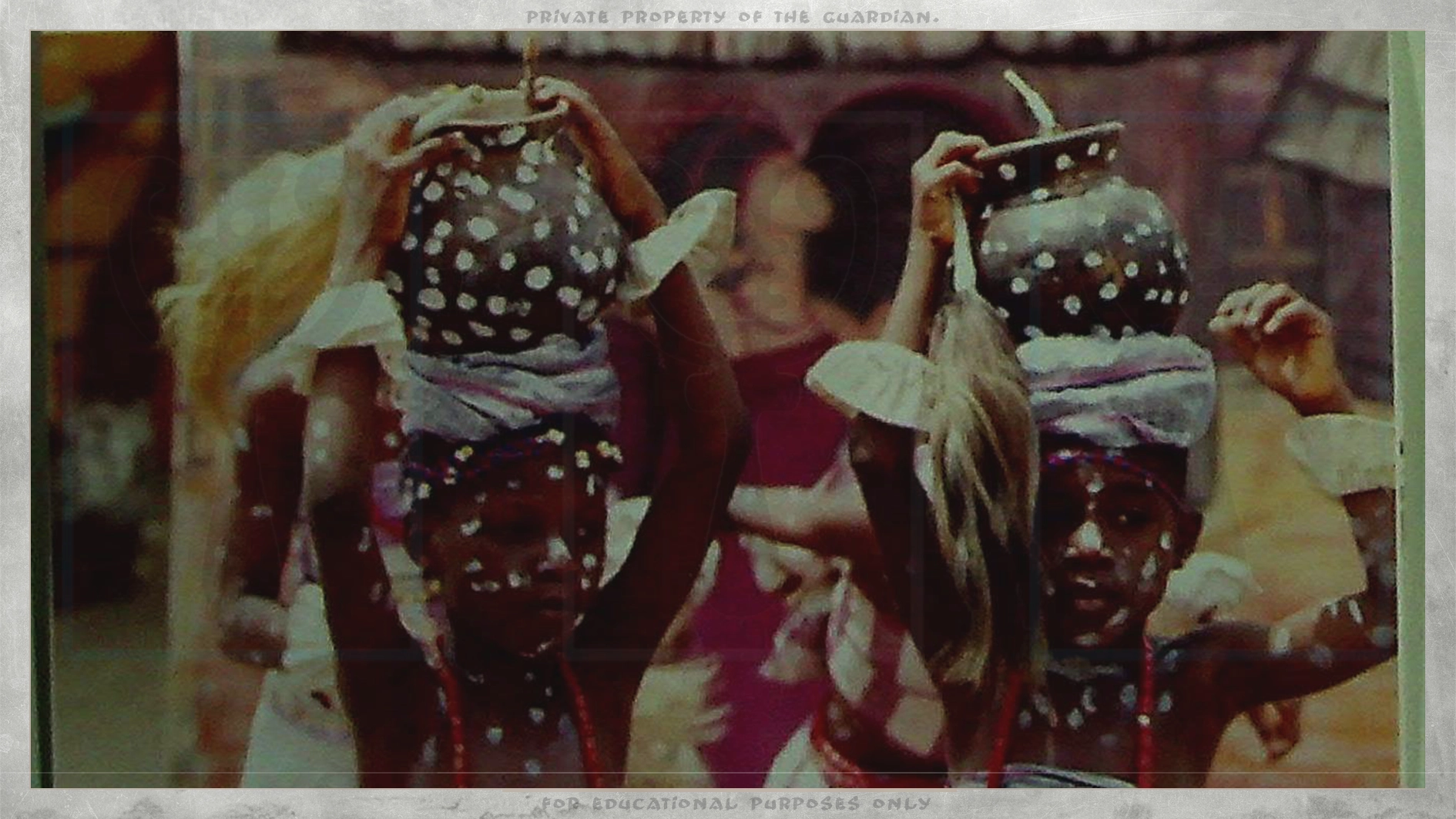
Have you ever stopped to look closely at a simple calabash bowl? If you live in Nigeria, you might only see it as a rustic novelty item at a trendy, Afro-centric restaurant, serving as a container for palm wine or local soup. It looks humble, organic, and entirely quiet. But if this dried, hollowed-out gourd could speak, it would tell you the entire history of Nigerian power, survival, and spirit. Long before we traded our heritage for imported plastic buckets, metallic pots, and Western laws, the calabash was the literal canvas of our civilization.
Photos from the archive capture a time when the calabash was not just a kitchen tool, but a sacred mirror reflecting who we were. This simple vegetable vine holds the exact blueprints for how we used to govern ourselves, how we carried our heaviest spiritual burdens, and how our women built their financial independence.
The Oyo Empire and how it was checked
In the old Oyo Kingdom, the Alaafin (the King) ruled with immense power, but he was not a dictator. He was constantly watched by the Oyomesi, a powerful council of seven kingmakers. If an Alaafin became tyrannical, greedy, or acted against the spiritual well-being of his people, the Oyomesi did not draft long legal documents or call for press conferences. Instead, the leader of the council, the Bashorun, would present the King with a single, sacred object: an empty, covered calabash.
This was not a gift. It was the vote of no confidence. Inside that empty darkness was a silent command: “The gods reject you, the people reject you, the earth rejects you.”
Upon receiving the calabash, the King knew his reign had ended. To preserve the honor of his family and the crown, he was expected to commit ritual suicide that very night. There were no appeals, no injunctions, and no hiding behind political godfathers. The calabash was the major symbol of political accountability, a reminder that leadership is a loan from the people, and if you misuse it, you must pay with your life. Looking at our political landscape today, one cannot help but wonder: what would happen if our modern leaders faced the non-negotiable standards of the empty calabash?
While the calabash could end the life of a corrupt king in Oyo, it was used to sustain the life and health of an entire community just a short distance away in Osun.
Every year during the famous Osun-Osogbo Festival, a young, pure-hearted votary virgin is chosen for a monumental task. She becomes the Arugba (the Calabash Carrier). She bears a massive, highly symbolic calabash filled with the spiritual prayers, sacrifices, and collective hopes of the entire kingdom.
As she walks out of the palace toward the sacred Osun river, she is not allowed to stumble, fall, or stop. The weight is immense, both physically and spiritually. The people line the streets, shouting their prayers, touching her, and letting go of their misfortunes into the atmosphere, believing that the vessel she carries will absorb their pain.
The Arugba represents a beautiful, mystical concept of leadership: carrying the burdens of the public with absolute grace, purity, and selflessness. She does not carry the calabash for personal gain or prestige; she carries it so that her society can be cleansed, healed, and blessed. Emphasizing that a leader is supposed to serve the people.
Kwarya in Northern Nigeria
In Northern Nigeria, the gourd is popularly known in Hausa as the Kwarya. Here, it moves out of the palaces and sacred shrines and directly into the bustling marketplaces.
For centuries, Fulani and Hausa women have used the kwarya as the backbone of their daily commerce. These are not plain bowls. The women decorate them using pyrography, a technique where they use hot, glowing metals to burn intricate geometric patterns, lines, and stories directly into the wood.
A northern woman’s collection of beautifully etched kwarya was traditionally a proud display of her wealth, her artistic skill, and her domestic stability. Often given as a vital part of a bride’s dowry, these calabashes were used to scoop, store, and sell fura de nunu (millet and fresh milk).
The kwarya was the original, organic engine of female financial independence. It allowed women to control their own income, feed their communities, and preserve artistic traditions that passed down through generations. Long before modern banking or micro-loans arrived in Nigeria, northern women were already running a highly sustainable, completely biodegradable local economy powered entirely by the fruit of a vine.
When we lay these three histories side by side, we see that the calabash plays a symbolic role in the Nigerian story.
In Oyo, it taught us that power must always bow to accountability. In Osun, it showed us that true leadership requires carrying the burdens of the people with grace and selflessness. In Northern Nigeria, it proved that our economic survival and artistic identity have always been deeply rooted in our ability to innovate with the natural world around us.
Over the years, we have slowly pushed the calabash out of our daily lives. We replaced it with imported plastic bowls that litter our streets and our ancestral values with p
