 Follow Us on Google News
 Follow Us on Google Discover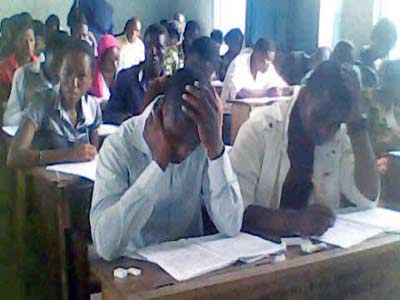

The Deputy Chief Whip of the House, Mr. John Olaleru, representing Kajola state constituency, moved the motion, which was seconded by the Deputy Minority Leader, Oyatokun Oyeleke, representing Afijio state constituency.
Olaleru while moving the motion noted that urgent steps must be taken “to curb and reduce incidents of examination malpractices, popularly called ‘runs’ in our society in order to redeem the image of our educational system globally.”
In the motion, Olaleru urged the executive arm of government, through the Ministry of Education, to place severe sanctions on any school found guilty, probably preventing such schools from presenting students for public examinations for a period of time.
The motion also seeks, through the Ministry of Education, Teaching Service Commission (TESCOM) and State Universal Basic Education Board (SUBEB), to keep database of teachers found to be aiding and abetting examination malpractices and demote or terminate the appointment of such teachers, depending on the severity of involvement.
The Ministry of Education, according to the motion, should create an electronic database of all pupils and students in all public and approved private schools, adding that the government should, through the educational agencies ban any student caught in examination malpractices from writing any public examination in the state for a period of two years.
Olaleru lamented that examination malpractices have become a cankerworm that has eaten deeper into the fabric of Nigerian educational system, Oyo State inclusive.
He explained that causes of examination malpractices include negative impact of ICT, poor reading culture, over reliance on paper qualifications, inadequate educational database, insufficient personnel in schools, lack of educational ICT connectivity in schools and so on.
In their contributions, the legislators supported the motion and made a case for the government to have special focus on the activities of special centres because of the allegations that such centres aid malpractices.
The lawmakers also canvassed the return of quiz, competitions and literary and debating society in schools to build students’ capacities and ensure periodic training and re-training of teachers.
But a member representing Ibadan South West II state constituency, Mr Olusegun Ajanaku, took an exception to placing a ban of two years on any school where there is evidence of examination malpractices.
He contended that the fingers that sinned should be the one that should be sanctioned; adding banning of schools where there is evidence of malpractices from presenting candidates for two years would be a disservice to other upright students.

