 Follow Us on Google News
 Follow Us on Google Discover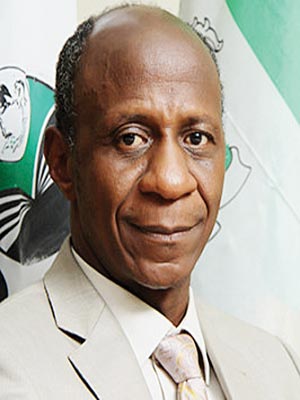
Designed by law to be an interventionist agency, the Tertiary Education Trust Fund (TETFund) by default ended up becoming the major sponsor of capital projects in Nigerian campuses, hence the most visible brand on these institutions. Unlike most Nigerian outfits of this nature, the most scathing criticisms about the agency is not that of corrupt practices including contract scams. Instead, it is largely about its “choking” guidelines for accessing funds. Executive Secretary, Prof. Suleiman Elias Bogoro, who was one and a half year in office yesterday, told ENO-ABASI SUNDAY, in this exclusive interview that TETFund’s stringent guidelines are meant to protect public funds from abuse. He also spoke on a wide range of issues including how private universities can benefit from its intervention. Excerpts
What came into effect when Education Tax Fund (ETF) metamorphosed into Tertiary Education Task Fund (TETFund)?
The difference between Education Tax Fund (ETF) and Tertiary Education Task Fund (TETFund) is simple. TETFund is suggestive of a re-focus precisely. And the re-focus is trying to capture the original concept of TETFund- that is ETF as it was.
When the Academic Staff Union of Universities (ASUU) negotiated with the Federal Government in the early 1990s culminating in the agreement that produced the ETF, which came into effect by law in 1993, the idea was for the benefit of tertiary institutions. ASUU, which was in the lead for the creation of the body, also had polytechnics and colleges of education as beneficiaries besides of course universities. ASUU it was that came out with the idea that the statutory funding channel for the education sector overall had virtually failed this country. Overtime, resources were dwindling and allocation for the education sector was consistently going down. At some point in time during the military era, it could be anything about just four per cent of the total appropriation or federal allocation to the education sector in its totality. And we could see the difference. Little wonder that when military rule perpetuated for a long time, that is after the termination of the democratic government led by President Shehu Shagari in 1983, it was apparent that the sustained military rule had clearly negative effects on the education sector because of the protracted dwindling funding. That unacceptable scenario coincided with the lowest moment in the education sector, reflecting for instance, in the issue of brain drain.
From the mid 1980s to early 1990s, there was growing frustration in the education sector. And for the tertiary education sector, it reflected in the best of our brains in the universities leaving this country in droves and heading to just anywhere they could get better conditions of service as poor salaries and dilapidating infrastructure hall-marked the sector.
So, once the funds were made available to the ETF from 1993 to 2010, you saw that they were diligently applied, and in fact the beneficiaries in many cases, were not necessarily supervised or monitored by the Education Ministry, including monotechnics and research institutes. Inclusion of these institutions was more of an unnecessary duplication because ETF came about as the need for a distinct form of intervention for tertiary and basic education sub-sectors arose.
However, with the arrival of the Universal Basic Education Commission (UBEC), intervention in basic education was addressed. It was at this point that funds from TETFund stopped going to basic education. In other words, before the creation of UBEC, the tertiary education sub-sector was not having the benefits that were originally conceived by ASUU.
So it was after government bought ASUU’s argument about re-focusing on where the monies were going to that ETF became TETFund and the focused also changed, while basic education, monotechnics, research institutes, colleges of agriculture and even nursing schools, which sometimes benefitted exited the list of beneficiaries. Before their exit, the money accruing to ETF was thinly applied to tertiary education and so ineffective. So, with the TETFund replacing ETF, more funds were coming exclusively to public tertiary and institutions. Little wonder over the last four years, there has been manifest impact in the area of infrastructure, accreditation requirements have significantly improved so much more that many institution that could not meet three quarters of programmes and disciplines could not meet accreditation requirements have now met it. Four to five years ago, there was no Nigerian university in the ranking of the first 100 universities in Africa. Today, we have 28 of them and a few in the top 10. But like I always said, this is the difference between ETF and TETFund, which has seen to the deepening of intervention in this sector. With the abundant human resource that nature has blessed the country, we will continue to climb and continue to recapture lost grounds. And I am happy that TETFund is driving the renaissance.
President Muhammadu Buhari recently botched a trip to Cross River State to flag-off a road project because the Environmental Impact Assessment (EIA) was not carried out. Does TETFund insist that benefiting schools carry out EIA’s before projects are executed?
Environmental Impact Assessment (EIA) is a phenomenon that is largely like a new thing to us, but has been integrated into development processes in the developed world. And I am happy that we have a very positive signal from Mr. President. I can assure you that EIA in its totality, not just environmental, is one of the major factors that are being looked into in our interventions. TETFund interventions, by policy are guided largely by regulatory agencies prescriptions and suggestions. In the past, we noticed that EIA was not done on some building projects, and in the southern part of the country, we were running into the challenge of some buildings collapsing even before they were completed. So, recently, we have made it a requirement that soil test report must accompany the architectural designs as well as other drawings associated with any building project. At TETFund, we are sensitive to EIA, and will never disregard it as prescribed by the Environment Ministry. Our projects and monitoring departments are very conscious of this.
TETFund as it were is an interventionist agency. But it is apparent that it has become the major sponsor of capital projects in Nigerian campuses. How sad a development is this for a country that wants to measure up with rest of the world?
At TETFund, we just do what we are set up to do and not so concerned about who is supposed to be doing what besides we. If we bothered ourselves with that, it could be very disturbing. The major funding window for education, which is appropriation, definitely has failed the nation. Unfortunately, this is not happening in the education sector alone because there has been dwindling budgetary allocation in all sectors across board, including ministries, departments and agencies. As a result, heads of these outfits are struggling to keep up especially because of the envelope system, which they have to live with once the allocation has been mentioned. What is, however, more worrisome in all of these is the poor implementation of approved appropriation allocation. That is a bigger problem than the appropriation figure itself because the implementation figures are most of the time less than 40 per cent. This is not very good. But something tells me that this is something that the new government is conscious of. Now that efforts are being made to block revenue leakages and stop pilfering of government resources, it is very important for all stakeholders to take serious cognizance of budget discipline, especially in the face of falling oil prices.
If all these are taken seriously, I don’t see why the appropriation window for education cannot improve. Having said this, let me state categorically that capital projects in public tertiary institutions in the country should not only be done by TETFund, as is fast becoming the case, with the several TETFund interventions seen around the country.
By concept, TETFund’s is an interventionist agency. And what that means is that its intervention is supposed to be supplementary, but a number of persons appear to be saying that TETFund is actually leading. For us, even though we score good grades as a result of these comments, we are not satisfied, and that is why we are striving to do much more than we are doing.
If government re-organises and improves the appropriation window of funding and suddenly we begin to see more capital projects sprouting up in tertiary institutions, you better imagine what that would do to enhancement of tertiary institutions, if sustained for just five years. At that point, instead of the best Nigerian university being rated 2,016th in the world (as at the last time I sighted the ranking), we would be among the first 1, 000 for a start, then in the first 500 and eventually in the first 100. We feel very embarrassed with our poor ranking while South African and Egyptian universities are high up there. There are no reasons for this to happen to Nigerian universities because in the 1970s, some of the very best brains from around the world, including professors from Ivy League universities were happy to come to Nigeria, which also at that time had some of the best universities, for their sabbatical and vice versa. All these happened because the standards and respectability that Nigerian universities commanded in those days was equal to that of the very best universities in the world.
Our desire is to have the status quo ante return, and that is the more reason that we wish that funds come into the universities through the statutory funding window more than what is happening now.
The Vice Chancellor of Caleb University, Prof Ayo Olukoju, recently declared that since private tertiary institutions were not benefitting from TETFund, doctorate degree holders in these institutions should be made to access research grants from TETFund since they transit seamlessly between private and public tertiary institutions.
I agree with the idea to a large extent, but I have a slightly modified opinion. First, every Nigerian trained up to Ph.D level is an asset to this country. However, TETFund law stipulates that we should intervene only in public institutions, and there is wisdom in leaving it that way.
Historically and contemporarily, any government, in any part of the world intervenes for the highest amount of people. In other words, a government that decides to intervene for only a small amount of people will definitely lose legitimacy and could even be voted out of office in the next election.
Secondly, any government would be very happy to intervene so as to allow children of the less privileged, who are always in the majority, to have affordable tertiary education. This again is a contemporary reality because governments that are sensitive are always out to uplift the weak first, before strengthening the strong. Any government that chooses to strengthen the strong before uplifting the week is getting it wrong. This, in principle is why our law insists that at this level of our development, we should only intervene in public institutions, where children of the less privileged are.
In the next five to 10 years, and with serious improvement in the statutory funding level, it could get to a level where it could be said, our public tertiary institutions are so strong now, and ranked amongst the top 100 or so in the world, so let the funds be extended to private universities. But for now, I can say authoritatively that the population of students in all private universities in the country is just the population of one public university. The University of Lagos has a population of about 70, 000 and the population of the entire private universities in the country is just above 70, 000. So you can see that government is legitimately focusing on the larger segment of the society.
However, I agree with the vice chancellor Caleb University that we should be thinking of what we can do for doctorate degree holders, who are in private universities because of their usefulness in the society. I am hoping that if the funding for TETFund were increased, beyond two per cent (which a case is being made to the Federal Government), this would be a possible window for Ph.D holders in private universities to benefit from our research grant.
But beyond this, we want to see very innovative research proposals from the private universities. Since we cannot put money directly in them, let them partner with public universities both at the state or federal levels. If a private university partners with a public university, and they puts up a Grade A proposal, with the public university leading the research team, then the private university will legitimately benefit from our funding. This is a way of encouraging the partnership of private and public universities that would lead to groundbreaking research efforts, all in an effort to ensure the collective interest of Nigeria.
Again, it should be stated that there are definitely more migrations- for knowledge communication and knowledge transfer- from public to private universities. In other words, there are more lecturers in the public universities that are going to teach in private ones than vice versa. Because of the guaranteed funding in public schools over time, more professors who are beneficiaries end up migrating to the private universities to do part- time teaching. In so many of the private universities, if they are sincere with themselves, nearly half of the lecturers that they have on their list are in still in public universities.
For Ph.D holders in private and public universities, besides encouraging partnership in the area of research, there is also post-doctoral research that even private universities could benefit, especially for fresh Ph.D holders who could be sponsored for between six months to one year or thereabouts. A window can be created if provisions are made in the process of amending the TETFund’s Act. If this happens, private universities can benefit from not only from joint research with public universities, but also from post-doctoral research.
Many state governors are not making available their matching grant for UBEC, which is meant for the development of basic education in their domains. This caused the commission’s boss to speak out recently against the lack of political will on the part of state governors. Does this ugly development affect the quality graduates produced by Nigerian universities?
We need strong political will to drive education at the basic level. The executive secretary of UBEC is very right, and what he pointed out was the frustrating aspect of his mandate. I believe that the President Muhammadu Buhari-led government must be working on some ideas to sort out this problem, which will also require the understanding and cooperation of the state governments as well as the Governor’s Forum. At TETFund, we are celebrating the impact and improved ranking of Nigerian institutions internationally because of our over four years of intense intervention in our universities and other tertiary institutions.
Having said that, let me add that the foundation in the education sector remains the basic education and one of the biggest challenges there is that of teachers. This must necessarily be addressed alongside other niggling issues that are capable of truncating sound universal basic education.
A while ago, you spoke about amendment of the TETFund Act, but many people are of the opinion that you are against the amendment of the act.
How could I contradict myself on that? What we at TETFund are opposed to is a TETFund Act that (to our mind) suddenly emerged from nowhere.
In the National Assembly, there is a process that amendment of laws must undergo, ranging from passing the first and second readings before going for public hearing. That is what happened some three years ago when amendment in respect of TETFUND Act was proposed. But then, there were also plans to bring in the Nigeria Law School as one of the beneficiaries. But all stakeholders were against it. So, if you want to do a thing, or intervene in a particular sector and all the stakeholders in the sector kick against the idea, it is only logical for such a step not to be taken.
Everyone understands the fact that the law school is a professional regulatory institution and not a degree awarding institution, and for us, we give our interventions to institutions that are clearly defined by the enabling law-public tertiary institutions. If we had yielded grounds for the law school, by now engineering, medical and accounting regulatory bodies would have been queuing up to seek for intervention.
However, I want to assure you that we are in contact with relevant stakeholders including the National Assembly, which we believe is patriotic enough to appreciate our concerns, and would contribute its quota to the raising of the education tax from two per cent to four per cent.
So, we are not opposed to TETFund Act amendment as the Seventh Senate did try to do with that hurried passage of over 40 laws within 10 minutes. All we did after that happened was to only appeal to Mr. President not to sign that amendment that came from nowhere.
How would you rate TETFund’s performance over the years?
Under the ETF, we complemented UBEC. But with TETFund our functions are clearly spelt out. However, it would be self-serving for me to attempt to assess myself now. That said, we thank God that we have risen to a new mandate- that of focusing on tertiary education. But we would really prefer to leave Nigerians to judge us on our performance.
et me also add that we are satisfied with the views and comments of stakeholders who spoke about our efforts during a recent independent tour of our projects in parts of the country by education correspondents. Judging from those comments, I would say with all modesty that it does appear we are doing something right.
One of the criticisms against TETFund is that of cumbersome procedures before funds are accessed. This partly explains why, for instance, 2011 and 2012 projects are still sprouting up. Can’t the process be sped up a little without compromising due process?
The issue of slow accessing intervention funds by beneficiaries was the first challenge I met upon assumption of office April last year. Working with the board of trustees, we quickly rallied round stakeholders in an attempt to address the issue. We told the stakeholders to assess us honestly and point out our areas of weakness. We also told them to be prepared to hear out frank views. That meeting led to the emergence of an improved version of our guidelines. But there were no major changes because the guidelines of TETFund were well thought out and very detailed. The point though has to be stressed, and that is, our guidelines are rigid because we want to protect public funds, and our robust and effective guidelines help us to achieve that.
The vice chancellor of Ahmadu Bello University, Zaria, only a few weeks ago confessed that you couldn’t access the next tranche of TETFunds cash if the outfit is not satisfied with what you have done with the ones you received earlier. All these are because we have a robust implementation template that ensures that public funds are protected.
This, Nigerians must appreciate. However, last year after we modified a few areas that there were some roadblocks, accessing of funds improved so significantly within four months. So, if there is slow accessing of funds allocated to any institution, it is definitely not our fault. Sometimes it is litigation at the level of the institutions that slow down the process for the institutions, while in some others, the institutions have issues to sort out with the Bureau of Public Procurement (BPP). These are not problems caused by TETFund. Some of the measures we put in place to ensure probity, accountability, transparency and strict implementation of projects are the reasons we are said to be a model of an intervention agency in Africa. This is the secret of out success.
Where would tertiary education in Nigeria be without TETFund?
As the Japanese would say, TETFund is a case of ‘good thinking, good product.’ If the early ASUU strikes had not led to the establishment of TETFund and improved salary structure for lecturers, like some one said, there would not be brain drain, but brain evacuation. Nobody that sees himself, as an intellectual would have wanted to teach in Nigerian universities. As a result of the sustained intervention and improved funding in our tertiary institutions, today we can afford to keep first class graduates in the system. Ten to 15 years ago, our first class graduates in courses like mechanical engineering, medicine would prefer to go into banking than teach. These were terribly negative signals that TETFund has helped nip in the bud. We have done a lot also in the area of academic staff development, by sending out this class of people to different universities within the country and abroad including Ivy League institutions, to better their lot, by acquiring masters and doctorates.

