 Follow Us on Google News
 Follow Us on Google Discover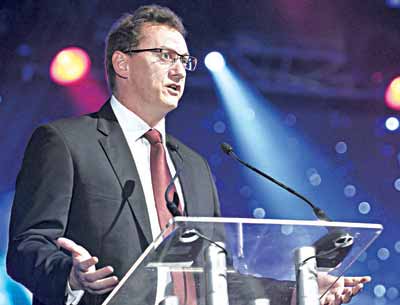

In the middle of the activities leading to the recent CNN Multichoice African Journalist of the Year awards in Nairobi, Kenya, the Chief Executive Officer of MultiChoice Africa, Tim Jacobs fielded questions from the editors from African countries that witnessed the grand ceremony. Editor of The Guardian, Martins Oloja was there. Excerpts.
What is your experience with Nigeria and the Nigerian market?
I have been coming to Nigeria not specifically for Multichoice but for other companies that I have worked probably for the last 15 years or so. I have to say that the change in Lagos is quite significant. The thing I like most about Nigerians is specifically the kind of the deep passion to be entrepreneurial, to get things done, to try to make a difference in peoples’ lives, which means that people are already focused on business opportunities, they are focused as consumers on what they need, they are very clear in their own mind about what it is that they are trying to do.
I think some of the other countries that I travelled to are little bit more formalized, you know people with formal jobs, the kind of go-get attitudes is a little bit less pronounced because they do a 9-5. So, for me,Nigeria is a really interesting market opportunity; it is also very difficult. The Nigerian market and the Nigerian consumer is very activist; they don’t like surprises in the system; they tend to react quite strongly to anything that they perceive as negative,which obviously, as a consumer-based business, means that we need to be on top of our game; we need to make sure that what we do in the country really makes sense for the consumer.
We also understand that there are times when we do things that are not popular, but we do it in the interest of the business. So, because we are very conscious of the way that the consumers are likely to react, we tend to think quite deeply before we do stuff that is going to result in a negative impact. John John Ugbe, MD Multichoice Nigeria, and his team really think deeply about what we need to do with the price increase for example. We try to minimize the impact. In Nigeria, we have been very fortunate that after the price increase we put through on the first of April, we haven’t had to put another price increase into the market yet.
Obviously it depends on the currency, if the currency does move materially, we may well have to do that but at the moment we have been able to avoid doing that in Nigeria. And I think that is largely because the government and the central bank have been very strong on the policy decision-making. They haven’t reacted to short-term movement in the black market rate and the weakening of the oil price; they have managed to hold firm. So, we’re very hopeful that the currency stays, so we don’t need to put a price increase. But obviously, time will tell.
Pay per view is a very simple financial equation. If you want to do pay per view, you have to take whatever content the person wants to watch; Let’s take the obvious one, the EPL. You take the cost of the EPL, you say how many subscribers do I have, then I divide the cost by the number of subscribers that want to watch EPL and that’s how many people pay for it.
What are you doing to improve on content?
I don’t think that an improvement on content is the issue right now. If you think about the Nigerian market, we have all the Africa Magic channels. We have new shows that are coming into Africa Magic all the time… really strong tele-novellas. Now, I don’t think that we can say we are going to improve on that; what we are going to do is to refresh. The MNet team that is based in Nigeria is constantly looking at scripts, constantly looking at new programming. So, as one really popular series kind off comes through, we then replace it with another one.
A couple of months ago, we put Zee World into the African continent, Nigeria included. That has been resounding success; the market has really responded well to that. So, in combination with the existing line up, refreshing the existing line up, the programming within those channels and bringing stuff like Zee World on, I think the offering that we got at the moment in the Nigerian market is very strong.
Without coming up with another subscription price increase, how have you been striking balance between the cost of doing business in Nigeria and the target of making profit?
Just to put this into context, Nigeria is actually one of the cheapest subscription models that we run on the continent. You guys can easily go to the Internet and see what consumers in other countries pay. Nigeria pay$20 dollars cheaper than probably all of your neighbours. Now, some of that is because of other considerations … there’s the VAT rate and other things that the consumer has to pay for in other country.
But Nigeria is a very affordable pay television market; it is one of the cheapest in the world. What we have done in the Nigerian market is we have kept the price low over many years in order to try and stimulate the market, because Nigeria is a potentially large economy. We have so many potential subscribers. Our growth in Nigeria, I would say, has been good. I think our GOtv platform, which kind of attracts the lower end of themarket, has been doing incredibly well over the last year, particularly about December last year when we introduced a very cheap price, so we subsidize very deep to get to $20. That has obviously stimulated demand, but we need scale.
In Nigeria, what we are always hoping for is that we can keep the prices reasonably low if we get the scale… We just launched Mnet Igbo as we continue trying to satisfy many segments of the market. We are happy to continue to invest, but we need to obviously see the scale coming into the business. When we get that, then we keep the balance, then we keep the price reasonably low and provide good additional content.
What is your take on pay per view?
Pay per view is a very simple financial equation. If you want to do pay per view, you have to take whatever content the person wants to watch; Let’s take the obvious one, the EPL. You take the cost of the EPL, you say how many subscribers do I have, then I divide the cost by the number of subscribers that want to watch EPL and that’s how many people pay for it.
Now we have worked the numbers. Anywhere in the world, pay per view is materially more expensive for the person who wants to watch only that piece of content, then binding all the content together and spreading over the time market. It is just a mathematical calculation; it is not that complicated.
I have got two examples that can show you what has happened elsewhere in the world. In the US, the Manny Pacquiao and Mayweather fight, if you wanted to watch it for one evening, one day cost $99! It’s not a full day;it’s a couple of hours. Rugby World Cup in the US at the moment, as I understand it, is also close to $90, $89 or something, for the duration of the World Cup. So let’s call that a month and half.
If you want watch Rugby World Cup in the US, you pay a single fee of almost $90. In Nigeria, you guys are paying for Premium subscription just over $60 a month equivalent and for that $60 a month gives you all of the content. Okay, maybe Nigerians don’t want to watchRugby, but the same principles apply if we want to charge you the same way – pay as you go for the EPL. Remember, the EPL is a right cost and much more expensive than the Rugby World Cup or the Manny Pacquiao fight. The pay as you go is a nice concept.Everybody likes it.
And the reason people think that is an option is that they think about Netflix. You know that I can go and get a VPN and I can just watch whatever I want with $10 a month. But,remember, their content is old content. Its stuff that is not fresh, it is not stuff that is happening now and with sport TV in particular, it only means anything to people when they watch it live. Nobody wants to go three weeks after Chelsea plays Man U and say watch it over again. It has 10 percent the value of the live match. So I don’t know if that just helps you to understand a little bit about how the pay per view module works.
A telco just secured licence to operate in the market. How is the impedning competition likely to affect Multichoice?
We are often asked this question about Multichoice’s dominance. We don’t see our position in the market place as dominance. One, we have lots of competitors. at the bottom end of the market. Let’s take something that is really kind of top of market in Nigeria, the whole digital migration.
So we started in Nigeria two years behind the other operator in the Market and the only way that we could compete was on a reasonable price point and with top grade content. Now, given that they were there two years before us, there is no reason whatsoever why their offering shouldn’t resonate with Nigerians.
They had two years to figure out what you guys like, what you don’t l like. Now if we run a very good and very successful business and we are competitive, I don’t see that as and can not describe that as dominance. What we do is understand and pay attention to what the Nigerian consumer wants. The issue is not dominance, we are just good at what we do and we try to really resonate with the consumer.
We don’t like to put out a price increase into the market, we only do so when it is absolutely necessary ; it is the balance that John is talking about. We don’t see ourselves as dominant; we see ourselves as a very good supplier that understands what its consumers want. The consumers have a choice, they can go to any other platform or competitors but If they choose to come to us, that is just because we happen to be good at what we do. We don’t see ourselves as this dominant player that just dominates everything. We actually have to fight every single day, to make sure that what we offer is a better offer for the consumers, because the consumers can walk to me and say they don’t want this product, they want my competitor’s product, and they have the right and the ability to do that.
Can you share with us your vision for Multichoice?
The vision for multichoice is a very clear one. We need to do a couple of things: We need to be responsive to our consumers’ need. We understand that on the African continent – because that is where we have chosen to play in the future, on the African continent –we need to become more localised, which is why we continue to produce, for example, more Africa magic channels.
So, we are doing more localisation. We are bringing Bollywood into our programming; we are bringing Nollywood into our programming. This is a representation of the strategy at Multichoice; we are becoming more localised. At the same time, we also have premium subscribers who are used to and want and demand the top-end Hollywood content.
So, what we are doing is that we are expanding the cost base in order to cater to more of those needs of different population groups. In the same micro-economic kind of content proposition that we are doing in Nigeria, we are starting to do it in some of our other markets, so we are busy launching a channel in Tanzania to cater to that specifically. We have Zambezi Magic, which is launched for the southern territories; we have programming for Django Magic, our Portuguese market. Our long-term vision is to become more and more localised; and in doing that, we want to win and maintain the hearts of the consumer. We want to be their first choice.
We also want to bring onto our platforms the local channels. So John gets hammered by me on weekly basis about anybody that he doesn’t have, any free-to-air that he doesn’t have on our platform. That is our commitment: one, develop our local programming for our local market; two, make sure that if a third party has got really good content that is resonating with our audiences, we get that content and make it available to our customers ; and three,make sure that we bring local programming onto our platform to ensure that the consumer has access to the best that we can offer at every single territory that we are in , and to do that at the cheapest price point that we can.
But unfortunately when the currency devalues – because a lot of our input cost is in dollars – that is when we have to put the price increase into market. Unfortunately, some of our territories have increased drastically this year. It’s been actually horrendous for us to do that, but if we want to maintain that vision of giving more local content to the audiences, they have to be able to pay for it.
Will a time ever come when the rains do not disrupt programmes being watched by customers?
It takes quite some time for decoders to reboot. I was wondering if it’s something Multichoice is looking at.
When your decoder is booting it’s because it’s trying to acquire signals from the different transponders; and maybe we are a victim of our own success as we want to give more, because the more the channels you have, the longer it just takes to pick all of them up.You can relate it to your PCs of old when the software was on small chips, as you added more services, it took longer to load.
You have been very successful in the way that you have managed your entry into the market. Can you tell us how you have managed the success and the strategies that have helped you achieve as much as you have?
Let me talk about what people don’t see and what people discount in our business. I take the Nigerian Premier League as an example. You know we hear about EPL all the time but we bring the Nigerian Premier League to the screen live, the quality of the league is changing but it takes us three OB vans and a crew of about 47 people to go to Asaba to put the league game live.
In a slightly different way, what John is saying is that people see the end result of what we saw as potentially a 10-year investment, ten years before. Investments we have made to get to a point where we are at the top of the consumer’s mind. Even the English Premier League, it wasn’t always the top property it is today. There was a time when the English Premier League was nothing; people didn’t know the teams, but somebody had to keep buying the rights, showing it on the African continent. The league also had to get better and we had to believe that it would and we had to believe that to continue paying the rights money year after year when it wasn’t driving our subscriber base was the right thing to do.
This is what we do well, we built the brand. We take the Nigerian Local League, we take the basketball, we uphold that brand over long periods of time. But a few people don’t see this, they chose to believe we’re exploiting the consumer. But we also have to recover years and years of investment when we didn’t get the subscribers to watch it.
Now, it has become popular and the same thing applies not just for sport, the same thing applies for example to other programmes that we do, the things that work, the things that don’t work. And all the time, we’re able to make investments over long periods of time.
To come back to your question, what is our vision? Our vision is to get it right more times than we get it wrong. We will get it wrong from time to time; we understand that. That’s part of the investment cycle, but what we believe in is that we will get it right more times than we get wrong.
When something doesn’t work, that’s when we take it off air. Now, anytime we take something off air, of course, the small number of consumers in the market that love it, immediately go to social media and say: ‘What are you doing? this is the most important thing’. But we measure. All the time, we are measuring: What are people watching on our platforms. When it’s a small percentage watching something, we’d rather take it off and find something that works for the broader subscriber base. So we’ve taken some stuff off the market recently. But we put other stuff on and we try to refresh.
It is not about how much more can we do? It’s about quality; we keep changing what’s not working for what does work. And in that process, what the consumer will experience is not more but better. Meanwhile, one of the issues of pay per view is people saying I don’t watch 130 channels. Fine, but you do watch 30 channels and all the 30 channels that you watch, let’s make them fresh and really special for you, the consumer.

