 Follow Us on Google News
 Follow Us on Google Discover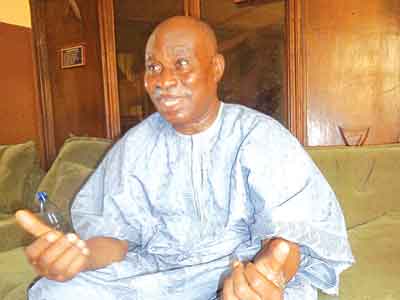

Idowu Sobowale is a Professor of Mass Communication at the Covenant University, Ota, Ogun State. In this interview with MARCEL MBAMALU, he argues that much as the Independent National Electoral Commission (INEC) shares part of the blame for the poll shift, the electorate and political parties are culpable for the disproportionate Permanent Voter Card (PVC) collection.
Elections have been postponed; at what cost is this to Nigerians and what should INEC do differently in six weeks?
I THINK the biggest cost is to the psyche of Nigerians. This is because every person had geared up towards the elections. Going by the assurance that the INEC Chairman was giving about readiness, nobody was expecting that the postponement would come.
However, there had been rumours of clandestine activities as the National Security Adviser (NSA) to the President went all the way to London to propose a postponement because of the situation in the country. That confirmed the rumours that had circulated for some time. However, going by what Nigerians had been experiencing before the formal announcement of the postponement, one would be at a loss not to, at least on the surface, understand the necessity for the postponement.
The problem with Nigeria is that we don’t seem to be always honest with whatever we do. That has given the people an impression that our leaders are not trustworthy. Even when they mean well, they are perceived as otherwise, because if you look at what happened during the last elections, when those hapless NYSC members were attacked and killed, one would be wary to want to conduct elections in places as volatile as those three or four Northeastern states. On the surface, there appears to be a genuine reason for the postponement.

But, both INEC and the security officials ought to have seen that long before now. This is because, rather than the situation getting better, it is getting worse. When the new Chief of Defense Staff assumed office, he gave a deadline of four months for the insurgency to be over. I was shocked, because I was part of the Nigerian civil war, at least from the media perspective. I covered the war. I knew that, in situations like that, you don’t give that kind of assurance to people, because whatever a person like that says would be accepted as the truth and used as yardstick for the entire organisation would be judged. I thought not too serious consideration was given to credibility before that statement was made.
And, if anything, I think the damage to the country has been more since that time than even before. His (the Chief of Defense Staff) own town was even attacked. That was something totally different. It has provoked stronger reconsideration of the situation.
Now, everybody is taking the assurance that by March 28, everything would have been over, with a pinch of salt. It has been said before and it didn’t happen. What guarantee have we that it will happen this time? There have been so many things that have happened since the Boko Haram insurgency that should give us a reason for worry. Rather than mellow, they are waxing stronger in terms of the damage they do to property, the loss of life they have caused and the displacement of people.
Are you saying that INEC should have gone ahead with the elections despite the insurgency?
If you look at it from the surface, it was apparently a tenable excuse. If my son or daughter were a corp member, I certainly would not want him or her to be sent to officiate in a place like that. I doubt if any of the political leaders will. They don’t have children in the country, talk less of sending them to the Northeast to conduct an election at this period.
In places like Chibok and other towns, the insurgents went and slaughtered people like chickens and nothing has happened. What now happens when people congregate and all of a sudden they are pounced upon?
We cannot ignore those arguments. Those who said that it is not the best thing to do, have a point, so also do those who are against it. The onus is on the military that have said that they need six weeks to be true to the timeline, without a further excuse. Whatever credibility remaining for Nigeria will be totally lost, if army comes out to say the six weeks is not feasible. We have gone through that several times in the past. We really need to be very careful.
On the issue of PVC collection, INEC says it is ready; yet, many have not collected their Permanent Voter Cards…
I think INEC has its own share of the blame. Four years would have been enough to get the PVCs ready. But, since they started issuing the cards, if you go to any collection centre, you will find a heap of cards that are ready but people haven’t gone to collect them. INEC will not go to their rooms and drag them to go and collect their PVCs. The greater effort to mobilise people should have been taken by the political parties.
Towards the last few days to the postponed elections, the political parties started mobilising. I thought that was coming a bit too late. That mobilisation should have started from the word go, because people normally would be non-challant and think there is so much time when there is no time at all. They would want to do things at their own pace.
On INEC’s side, I think not enough personnel were deployed to handle the task. In a place where three, four people are serving thousands of people, there is little that can be achieved. Given the penchant of Nigerians to want to be served at the same time, it results in chaos, at the end of which nothing is achieved. That has been the situation.
But there were people who were not of age four years ago…
It ought to have been done. They don’t wait until 200 million are ready to go to the polls in two weeks before the production of the PVCs. It is an ongoing process and should remain so forever. As soon as you turn 18, you should be able to walk into the office, fill the necessary form and get your card. It should be a daily routine for INEC. When an election is to be held in the US and the UK, you don’t hear this kind of things. Everybody knows that when you turn 18, you should go and apply and get your card. On the day of the election, you vote.
In any event, if INEC has distributed 100 per cent of the PVCs, it is not everyone that will vote. I don’t think we have had an instant where we had 60 per cent turnout in an election. It is only when people are geared for a change that you have a massive turnout.
Do you think that the six weeks extension is all that is needed?
I am very wary about answering in the positive because, if they had extended the election for three years, on the eve of the elections, they will still be at point zero; the situation would not have changed. God, only, can solve the insurgency. It is not what anyone can predict. We are talking about people who are not fighting conventional war. When they are pursued from one flank, they rear their ugly head from another direction. Maybe now that we have a multi-national force facing them, we might see some changes.
Do you think the decision to peg the extension to just six weeks was influenced by the presence of the multinational force?
Even if that were the case, INEC has no reason not to. Going by the reason that nobody would want to lose his or her children to situations in the Northeast, what could INEC do? Jega has said repeatedly that they are not in control of security; they can only go by the advice of those in security.
Don’t you find anything wrong in that excuse; was INEC really ready for the elections as it were?
What would anyone have wanted him to do? If I were in his position, I probably would have behaved the same way. If you say INEC wasn’t ready, Nigerians, too, weren’t ready. A huge pack of cards had not been collected as at the time he made the announcement. But, of course, INEC had its own blame and the electorate has its blame as well. INEC will not go to anybody’s room to give them their cards.
Certainly, all eligible voters were not empowered. The cards didn’t come at once. If you look at the arrangement for collection in Lagos, it was staggered, when it should have happened at the same time. That is why I said that four years was enough for INEC to have gotten its acts together. INEC didn’t. When it finally did, the modalities for collecting the cards, too, were not foolproof. They should have done it better.
Also, not everyone came out to collect the available cards. I remember that the government gave public holidays for people to collect, but in spite of that, many still didn’t. No matter how long the extension, on the eve of the elections, one will still come across people, who have still not have collected.
Do you think the elections should have held?
Yes, but, obviously, minus those who have not collected their PVCs.
So, Nigeria should have had the elections with the troubled areas in Northeast exempted?
For the troubled spots, I think yes. They told us that they have made arrangements for those who had been displaced to cast their votes. But if anything had gone wrong, INEC would be blamed and they wouldn’t be able to avert the blame. I think that was what Jeja considered the postponement.
As human beings, we tend to be more concerned about what we want. If what we want produces a result that we do not like, we blame the other party for acceding to our request. So, when you are in such a delicate position, you really have to weigh the options. And no matter what you do, you are going to get blamed anyway. If APC does not blame INEC, PDP would; and if PDP does not blame INEC, APC would. Other people also would have their opinion.
INEC released numbers regarding those that have collected PVCs; and it seems many people didn’t expect the figures they saw?
Yes, look at the Northeast where they recorded about 90 percent. In Nigeria, issues are not always straightforward. In the first instance, as I told you earlier, I did not see why INEC should have used the modalities it did for the distribution of the cards. That gave INEC a black spot; it made it suspicious.
What modalities are you referring to?
For instance, in Lagos, I think they said they gave a gap of about three weeks for 11 local governments, after which they would get to another nine local government. Lagos PVC cards were said to be ready on a particular date; and wherever you are, you are expected to go there that same date. INEC gave three days for the collection. It should have known that three days was too inadequate. If not consistently, they should have certainly made it, at the very least, one week.

