 Follow Us on Google News
 Follow Us on Google Discover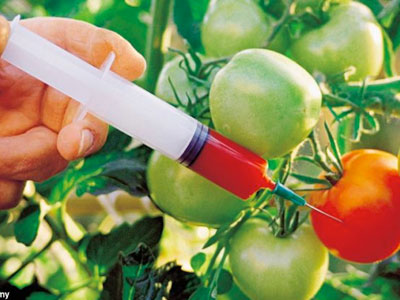

Several scholars are divided on the safety or otherwise of biotechnology around the world. in this report, CHUKA ODITTAH, examines the myths and realities of the issue, particularly as it affects Nigeria.
OUT of the world’s 197 countries, only about 70 nations have fully embraced biotechnology. Statistics reveals that the United States of America, Argentina, Brazil, Canada, India and China are among leading countries cultivating commercial quantity of biotech aided agricultural produce and pharmaceutical products globally. Research indicates that vast majority of countries that ventured into biotechnology did so largely out of the desire to meet the growing food, clothing and sundry needs of their citizens.
Biotechnology, according to the United Nations (UN) Convention on Biological Diversity Art, is the use of living systems and organisms to develop or make improved useful products. It has also been described as a tool box for solving problems leveraging on science knowledge.
However, biotechnology (BT) or Genetically Modified Organisms (GMOs), has continued to generate controversy on its safety or otherwise. Local and foreign scientists, have at various times alluded to safety concerns or otherwise of BT and GMOs. The resultant effect is that countries which are yet to cast the dice in favour of its adoption are hesitant.
Back in Africa where the pace of its adoption or commercialization is rather stunted, only Ghana, Côte d’Ivoire, and South Africa are in the forefront of biotechnology use for economic benefits.

What has however been happening is the massive importation of food items, drugs, and clothing derived from BT into the country. Although, government is not oblivious of this development, consumers are left with no choice but to consume unregulated BT processed foods.
Several attempts made to curry the support of Nigerian lawmakers to pass the National bio-safety Bill has hit the rocks. Whereas the bill seeks the careful regulation of biotechnology application at all levels in the country, it would appear that the sharp division between scientists on the long-term benefits of BT or GMOs, is in itself a recipe for caution for the lawmakers. This is particularly so in view of increasing cases of diseases such as cancer in children, men and women of various social classes, and also rare diseases in animals, many of which cross infect humans.
As Africa’s most populous nation, the potential investment value of full embrace of BT in the agriculture policy framework is incredibly huge, both to the funding foreign nations as well as to the local and international distribution chain players. But again, the ripple effects that naturalists fear for, should Nigeria decide to go full blast into BT, raise genuine concerns about safety of consumers and the environment. This is even more real in the face of global warming and depletion of the ozone layers.
Although GMO or BT interest groups argue that the technology is completely safe and built to guarantee bountiful harvests, they equally say it holds the key to ingrained pest control features which make planting and harvesting a delightful experience for farmers. This is because rather than spending more money to acquire pesticides in tackling worms or other parasite that attack seedlings or economic crops, farmers need only to buy BT seeds which have in-built resistance to pest attacks.
However, writing under the subject of biotechnology and agriculture, a scientist known as Conway in a commentary published in Ecology and Society noted that biotechnology clearly has effect on soil and ecology, depending on how it is managed.
“Balance of evidence suggests that GM organisms have the potential to both degrade and improve the functioning of agro ecosystems. Depending on which GM crops were developed and how they are used. GM crops can lead to increase or decrease in pesticide use, the enhancement or degradation of ecological services provided by agro ecosystems, or even the loss or conservation of biodiversity, thus providing cause for concern”, he stated.
Other scientists have also posited that while the technology might be beneficial to farmers in the interim, chances are that it could breed BT resistance; kill non target caterpillars, butterflies, and bees. Other highlighted risks include creation of new viruses (Hails 2000), movement of genes into nonagricultural ecosystems where subsequent increase could eliminate endangered species; prevent farmers from developing their own seed supplies best suited to local conditions. All of these reactions are believed to hold grave consequences for humans.
But a scientist, Dr. Prince Addae,Cowpea Project Manager at the African Agricultural Technology Foundation(AATF), holds a different view. He argues that genetic engineering on plants is completely safe without any proof of backlash to man or his environment. For instance, he pointed out that his non-profit making research based organization exists to, among other reasons, advance factual scientific explanation about the safety of agricultural technologies to improve yield. This according to him is in addition to helping to facilitate public private partnership for easy access to appropriate agricultural technologies by smallholder farmers in Sub-Saharan Africa.
He restated the success story of Cowpea (beans) improvement project undertaken by AAFT to develop varieties of cowpea(beans) to be able to withstand a pest commonly associated with beans cultivation-Maruca Vitrata.
“The AATF is coordinating a public private partnership to develop improved varieties of cowpea (beans) that can withstand the Maruca Vitrata. This is to enhance farmers’ grain and fodder production. The project, which started in 2008, is all about accessing and inserting the cry1AB gene (BT gene) into selected cowpea to protect the crop against the Maruca pod borer. Confined field trials are currently on for more than four years at the Institute for Agricultural Research, Ahmadu Bello University, Samaru, Zaria. The developers expect to have the first Maruca resistant cowpea (BT Cowpea) seed available to farmers by 2017, subject to approvals from regulatory agencies,” Addae stated.
At a two-day training on bio-safety hosted in Zaria by Monsanto for a cross section of science reporters, Mr Rufus Egegba, Deputy Director at the Federal Ministry of Environment, explained the history and position of the Federal Government on bio-safety in Nigeria.
He further explained that his ministry has consistently engaged relevant authorities to ensure adequate protection of Nigerians from possible adverse effects of biotechnology application. “Nigeria as a country signed and ratified the Cartagena protocol on Bio-safety in 2000 and 2003 respectively. Nigeria has also signed the Nagoya Kuala Lumpur supplementary protocol on liability and redress to the Cartagena protocol on Bio-safety in 2012”, he said.
Also, Head,Open Forum on Agricultural Biotechnology(OFAB), Mrs Rose Suniso Gidado, stressed the readiness of the forum to deepen media understanding of biotechnology and its safety.
While harping on safety of biotechnology and its application in agriculture, pharmaceuticals, textiles among others, Gidado said proper enlightenment remains the surest sub-structure to place speedy legalization and passage of the biosafety bill..
A lecturer at the Department of Plant Science, Institute for Agricultural Research, Mohammed Lawan Umar, explained aspects of genes study to prove that biotechnology is a product of tested science.
Regional representative of Monsanto, Kehinde Jonhson, said the workshop, organized in conjunction with OFAB, is in line with international best practices to promote teamwork across board.
As the world anxiously awaits the outcome of studies on improved varieties of certain agricultural produce like cowpeas, cassava, sorghum, rice, maize, cotton; all of which are currently being understudied by Nigerian scientists, it would appear that caution remains the guiding principle of authorities in the country.

