 Follow Us on Google News
 Follow Us on Google Discover
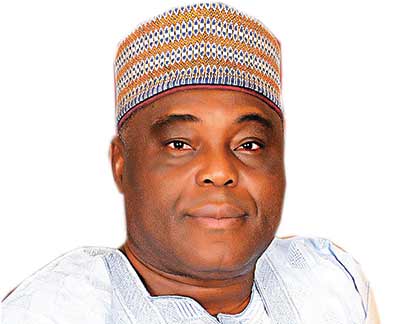
Chris Ebuetse is media aide and biographer to High Chief Raymond Dokpesi. In this interview with GBENGA SALAU, Ebuetse laments Dokpesi’s fate in the hands of successive state operators.
Do you suspect that Dokpesi’s media exposure makes him susceptible to political confrontations?
I WILL respond to your questions this way as High Chief (Dr.) Raymond Dokpesi’s biographer: He personifies the electronic media practice; freedom of press. Research on him has exposed me to his travails and pains. My opinion is that with Dokpesi on trial, the Nigerian media is on trial.
Now to your question: It is a fact that Dokpesi’s media empire has continued to expose him to series of attacks and also attempts on his life. Some years back, he narrowly escaped death. His driver was brutally killed in the process by suspected assassins.
Do Nigeria politicians consider ethics when they produce political adverts and other broadcast materials? Which of the political parties operates on the basis of ethics before and during campaigns in the last general election? Can a television house regulate a live coverage where you see politicians insult their opponents and call them names in campaigns? Are they not the same politicians criss-crossing from PDP to APC and APC to PDP? Maybe politicians should set up adverts regulatory board, vet their materials before they forward it to media houses. Was there ethics in the recently concluded Kogi State election? Was there ethics in the Bayelsa State election? Do ethics go with violence that characterised the Bayelsa State election and the last general election?
Right from the military era of the late General Sani Abacha up to this present political dispensation, he has been a target of successive government in power. He is a high profile enemy to die hard political gladiators due to his media empire.
In the regime of the late Abacha, Department of State Service (DSS) men were deployed to his media empire under cover as reporters, producers and engineers. The reasons were to monitor and police the activities of the communication outfit in the discharge of its duties. I can recollect how a call came from Aso Rock that AIT should not allow the late Gani Fawehimi appear in one of the early morning Kaakaki programmes. Abacha later told Dokpesi to calculate his assets and liabilities, he, however, transited the week he was to take over the empire.
With the advent of democracy, in 1999, Dokpesi thought that his victimisation was over. But democracy became the height of undue interference in the activities of his media outfits. The political administration at that time had noted that AIT and Ray power 100.5 FM were giving undue recognition to activities of the National Assembly-led by the late Senator Chuba Okadigbo. For this reason, the consortium of banks, about six to which Dokpesi was indebted, were instigated to recall their loans. The police came in commando style into the premises of the empire to forcefully shut it down. The loans led to the temporary closure of the empire for six months.
Dokpesi also suffered series of attacks from government over tenure elongation. There was also the invasion of the facility by the DSS, taking away the broadcast materials on tenure elongation. The Federal Capital Development Authority (FCDA) also pulled down part of the corporate headquarters’ building on spurious claims that it contravened the Abuja Master Plan.
When AIT was occupying a section of Labour House building in Abuja, the station was razed by fire. There were several fire infernos in the outfit, such as the one that gutted the Abuja, Kano, Jos, Port Harcourt and Lagos offices. Most of these infernos from available findings were politically motivated. The reasons for all these challenges were that the twin stations were too critical of the government of that time.
In 2010, Dokpesi also saw the wrath of government, when he was the campaigns’ Director General to General Ibrahim Babangida. He was accused of bombing Abuja during the nation’s 50th anniversary. The attendant effect of this was his arrest and detention by the DSS. Though, later released, as he was not linked to the crime, the bomb blast was one of the pains of being a law-abiding citizen. The reason for the accusation was that his media empire was too powerful to be ignored by the government of the day.
The 2015 campaigns were toxic and some were afraid that there could be some backlashes; didn’t the Dokpesi media family envisage that, particularly with those personality documentaries aired on AIT?
It is not surprising that the present All Progressives Congress (APC)-led government that used Dokpesi’s media empire as a major opposition party during their formative period has forgotten too soon.
Electioneering campaigns in Nigeria have always been toxic. The 2015 campaigns were not an exemption. When Dokpesi was Babangida’s campaign Director General, the campaign against him were toxic. AIT also aired those campaigns on Babangida that could be considered as not healthy. Campaigns considered to be toxic have also been carried against Dokpesi in the media and Internet.
I have equally seen on the prints and electronic media, unhealthy campaigns against presidential candidates. I have seen what could be considered as toxic campaigns against former Vice President Atiku Abubakar and Nuhu Ribadu, former EFCC boss. I am aware that when Buhari ran against Obasanjo, there were campaigns considered to be toxic against him. When Buhari ran for presidency against the late President Umaru Yar’Adua, such campaigns were prevalent. The same happened in 2011 elections. There were campaigns considered to be toxic on both sides. It may, therefore, be right to classify this attack on Dokpesi as cumulative, spanning 12 years of the present government’s meritorious battle for presidency in Nigeria? Against this background, I may not be wrong to refer to Dokpesi’s travail as political vendetta for being resilient in piloting the affairs of his media empire for the past 20 years.
I can still recollect years back, Labaran Maku, visibly disturbed that the opposition was using AIT to lampoon the government of PDP. I can recollect my reply that the media empire of Dokpesi is for the ruling party, for the opposition, as well as the masses.
Dokpesi’s media empire was a frontier by the opposition parties in their quest for a merger. The history of the formation of APC is not far from us. The nation is advancing and people are becoming more informed. There is the attempt to gag the press in this present dispensation. It is now left for the media to either stand aloof or resist this repressive move.
The media family of Dokpesi had expected that this would happen. But we are also happy that there are two sides to a coin. I rely on the freedom of press; democracy and dictatorship don’t go together. The judiciary is the hope of Dokpesi and his empire.
Those deeply involved in electronic media business know that television and radio are capital intensive. There are satellite space bills to be paid in millions of dollars. Daar Communication is a global station. Anywhere in the world, the media is expensive. The money to him may not be far from services he rendered to the government in power then.
Dokpesi media empire has fought for significant issues on national cohesion, the Save Nigeria Group project that came up to rescue the country from drifting due to the failing health of Yar’adua cannot be forgotten in a hurry.
How challenging is the media for the Daar family, particularly paying the bills and managing costs generally in relation to accepting political advertorials that appear toxic. Is it possible for instance, to reject some political advert on ground of ethics.
The media is a fragile business and the numbers of electronic media that have existed and folded up are many. The terrain is too harsh for media practice. It is challenging. Political parties, their cronies and supporters sponsored all the political adverts during election. You talked of rejecting political adverts in terms of ethics. And what is ethics, if I may ask? Ethics is moral principle, behaviour, action that the society considers to be good by every standard.
Do Nigeria politicians consider ethics when they produce political adverts and other broadcast materials? Which of the political parties operates on the basis of ethics before and during campaigns in the last general election? Can a television house regulate a live coverage where you see politicians insult their opponents and call them names in campaigns?
Are they not the same politicians criss-crossing from PDP to APC and APC to PDP? Maybe politicians should set up adverts regulatory board, vet their materials before they forward it to media houses.
Was there ethics in the recently concluded Kogi State election? Was there ethics in the Bayelsa State election? Do ethics go with violence that characterised the Bayelsa State election and the last general election?
Do we ever take stock of the series of deaths due to violence in our elections since the inception of democracy? What is the premium placed in the lives of citizens? Was AIT studio in Lagos not up in flames during the last election? As an observer, I found out that what I considered ethical to one political party might not be ethical to another party. Different strokes. For instance, the slogan ‘change’ by APC was considered to be toxic to the PDP, APC’s advert that Nigeria should vote President Muhammadu Buhari rather than Goodluck Jonathan, was seen to be toxic by PDP supporters also.
As Dokpesi’s biographer, I have always prayed for him. I honestly do not want to wear his shoes, when I consider how exposed he is. He is a friend today, when his media airs anything favourable to the politicians and politician’s enemy tomorrow when his media airs anything considered by the rating of the politician to be toxic. Dokpesi’s media empire exists in an environment where the political climate is adversely hostile to his person and this, I think is a weak part of politics. Whatever way we look at this, no matter the colour or shape you want this alleged crime to take, it would be difficult for this government to convince the people that there is no political undercurrent.
 For the Daar family, the media is very challenging considering the series of interference like the attack on Dokpesi, this is no doubt, a trying time for the media empire. If God were not to be on his side, the political forces have always wanted his media empire to fold up. The station runs on diesel for 24 hours a day in over 26 or 27 stations in Nigeria. It is from the money generated that overhead cost is paid, general maintenance, payment of salaries, and replacement of vandalised equipment during election campaigns. The challenges of running the station are also enormous in a country like Nigeria where government controls the economy.
Paying media bills are very challenging. The air space is a vanishing product. It is not tangible product that one can keep for days. The losses cannot be quantified in terms of Naira, even in dollar and pounds. It takes about 15 to 20 years to break even in television business.
It is not surprising that the present All Progressives Congress (APC)-led government that used Dokpesi’s media empire as a major opposition party during their formative period has forgotten too soon. Electioneering campaigns in Nigeria have always been toxic. The 2015 campaigns were not an exemption. When Dokpesi was Babangida’s campaign Director General, the campaign against him were toxic. AIT also aired those campaigns on Babangida that could be considered as not healthy. Campaigns considered to be toxic have also been carried against Dokpesi in the media and Internet.
In America, the government of the day gives support to private media houses, because of their usefulness and importance to issue of national development, societal regeneration and peace. I feel we are indebted to Dokpesi, when we enumerate his role in building this nation, through the media.
Do you think Dokpesi has not stepped on toes in politics and in business?
Certainly, he has stepped on toes in politics and in business his media empire appears to be his cross. What they want is for it to fold up. Beyond Dokpesi, some staff were brutalised. Being close to Dokpesi has become a taboo in some government quarters. In this wise, how will the change we desire come about?
Dokpesi as a person will not deliberately step on toes. He is a nationalist, a great thinker, and lover of humanity and has always identified with the masses. There are Nigerians, who by their nature, and disposition, cannot forget and forgive. The government should not forget that the change we desire is for good governance and not for victimisation of those considered as political enemies of which Dokpesi appears to be number one.
Politics, to me, is a game and everybody wants to win. There is no need for hatred, victimisation, envy and pull him down syndrome. They would try everything possible to rubbish him. His voice remains a major powerful voice for the nation. Dokpesi is a businessman and the media has everything to do with government.
It is only in Nigeria you invite a man for questioning and you lock him up for weeks, you blackmail the person on national dailies as a common criminal before you slam charges on the person. If we say we are democratic, the world should see us practicing democracy, rule of law, due process and the exercise of the fundamental right of a citizen as entrenched in the constitution must be guaranteed.

