 Follow Us on Google News
 Follow Us on Google Discover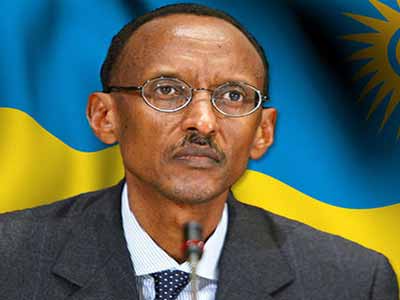

SINCE Africa has clearly failed to learn sufficient lessons from its political history, it remains exposed to a perpetual affliction of the crises that have bedevilled it. One of such self-inflicted crises that the continent has not outgrown is that of the aberrant version of leadership that refuses to quit when its time is up statutorily. It was an inadvertent or cultivated paucity of the awareness of the danger the continent is exposed to through sit-tight leadership that drove Nigeria to the brink of a political crisis when former President Olusegun Obasanjo nurtured the idea of getting a third term. Even though the former president keeps denying that he was responsible for the botched project, what sufficiently betrays the lack of sincerity in his defence is his failure to vehemently disown those who were brazenly peddling the assumed desirability of his continued stay in power.
While Obasanjo might have caught the bug of sit-tight leadership from African helmsmen such as Robert Mugabe of Zimbabwe, Paul Biya of Cameroun, Yoweri Museveni of Uganda and Yahay Jammeh of The Gambia, other African leaders have since been trying to succeed where Obasanjo failed. But African leaders who do not on their own realise that the era of sit-tight leadership has gone, are often forced by the people’s violent resistance, to acknowledge this. This is the bitter lesson that Pierre Nkuruziza is learning in Burundi now. The more unfortunate corollary of the tragedy is that Burundians have lost their lives in hundreds.
But African leaders and other citizens who are silent now should join the rest of the world to warn Kagame that if he treats with disdain the voice of his conscience, the caution of the rest of the world, and the dictates of democracy and his country’s constitution, he may not be able to ignore the gunshots that may force him out of office when the citizens’ suppressed discontent breaks out. For the sake of Africa and the citizens of Rwanda, Kagame must remember Burundi.
As though the warning were not loud enough, Paul Kagame is now about taking his country, Rwanda, through this path that is smeared with blood and tears. He has insisted on going for a third term at the end of his second tenure that has already given him 15 years in office and that would end in 2017. To give this selfish quest a measure of credibility, Kagame has orchestrated a referendum at which the citizens of Rwanda have given their approval for him to get a third term in office. On account of this referendum, after Kagame’s seven-year third term beginning in 2017, he is entitled to two further five-year terms . Kagame ceaselessly brandishes a testimony that the citizens are enamoured of the giant strides he has recorded in the development of Rwanda and thus they do not want him to go.
Granted that Kagame has really achieved so much, the only honourable path that is open for him is to quit the stage. He has 17 years to consolidate his achievements and after that he has to give way to another person. There is the need for Kagame to go home after his tenure to maintain the stability he has helped to build after the war that brought so much destruction to Rwanda. There is the suspicion that Kagame who belongs to the Tutsi tribe is not willing to hand over because of the fear that the Hutu who are in the majority would return the country to the path of barbarism and bloodbath. But why should there be this fear if Kagame has really built democratic institutions and the citizens for 17 years? If Kagame has really built democratic institutions and the people, there is the robust possibility that they would consolidate the gains he has recorded for his society. In this regard, Kagame must divorce himself from the tragic illusion that without him, Rwanda cannot continue. He must discard the self-deluding notion that the genes of successful leadership are exclusively located in the Kagame family and therefore before he dies he would anoint one of his children to take over the leadership of Rwanda.
True, since past efforts to ape the developmental models of the West have not helped Africa, the leaders of the continent should consider home-grown strategies. But this is only good to that extent that African leaders refuse to indiscriminately copy Western models. However, there is nothing wrong with replicating developmental models that have succeeded elsewhere and that are capable of working for Rwanda. Besides, since globalisation has made borders of other countries of the world pliable, it is not out of place when other parts of the world show interest in what is happening in Rwanda since these nations would share in the tragic consequences of any crisis in Rwanda. To that extent, Kagame’s argument that the rest of the world should mind its own business while he is entrenching himself in power in a manner that would trigger a conflagration remains a ludicrous bromide. Over the years, African citizens have realised that it is only when their leaders want to engage in treacherous activities that negate the people’s common interest that they take recourse to railing against the West. This was why when the rest of the world was against Sani Abacha and Nigeria became a pariah state, he tried to present this to the citizens as a measure of his single-minded pursuit of patriotism. African leaders like Kagame must come to terms with the fact that it is incumbent upon them to bring their own contributions to the global table of development just as they are free to take from it.
In this regard, Kagame should not wait for the United States and the European Union to tell him before he knows the right thing to do. And African leaders should not wait for the West to take the initiative of cautioning Kagame before they nudge their colleague on to the path of reason. It is not really shocking that African leaders are silent over the development since most of them have failed at home. Yet, it is not out of place to expect a few voices of reason on the continent to warn Kagame that Africa cannot cope with the possible crisis that he is oblivious of by his inordinate ambition. While it is true that like every other power-obsessed ruler Kagame would do everything to suppress the opposition, the fact remains that the latter is not doing enough. One major reason Kagame is about having his way is that he has succeeded in creating the impression that there is no opposition in Rwanda and that everybody is in support of his bid to elongate his stay in office. If Kagame has driven members of the opposition abroad, why cannot they speak from there? If Rwanda citizens fail to speak now, it would be too late to do that when the violence spawned by Kagame’s ambition has consumed the whole country.
Kagame may not give up his quest to retain power having started by violating his country’s constitution. But African leaders and other citizens who are silent now should join the rest of the world to warn Kagame that if he treats with disdain the voice of his conscience, the caution of the rest of the world, and the dictates of democracy and his country’s constitution, he may not be able to ignore the gunshots that may force him out of office when the citizens’ suppressed discontent breaks out. For the sake of Africa and the citizens of Rwanda, Kagame must remember Burundi.

