 Follow Us on Google News
 Follow Us on Google Discover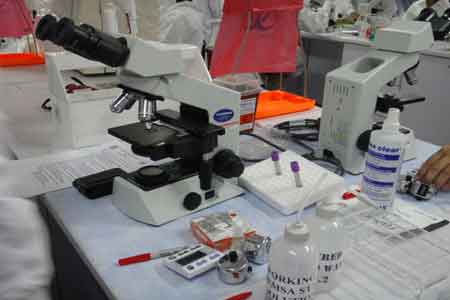
Prof. Olufunmilayo Falusi-Olopade, Director, Centre for Global Health, University of Chicago, Illinois, USA, on Friday advised the Federal Government to establish human laboratories in the country.
He fielded questions from the News Agency of Nigeria (NAN) on the sideline of the 18th Benjamin Oluwakayode Osuntokun Memorial Lecture, held at the College of Medicine, University of Ibadan.
Falusi-Olapade said the proposed laboratories would promote precision medical services.
She described human laboratory as a model where human beings, rather than animals, were used for health related experiments.
This, she said, would enable relevant health agencies to come up with accurate prognosis, diagnosis and treatment as the major components of precision medicine.
“Precision medicine is a special area in medicine, which teaches on causes, diagnosis and treatment of diseases at the right time with the right medication.
“It is a medical model that proposes the customisation of healthcare with medical decisions, practices or/and products being tailored to individual patients,” said the expert.
She said this model of medicine was already in practice in major hospitals overseas and that Nigeria should, therefore, adopt this practice in its healthcare delivery.
On the challenges and management of breast cancer, Falusi-Olopade said black women died faster from it because the average age of infection in African women was 45 years, unlike the Caucasian women at 82 years.
She said there were so many barriers to effective treatment of breast cancer in Africa and Nigeria in particular, the first being the high cost of treatment.
“Coping strategies of the patients, which includes reduction in their spending and sale of their properties make it expensive for patients to seek medical treatment for breast cancer.
“Out of these barriers, finance is responsible for 88 per cent of failure, while the lack of knowledge of primary cause of diagnosis and delay of treatment take up 82 per cent,” she said.
She, however, said that any woman from 50 years and above should be able to predict, pre-empt and prevent terminal diseases.
“She should be able to monitor her blood pressure, know her cholesterol level and control her weight in order to close the gates to heart diseases arising from obesity,” she said.
NAN reports that Falusi-Olapade was the first female to present the lecture in the 18 years of the memorial lecture.
She spoke on: “Building on the Osuntokun Legacy of Excellence in Clinical Medicine: Precision Medicine for All”.

